

Pompeo slams Iran’s ‘intimidation’ of IAEA inspector as ‘outrageous’
US secretary of state calls blocking of UN official from nuclear site an ‘unwarranted act of intimidation,’ says alarmed by Tehran’s ‘lack of adequate cooperation’
 Add ToI as a Preferred Source on Google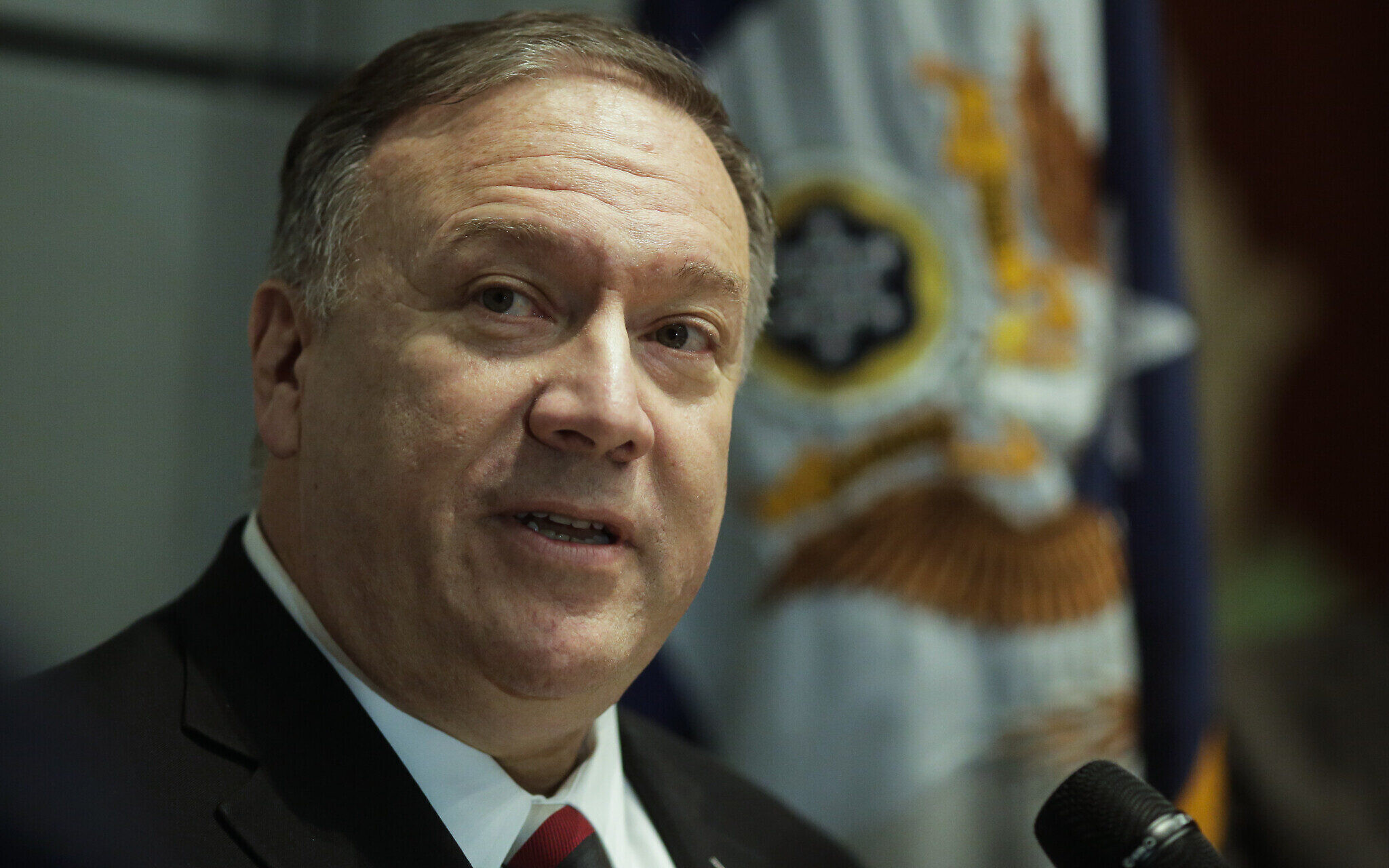
US Secretary of State Mike Pompeo on Friday slammed Tehran’s treatment of an inspector with the UN’s nuclear watchdog agency last week as “an outrageous and unwarranted act of intimidation.”
The top US diplomat said Iran “detained” the inspector, who the International Atomic Energy Agency has said had been briefly prevented from leaving Iran.
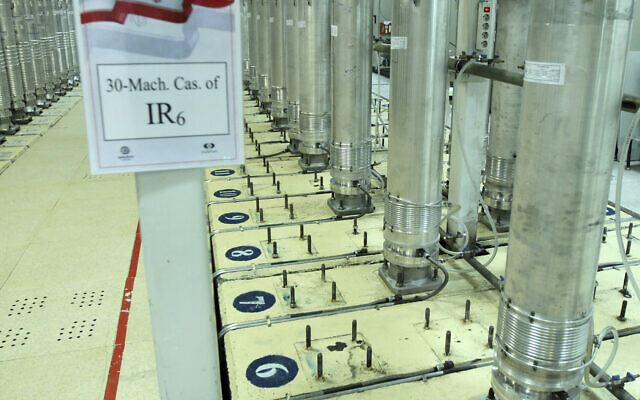
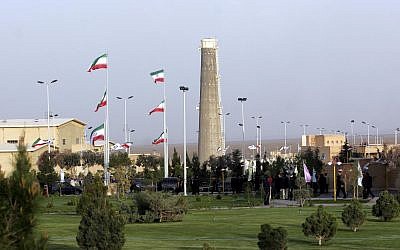
Iran said Thursday it had cancelled the inspector’s accreditation after she triggered an alarm last week at the entrance to the Natanz uranium enrichment plant.
The alarm during a check at the entrance to the plant in central Iran had raised concerns that she could be carrying a “suspect product” on her, Iran’s Atomic Energy Organization said in a statement posted online. As a result, she was denied entry, it added, without specifying whether or not anything had been found in her possession.
Iran’s ambassador to the IAEA Kazem Gharib Abadi told reporters after a special agency meeting in Vienna that after setting off the alarms on October 28, the woman “sneaked out” to the bathroom while waiting for a more thorough inspection with a detector that can find a range of explosive materials.
After her return, the alarms did not go off again, but authorities found contamination in the bathroom and later on her empty handbag during a house search.
Iran said IAEA officials were present for all the searches. The IAEA said it disputed Iran’s account of the incident, without elaborating.
“The United States fully supports the IAEA’s monitoring and verification activities in Iran, and we are alarmed at Iran’s lack of adequate cooperation,” Pompeo said in a statement.
“IAEA inspectors must be allowed to conduct their critical work unimpeded. We call on Iran to immediately resolve all open issues with the IAEA and to afford Agency inspectors the privileges and immunities to which they are entitled.”
Jackie Wolcott, the US representative to the IAEA, on Thursday also called the inspector’s rejection an “outrageous provocation.”
“All board members need to make clear now and going forward that such actions are completely unacceptable, will not be tolerated, and must have consequences,” Wolcott said in remarks released to journalists. “If the Iranian regime thinks it can test the international community’s resolve on this issue, then we assure you the United States will not waver.”
Wolcott’s comments also suggested the IAEA would discuss a warehouse near Tehran where Israel alleges it stole a secret “atomic archive” last year. She suggested that inspectors recovered possible nuclear material there.
“Iran has refused to provide — and apparently cannot provide — a credible, verifiable answer to the fundamental question of where the particles detected by the IAEA came from, and where the material and equipment they came from is today,” she said.
Iran has denied the claims by Israel, which is widely believed to have its own undeclared nuclear weapons program.
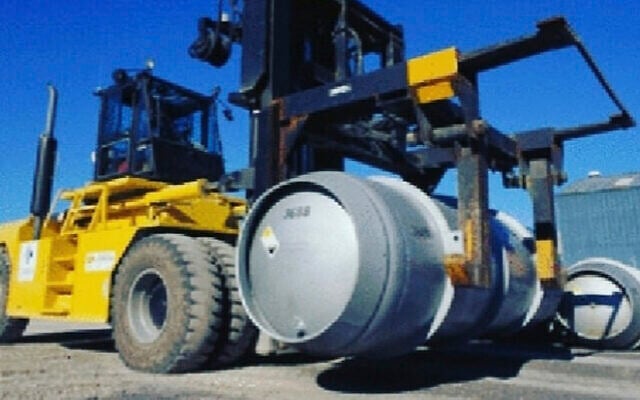
Iran earlier this week began to inject gas into centrifuges at Fordo, a facility built under a mountain north of the Shiite holy city of Qom, the Atomic Energy Organization of Iran said. Fordo’s 1,044 centrifuges previously spun without uranium gas for enrichment under the deal, which saw Iran limit its uranium enrichment in exchange for the lifting of economic sanctions.
The 2015 nuclear deal with world powers had called for Fordo to become “a nuclear, physics and technology center.” Now, it’s become an active nuclear site again and represents the most-serious step away from the deal it has taken amid the tensions.
A UN official from the IAEA witnessed the injection, Iran said. The centrifuges ultimately will begin enriching uranium up to 4.5%, which is just beyond the limits of the nuclear deal, but nowhere near weapons-grade levels of 90%.
Since the US withdrew from the deal, the other countries involved — Germany, France, Britain, Russia and China — have been struggling to save it.
Iran acknowledged Fordo’s existence in 2009 amid a major pressure campaign by Western powers over Tehran’s nuclear program. The West feared Iran could use its program to build a nuclear weapon; Iran insists the program is for peaceful purposes. Experts have suggested that the limits imposed under the 2015 deal, when obeyed, meant that Iran would need a year to gather enough material to build a nuclear weapon if it chose to do so — a time known as a “breakout period.”
Pompeo criticized Iran’s decision to inject gas into the Fordo centrifuges in a statement Thursday. He made no reference to US President Donald Trump’s decision to leave the deal in May 2018, sparking the crisis.
“Iran’s expansion of proliferation-sensitive activities raises concerns that Iran is positioning itself to have the option of a rapid nuclear breakout,” Pompeo said. “It is now time for all nations to reject this regime’s nuclear extortion and take serious steps to increase pressure.”
Pompeo did not elaborate on what those serious steps should be. The US earlier this week imposed sanctions on members of the inner circle of Iran’s Supreme Leader Ayatollah Ali Khamenei.



The Times of Israel Community.