

Portuguese police arrest 37 suspected ultra-right operatives for hate crimes
Police say detainees ‘promoted Nazi ideology,’ to target, intimidate immigrants, after weapons and neo-Nazi propaganda discovered during raid
 Add ToI as a Preferred Source on Google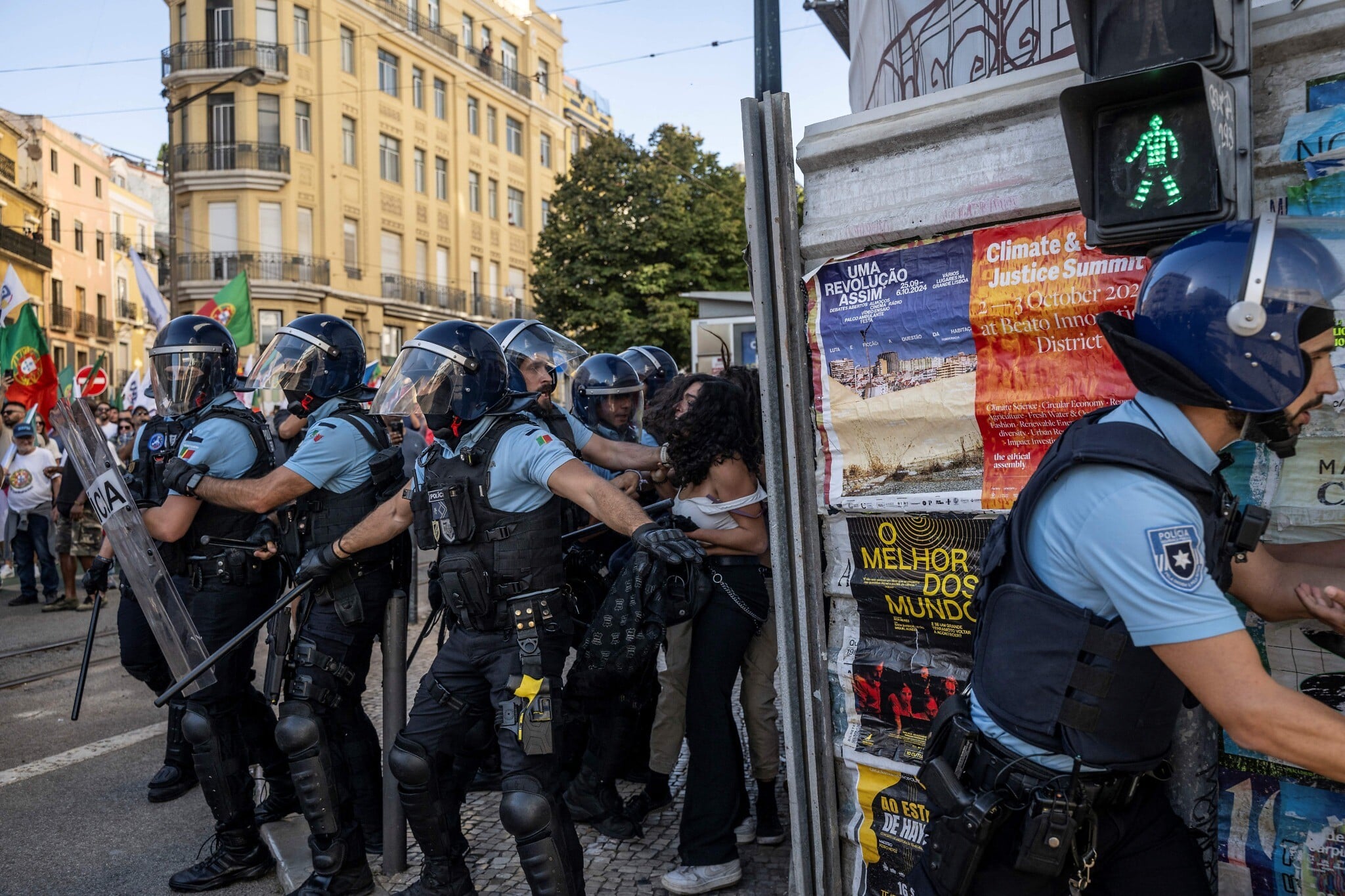
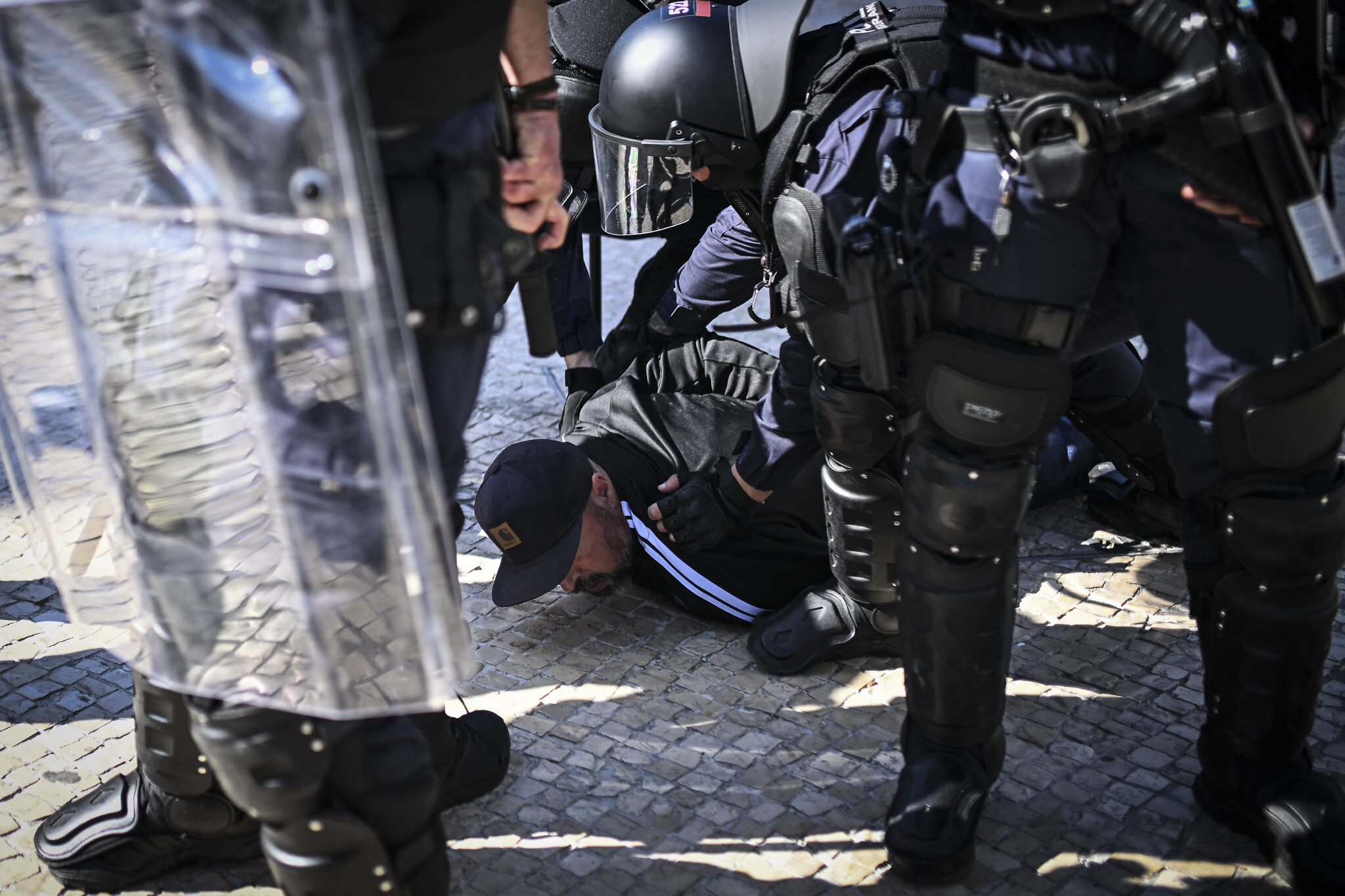
Portuguese police on Tuesday arrested 37 people suspected of belonging to an ultra-right group responsible for hate crimes, with links to similar international groups, in a large operation that involved around 300 officers.
“Those detained … promoted Nazi ideology, inherent to the national-socialist culture and the radical and violent extreme right, acting out of racist and xenophobic motives with the aim of intimidating, persecuting and assaulting ethnic minorities, namely immigrants,” the Judicial Police said in a statement.
Searches found weapons of different kinds and neo-Nazi propaganda materials.
The 37 suspects had “extensive criminal records and links to international groups that promote hate,” the judicial police said in a statement, adding that 15 people had been formally charged.
The victims were mostly immigrants from Muslim-majority countries in South Asia, according to local media.
Police sources said the group in question was “1143,” named after the year Portugal became a kingdom. The group’s leader, Mario Machado, is serving a prison sentence after being convicted of racial discrimination, hate speech and related violence.
The arrival of workers from Bangladesh, India and Pakistan, has boosted Portugal’s foreign-born population in recent years to around 15 percent of the total.
In June, police arrested several suspected neo-Nazis believed to be seeking to create an illegal armed militia, and seized firearms and explosives.
The suspects were believed to belong to the otherwise little-known Lusitanian Armillary Movement, whose name alludes to one of Portugal’s national symbols, the armillary sphere.
Human rights groups have long raised concerns about increasing hate speech and attacks against immigrants in Portugal, where the far-right, anti-immigration party Chega last year became the second-largest parliamentary group, 50 years after the country overthrew its fascist dictatorship.
In June, a group of neo-Nazis attacked several actors outside a Lisbon theater during Portugal Day celebrations, prompting the government, criticized by left-wing parties for what they see as a failure to take action against far-right groups, to condemn the violence and promise an investigation.
And in April last year, far-right groups provoked clashes in downtown Lisbon, marring celebrations of the 51st anniversary of the Carnation Revolution, which ended the dictatorship.
On Sunday, Chega leader Andre Ventura came in second in the first round of a presidential election, proceeding to a runoff against Socialist candidate Antonio Jose Seguro.









The Times of Israel Community.