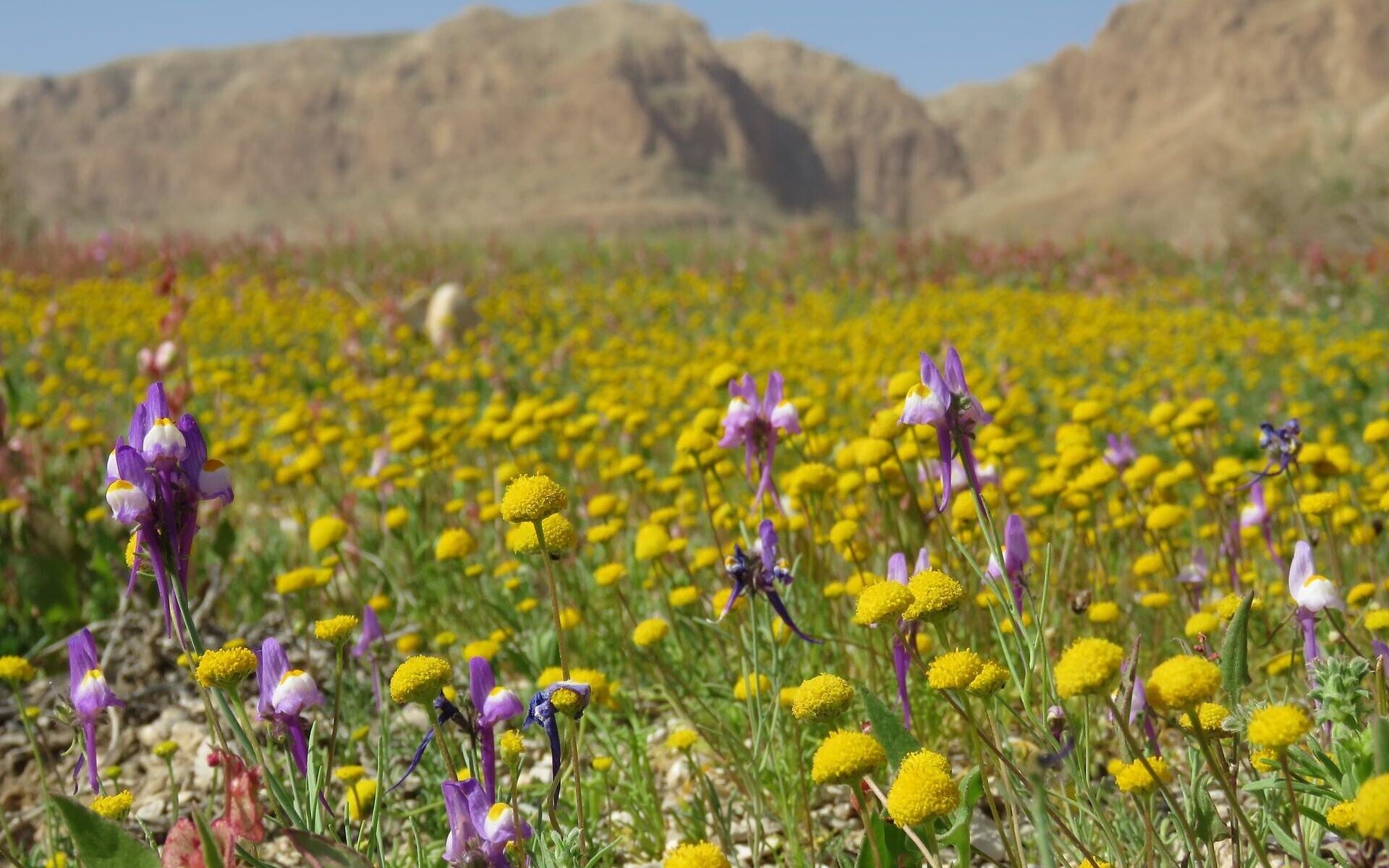
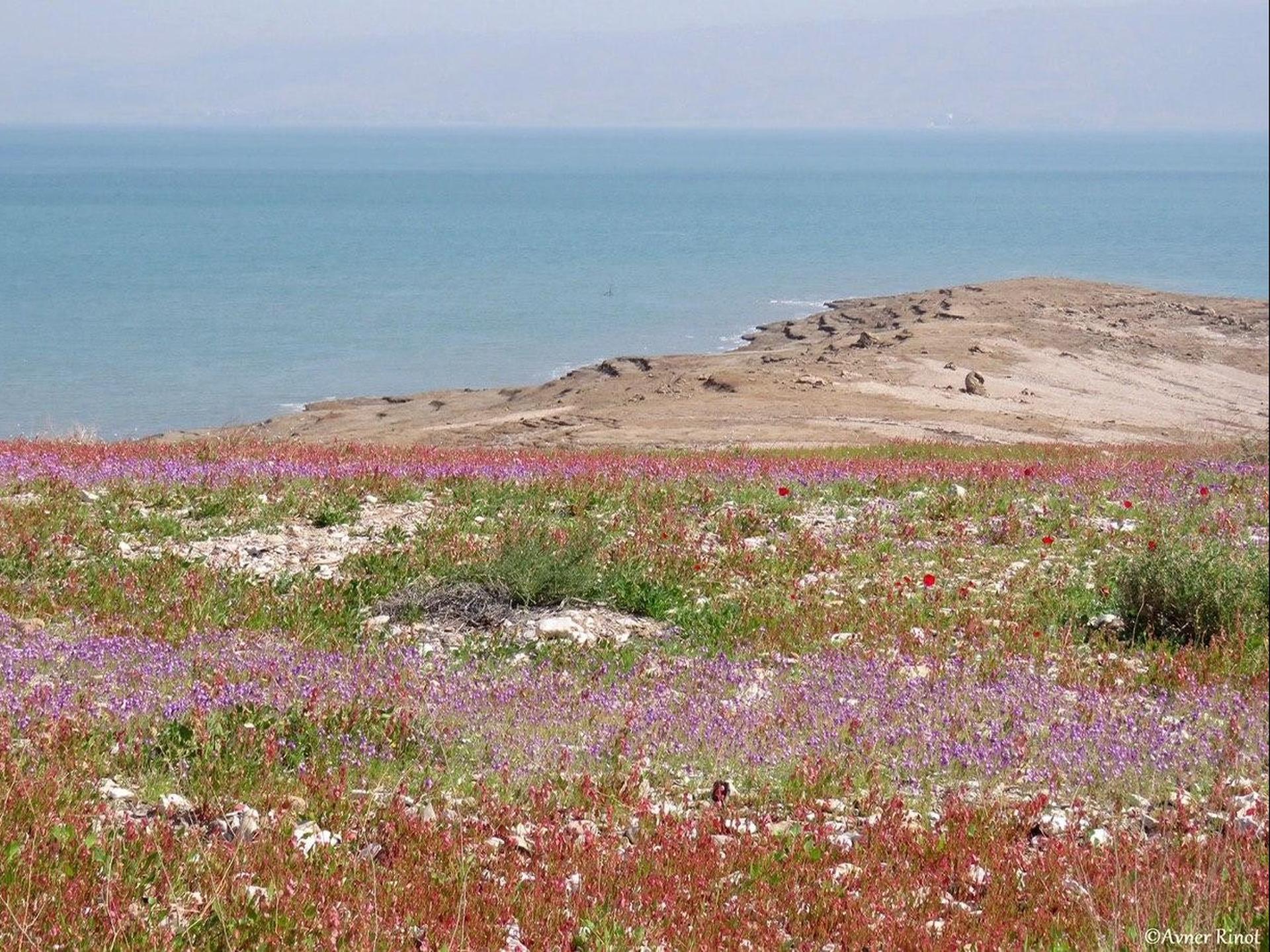
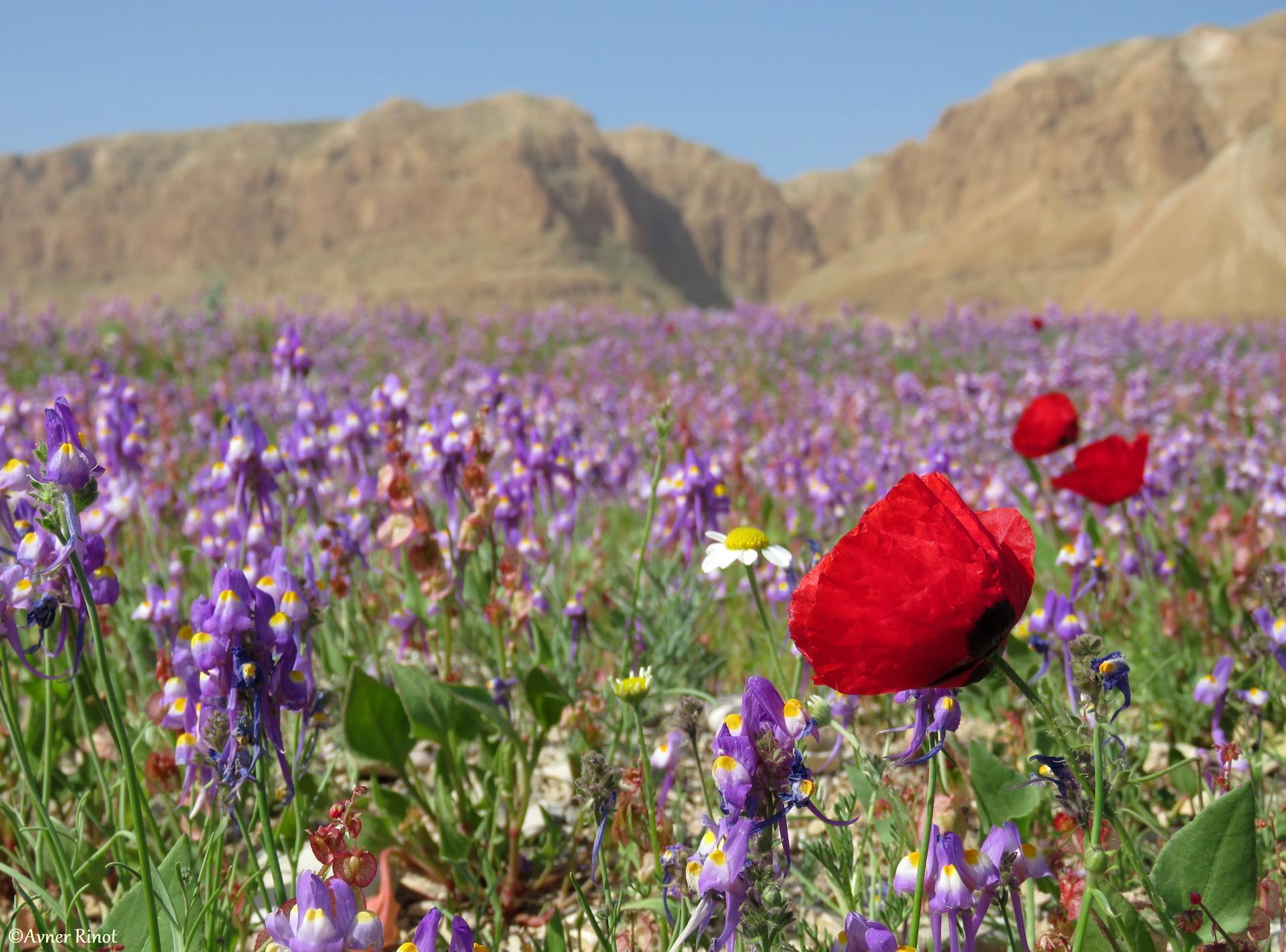
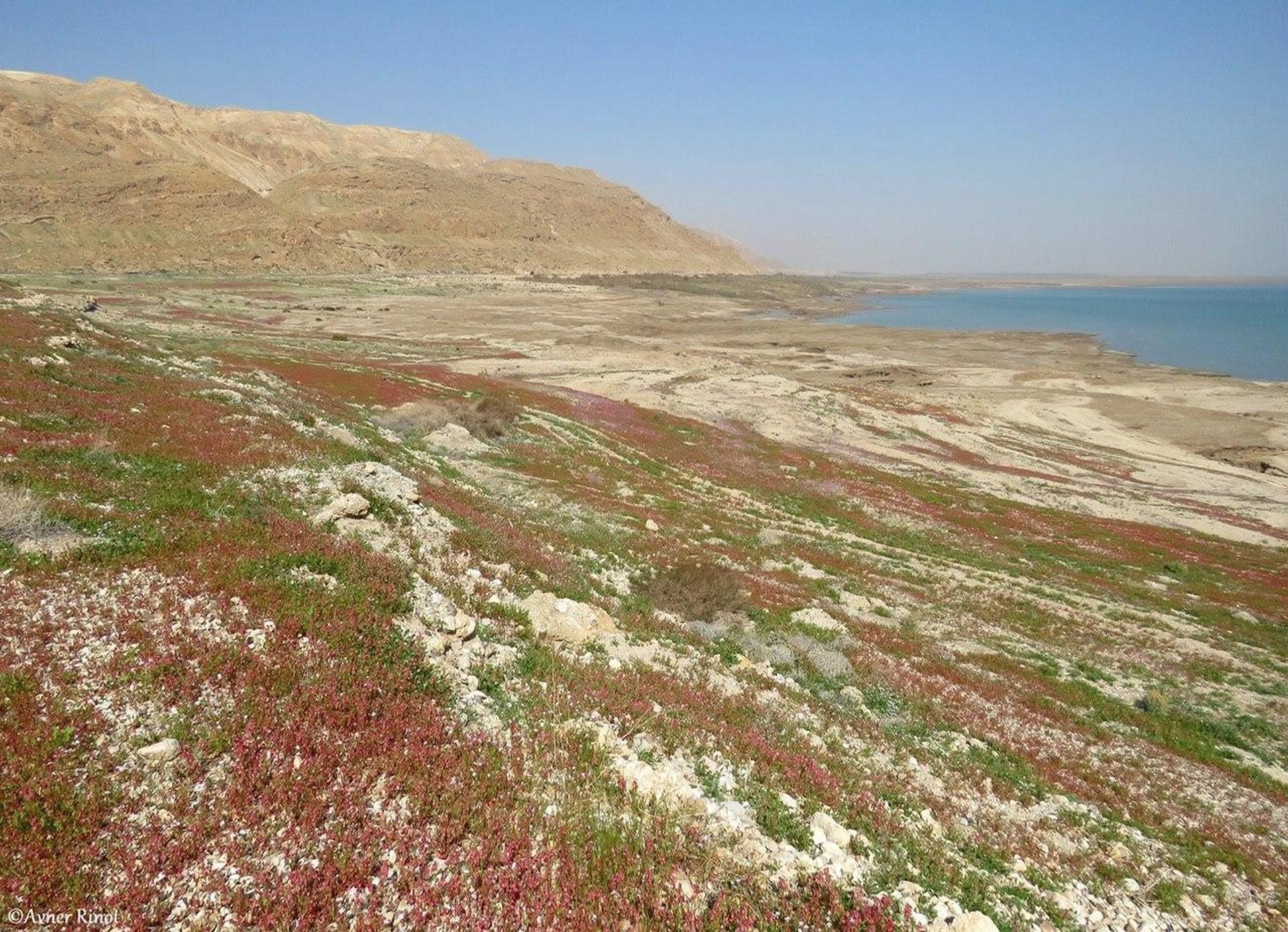
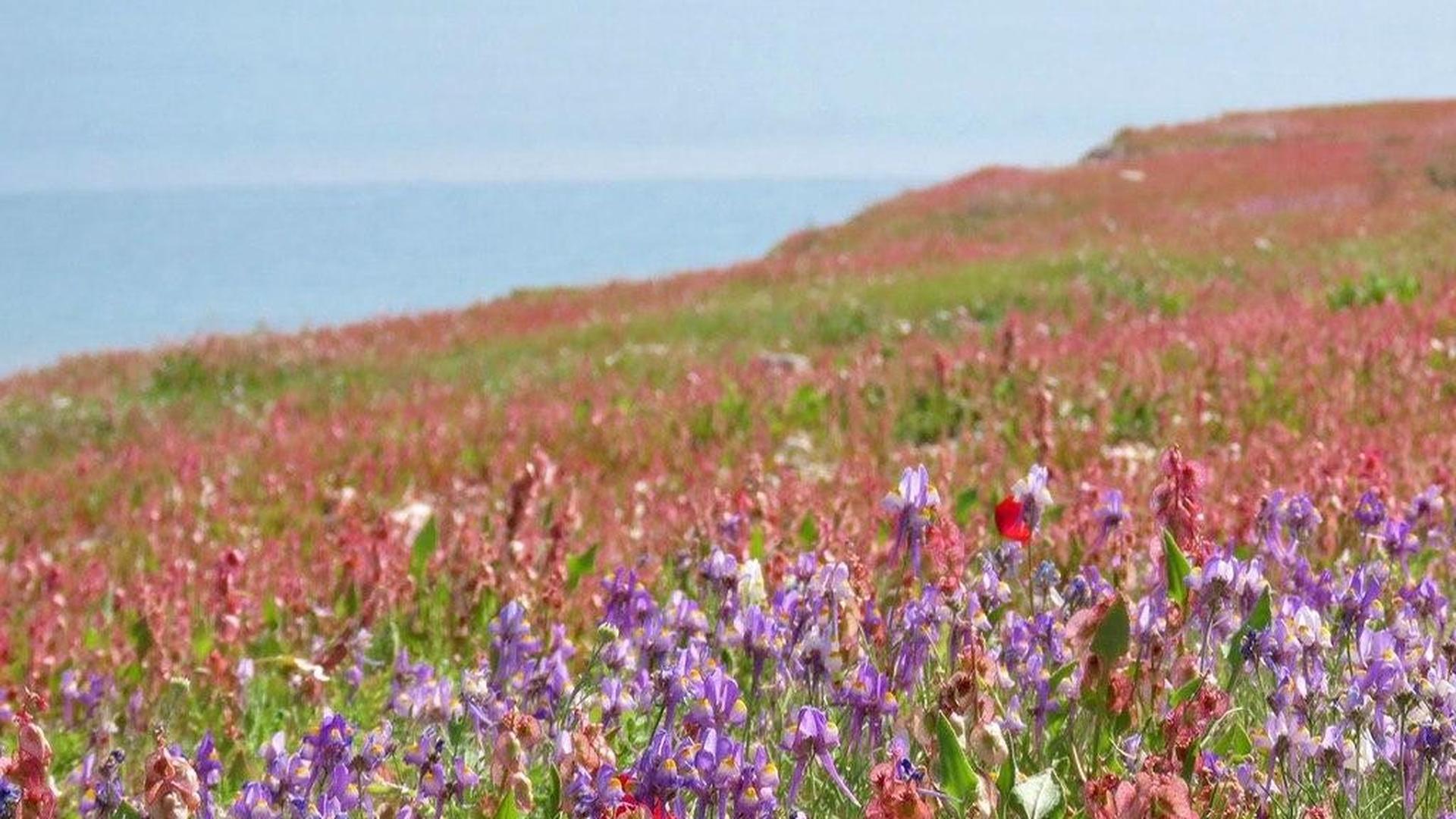
Thanks to a long period of rain this winter, the shores along the northern Dead Sea have burst into carpets of color.
The seven kilometer (four mile) stretch between Kibbutz Kalya and Ovnat is rife with fields of annual species whose seeds can lay dormant in the desert for years until there is enough water for them to germinate.
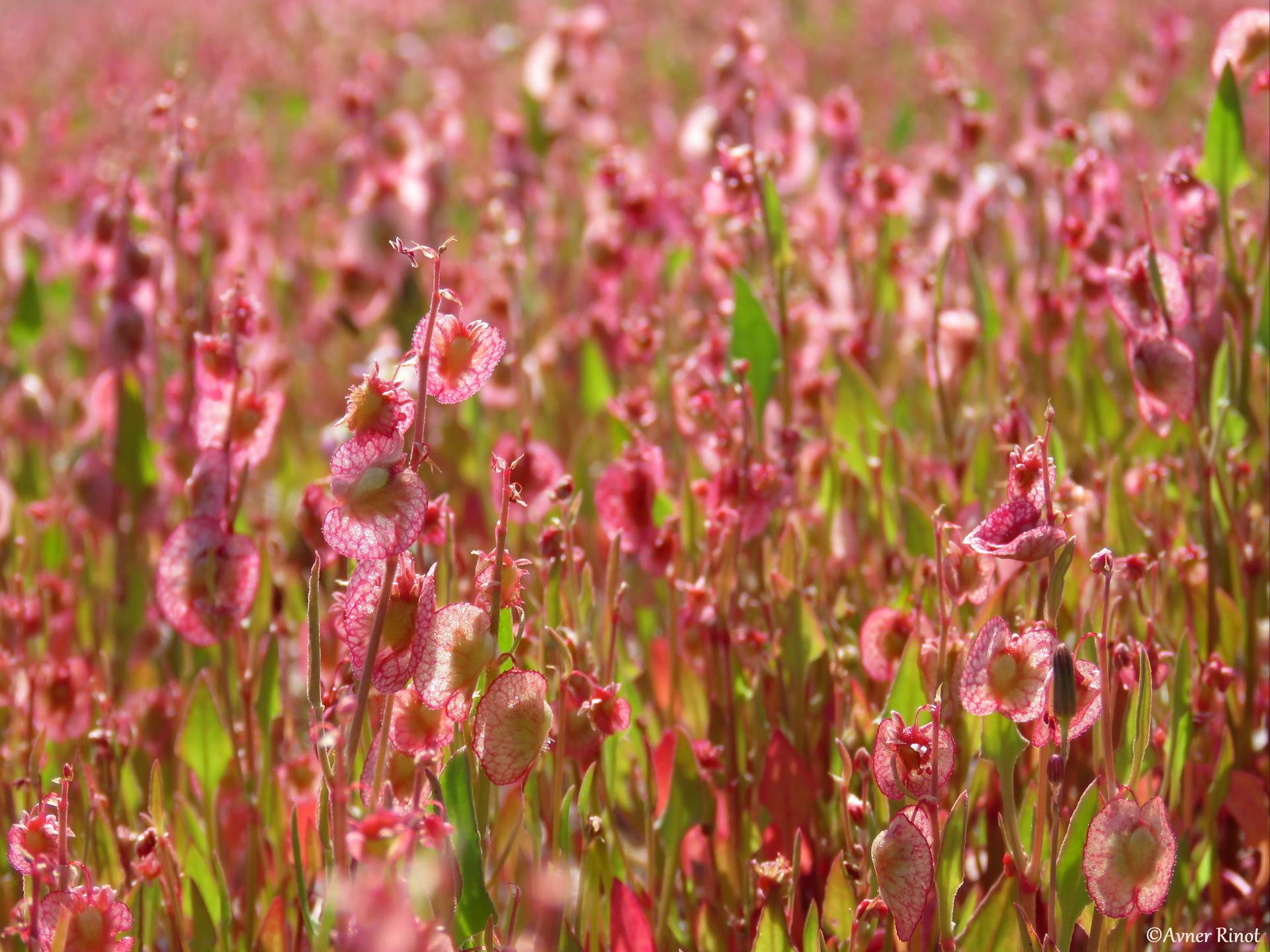
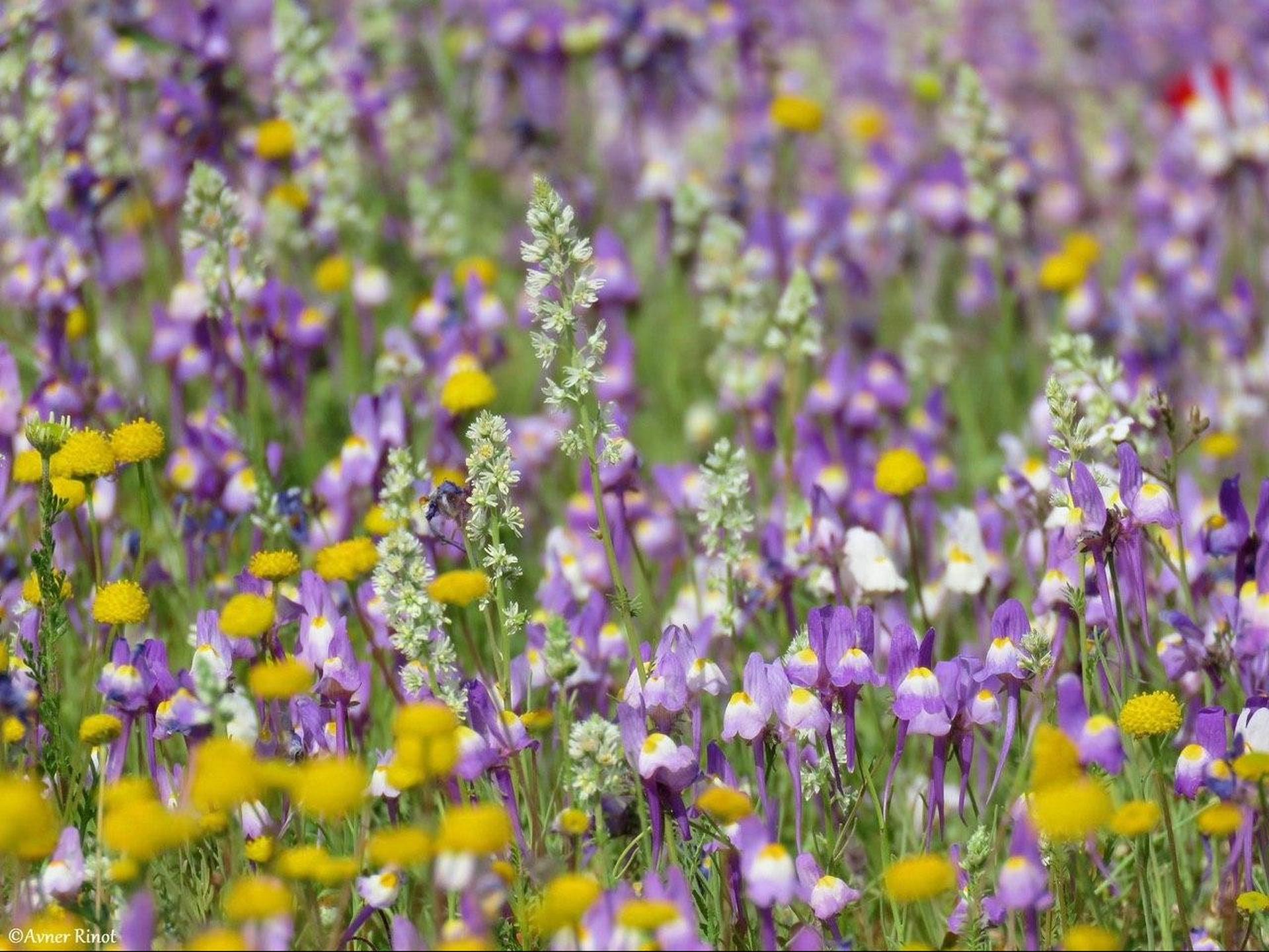
These include swaths of Rainbow Toadflax, which comes in mauve, yellow or white, with orange dots’ pink-leaved rumex; yellow Faktorowsky’s Aaronsonia; and white mignonette. Poppies abound, too.
Faktorowsky’s Aaronsonia is named after botanist and agronomist Aaron Aaronsohn, who is best known for having discovered one of the wild ancestors of wheat — Triticum dicoccum, otherwise known as spelt wheat — in 1906, in what was then Ottoman Palestine.
Rumex pictus is edible but only in very small quantities. It contains a chemical, apparently evolved to deter herbivores, which gives it a tangy taste but which, when consumed in large quantities, can damage the liver and blood vessels.
Get The Times of Israel's Daily Edition
by email and never miss our top stories
By signing up, you agree to the
terms
Help us report truthfully on social media

As a multimedia journalist, my job is to take the quality, fact-based journalism produced by The Times of Israel newsroom and make it accessible across every platform — from Instagram posts to podcasts to short-form videos.
This is how many, especially young people, consume news these days. But misinformation is rampant on social media. Our team at ToI produces accurate, responsible short-form reporting on Israel and the Jewish world.
If you believe in the importance of factual social media journalism, please consider joining our reader support group, The Times of Israel Community. Your financial support is essential to sustain responsible multimedia reporting.
— Gabriella Jacobs, multimedia journalist
Support our work
Support our work
Already a member? Sign in to stop seeing this
You're a dedicated reader

We’re really pleased that you’ve read X Times of Israel articles in the past month.
That’s why we started the Times of Israel - to provide discerning readers like you with must-read coverage of Israel and the Jewish world.
So now we have a request. Unlike other news outlets, we haven’t put up a paywall. But as the journalism we do is costly, we invite readers for whom The Times of Israel has become important to help support our work by joining The Times of Israel Community.
For as little as $6 a month you can help support our quality journalism while enjoying The Times of Israel AD-FREE, as well as accessing exclusive content available only to Times of Israel Community members.
Thank you,
David Horovitz, Founding Editor of The Times of Israel
Join Our Community
Join Our Community
Already a member? Sign in to stop seeing this


 Add ToI as a Preferred Source on Google