

Renegade Gaza groups get in the way of Hamas-Israel rapport
Both the Strip’s rulers and the Jewish state have an interest in keeping the peace, but the Salafis have other plans

Avi Issacharoff, The Times of Israel's Middle East analyst, fills the same role for Walla, the leading portal in Israel. He is also a guest commentator on many different radio shows and current affairs programs on television. Until 2012, he was a reporter and commentator on Arab affairs for the Haaretz newspaper. He also lectures on modern Palestinian history at Tel Aviv University, and is currently writing a script for an action-drama series for the Israeli satellite Television "YES." Born in Jerusalem, he graduated cum laude from Ben Gurion University with a B.A. in Middle Eastern studies and then earned his M.A. from Tel Aviv University on the same subject, also cum laude. A fluent Arabic speaker, Avi was the Middle East Affairs correspondent for Israeli Public Radio covering the Israeli-Palestinian conflict, the war in Iraq and the Arab countries between the years 2003-2006. Avi directed and edited short documentary films on Israeli television programs dealing with the Middle East. In 2002 he won the "best reporter" award for the "Israel Radio” for his coverage of the second intifada. In 2004, together with Amos Harel, he wrote "The Seventh War - How we won and why we lost the war with the Palestinians." A year later the book won an award from the Institute for Strategic Studies for containing the best research on security affairs in Israel. In 2008, Issacharoff and Harel published their second book, entitled "34 Days - The Story of the Second Lebanon War," which won the same prize.
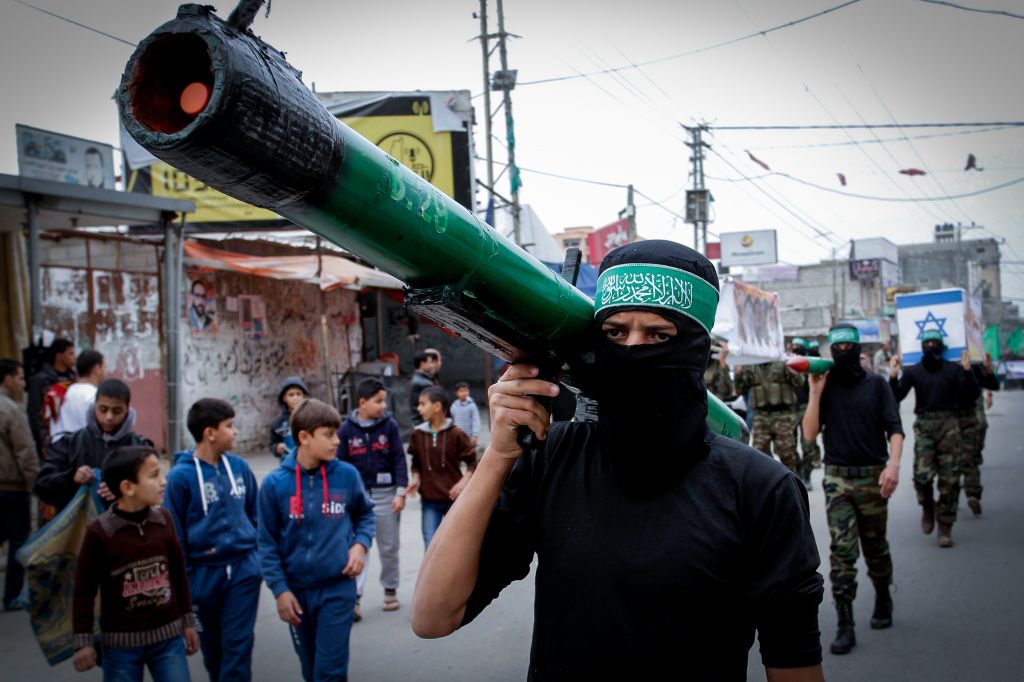
The Israeli government stated Wednesday night that it considers Hamas responsible for the latest volley of rockets into southern Israel. That may sound like a dramatic statement yet it is essentially meaningless. Not only was Hamas clearly not behind the rocket attack, but the Israeli government is also highly interested in maintaining the organization’s rule in the Gaza Strip.
Israel’s retaliation, a strike on an empty Hamas facility, unsurprisingly resulted in no casualties. Hamas already knows the drill: rockets land in Israel, the organization evacuates its positions, the IDF carries out a strike on vacant sites, and everything goes back to normal — until the next round.
Coming across a bit like Palestinian affairs analysts, the defense officials who briefed Israeli media correspondents – anonymously, of course – took special care to mention the infighting between Hamas and Salafi groups in the Strip as part of the background to Wednesday night’s rocket attack. The bottom line is that while residents of Israel’s south may say they are unwilling to become hostages to the conflicts between organizations in Gaza, they already are.
It was the same story last week, when an argument between two senior commanders in the Islamic Jihad led to the launch of a rocket at Be’er Tuvia. Apparently that is the case this time, as well: The Salafis threatened to respond within 48 hours to the killing of one of their prominent activists by Hamas security forces. While one may have thought that the Salafi retaliation would target Hamas headquarters or positions in the Strip, now it is clear that the preferred response is rocket fire at Israel. Even the jihadi groups have realized that Hamas’s main priority right now is to keep the peace.
Ironically, Israel in recent months has been the main lifeline for the Hamas regime in the Strip. Moreover, the Jewish state is virtually the only regional and global player keen on keeping Hamas in power. The volume of goods entering Gaza from Israel is constantly on the rise. IDF Coordinator of Government Activities in the Territories Major General Yoav Mordechai also recently approved the transfer of dual-use materials into the Strip, even though some of these materials can be used to produce weapons. Mordechai was operating under the assumption that terrorist activities will decrease as the humanitarian situation in Gaza improves.
At a press conference organized by the Qatari envoy to Gaza, Mohammed al-Imad, the diplomat praised the Israeli official for allowing the entry of the materials into the Strip. Perhaps the Qatari diplomat’s enthusiasm can be seen in the context of a Palestinian request to establish a gas pipeline between Israel and Gaza, which will include the construction of a special station on the Israeli side aimed at increasing power supply to plants in the Strip. Less than a year after the latest war between the two sides, the Israel-Hamas relationship is blossoming. Too bad the Salafi organizations are trying to put a damper on it.
In this light, it is also hard to not take into account recent claims made by Palestinian Authority officials. These officials state repeatedly that Israel is engaged in talks with Hamas over a long-term ceasefire, while neglecting negotiations with the Palestinian Authority. The PA has cited specific Israeli officials, serving and retired, whose names have not been cleared for publication, allegedly managing direct talks with Hamas. These negotiations are focused on the return of the remains of missing Israeli soldiers, but also on reaching a long-term truce agreement.
The truth is that, in practice, such an agreement is already in place. For the time being, Hamas is trying unsuccessfully to maintain the calm, while Israel remains faithful to the principle of “quiet will be met with quiet,” and has provided quite a few economic benefits to help Hamas consolidate its rule over the Strip.
In the meantime, residents of southern Israel cannot expect real quiet. A fight between two clans or rival factions will often end in rocket fire at the Israelis. The Israeli responses, mostly due to public opinion, will probably become more severe with time, as will the attacks from the Strip. And so, with baby steps, Hamas and Israel approach the next round of violence.






The Times of Israel Community.