

Should Jerusalem Day really be a national holiday?
Over the years, Jerusalem Day has gradually become a ‘rightist’ event, commemorated almost exclusively by the settlers and their brethren in Israel’s national-religious camp. Has the time come for Israel to admit that its military victory in the Six Day War isn’t cause for celebration?
Elie Leshem is deputy editor of The Times of Israel.
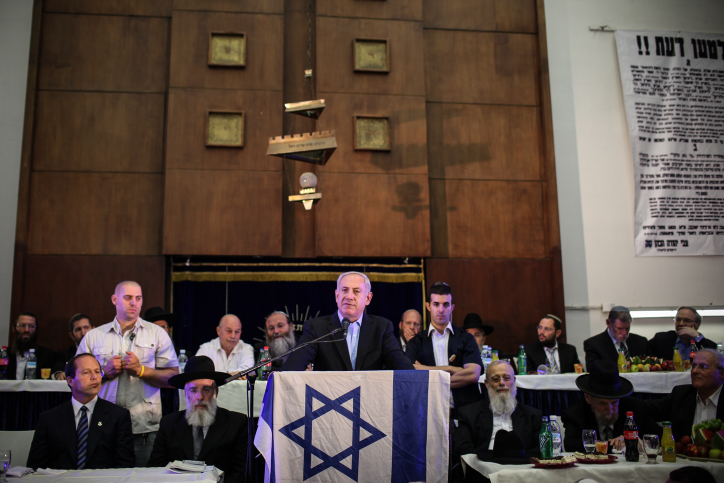
Prime Minister Benjamin Netanyahu, at a Jerusalem Day ceremony on Sunday, said that “Israel without Jerusalem is like a body without a heart. And our heart will never be divided again.”
Contrast that with remarks made by his predecessor, Ehud Olmert, earlier that day.
“As far as the Old City is concerned, we will have to arrive at arrangements — including on the Temple Mount — that will enable a peace agreement between us and the Palestinians,” Olmert told Maariv.
He also noted that, with its longstanding neglect of Jerusalem’s eastern neighborhoods, Israel had historically done little, if anything at all, to truly “unify” the city.
The opposing statements reflect a deep Israeli ambivalence toward Jerusalem Day.
But it wasn’t always this way.
Jerusalem has been the ultimate object of Jewish yearning for millennia, and the military victory of the Six-Day War was so improbably decisive that even secular Israelis — and Jews the world over — couldn’t help but be swept up in the ensuing almost-Messianic euphoria. A year later, the government accorded Jerusalem Day the status of a national holiday, affixing the official seal to the Chief Rabbinate’s decision to declare it a religious holiday.
But the elation faded fast. The Yom Kippur War was a rude awakening, and as the years went by, Israel’s continued presence in the West Bank became the backdrop for two bloody, deeply demoralizing intifadas. The international community also stepped up the pressure on Israel to cede the territories it had won in 1967 — including parts of Jerusalem.
Among many in Israel, the memory of a glorious military victory was eroded by the crushing banality of conflict. There was also growing public resentment toward a settler community that was perceived to be perpetuating the violence by making a peace settlement all but impossible.
Thus, Jerusalem Day gradually became a “rightist” holiday, celebrated almost exclusively by the settlers and their brethren in Israel’s national-religious camp. Outside Jerusalem’s traditional Flag Dance, which in recent years has more than once been the stage for altercations between revelers and Arab residents of the Old City, and official events geared mostly toward veterans of 1967 and their families, the day goes mostly unmarked and unnoticed.
Which leads us to our Question of The Times: Should Israel maintain the status of Jerusalem Day as a national holiday and celebrate the miraculous reunification of the city after 2,000 years of exile? Or has the time come for Israel to admit that the Six-Day-War victory is no cause for celebration, and let the national-religious celebrate Jerusalem Day as a religious — not a national — holiday? Join the debate in the comments below.
* * *










The Times of Israel Community.