

SpaceX finds cause of explosion that destroyed Israeli satellite
Launch pad accident that blew up $300 million communications device caused by breach in rocket’s helium system
 Add ToI as a Preferred Source on Google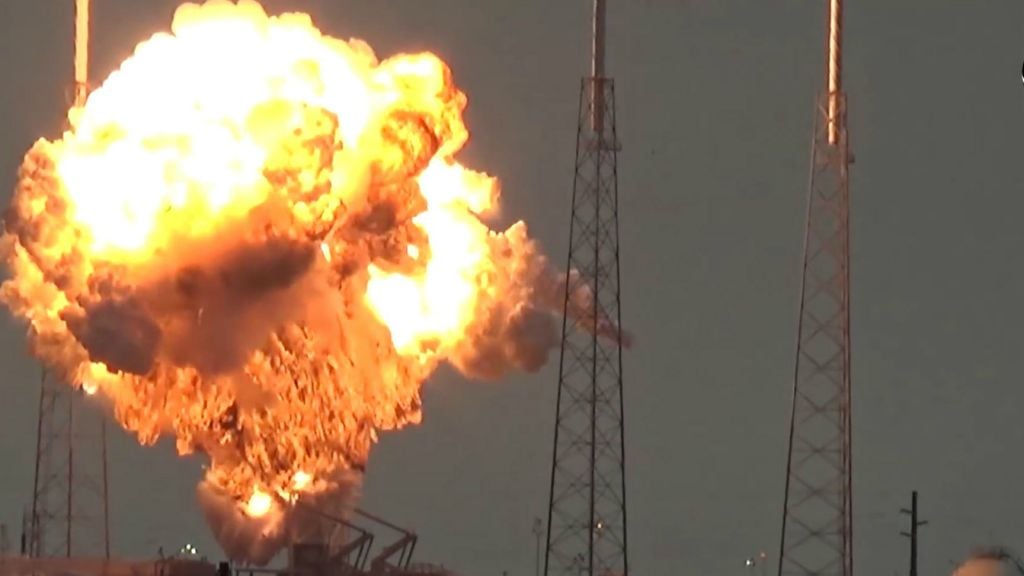
Elon Musk’s SpaceX company announced Monday that it had found the cause of a September launch pad explosion that destroyed a $300 million Israeli communications satellite.
The company’s Falcon rockets have been grounded since the September 1 explosion. SpaceX said in a statement that it expects to return to flight on January 8.
The statement posted on the SpaceX website on said the explosion was caused by the failure of one of three helium tanks, known as composite overwrapped pressure vessels or COPVs, inside the liquid oxygen tank in the rocket’s second stage. The loose liquid oxygen triggered a fuel explosion.
The investigation was overseen by the Federal Aviation Administration, the US Air Force, the National Aeronautics and Space Administration, and the National Transportation Safety Board.
The unmanned SpaceX Falcon 9 rocket was in the midst of a routine fueling test for its scheduled launch when it exploded. The explosion was felt throughout NASA’s Cape Canaveral, Florida facility and for several miles around.
The rocket was scheduled to hoist into orbit the Amos 6 satellite, built by Israel Aerospace Industries and owned by Spacecom Ltd. in partnership with Eutelsat Communications of France.
It was expected to operate for 16 years in part on behalf of Facebook and bring Internet connectivity to sub-Saharan Africa and television service to providers in Europe and the Middle East. Facebook CEO Mark Zuckerberg announced the project in June 2015.









The Times of Israel Community.