

Terror victim Ezra Schwartz posthumously inducted into Jewish frat
Father, Ari, says AEPi ceremony at Rutgers University was unique because it ‘represents who he could have been’
 Add ToI as a Preferred Source on Google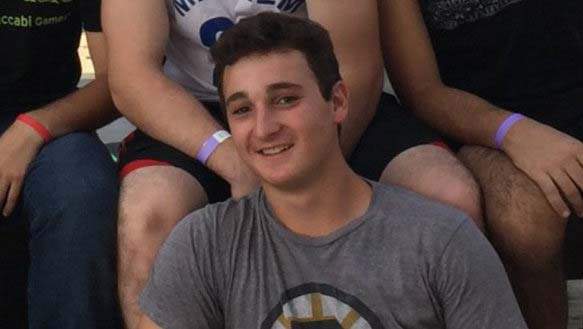
Ezra Schwartz, who was killed by a Palestinian terrorist in Israel in November 2015, was inducted posthumously into the Alpha Epsilon Pi fraternity at Rutgers University.
The induction ceremony was held Sunday night, at the start of Memorial Day in Israel, which commemorates fallen soldiers as well as victims of terror.
At the Sunday ceremony, Ari Schwartz, the father of Ezra, was inducted as an honorary brother of the Rho Upsilon chapter of the Jewish fraternity, which has chapters throughout the United States and around the world.
Ari Schwartz said at the ceremony that unlike others in his son’s memory since he died, the fraternity ceremony “represents who he could have been,” the news website MycentralJersey reported.

“He could have been sitting here. He could have been roommates with one of you,” he said,
“It means a lot,” Ari Schwartz said, according to the news website. “It really does. It seems like the entire world has reached out to us in order to support us through this tragedy. AEPi’s gesture today is another example of that. I very much appreciate the gesture of inducting me into AEPi as well. Now, I have something else I share in common with Ezra.”
Ezra Schwartz, from Sharon, Massachusetts, was on a gap year studying at a yeshiva in Israel. He was to start business school at Rutgers University in New Jersey in the fall of 2016.
He was killed when Mohammed Abed Odeh Harub opened fire near Alon Shvut in the Etzion bloc of the West Bank on a minivan full of students and teachers from Yeshivat Ashreinu in Beit Shemesh, who were volunteering to clear a nearby park. Three other people were killed in the attack. Harub was sentenced to four life terms in jail for the murders.










The Times of Israel Community.