

Terrorism, race, religion: Defining the Las Vegas shooting
Investigators struggle to uncover gunman Stephen Paddock’s motive, sparking debate over what to call the massacre
 Add ToI as a Preferred Source on Google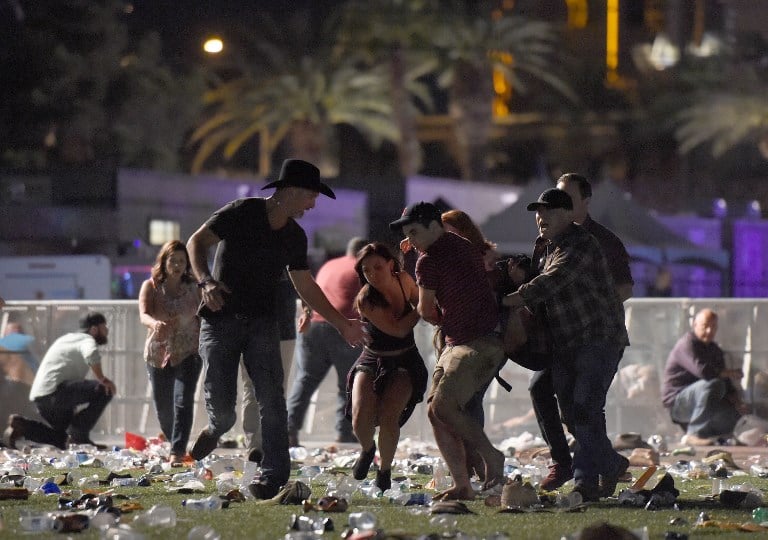
AP — The mass shooting in Las Vegas is the deadliest in modern US history, but is it terrorism?
While much will hinge on the motives of a white gunman attacking a mostly-white country music crowd, that uncomfortable question also hits at some of America’s most divisive issues: race, religion and politics.
The FBI said Monday that the 64-year-old shooter, identified as US citizen Stephen Paddock, had no connection to an international terrorist group. The Islamic State group earlier claimed responsibility, saying Paddock was a recent convert.
But beyond the claim, which offered no proof, the shooter’s motives are unclear and little was known immediately beyond his name and his choice of target.
“Just because we rush to ascribe motive when the shooter is Muslim doesn’t mean we should rush to ascribe motive when the shooter is white,” Shadi Hamid, a fellow at the Brookings Institute think tank and author of “Islamic Exceptionalism,” wrote in a tweet Monday.
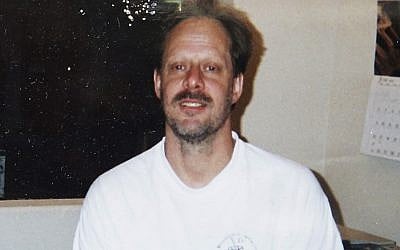
Paddock, from Mesquite, Nevada, apparently killed himself as police closed in on his hotel room. The lack of known motive so far clouds whether the shooting meets traditional definitions of terrorism. Those generally include having a political, economic, religious or social goal; and using violence to convey a message to a broader audience than just the victims.
The absence of information leaves many to fall back on a debate that has roiled the United States since even before Timothy McVeigh used a truck bomb against a federal building in Oklahoma City in 1995.
McVeigh was convicted not of terrorism, but of using a weapon of mass destruction and of murder for the deaths of eight federal law enforcement officers who died in the blast, which killed a total of 168 people.
At well over 50 dead, Sunday’s toll surpassed that of the June 2016 shooting at Orlando’s Pulse nightclub, which killed 49 people. The Orlando shooting was carried out by Omar Mateen, a 29-year-old US citizen who claimed allegiance to the Islamic State jihadist group and was killed by police. Then American president Barack Obama called it “an act of terror and an act of hate.”
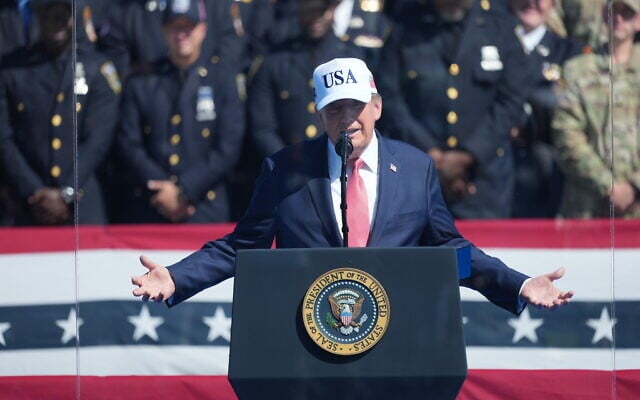
Within hours of the Pulse shooting, then-candidate Donald Trump sent a self-congratulatory tweet “for being right on radical Islamic terrorism.” On Monday, as president, Trump offered condolences to victims and their families and called the shooting “an act of pure evil.”
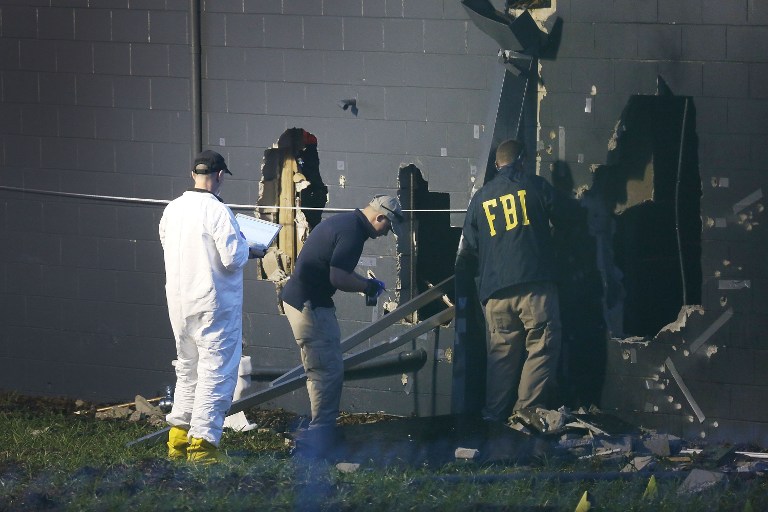
Outside the US, recent attacks that have resulted in terrorism charges include the November 2015 Islamic State attacks in Paris, which killed 130, and the 2011 rampage by Norwegian mass killer Anders Breivik, a neo-Nazi who gunned down 77 people in 2011.
Ahead of Monday’s shootings, Randall Law, who wrote “Terrorism: A History,” said he believed there is a racial component to the United States’ reluctance to clarify or prosecute with domestic terror laws.
Many Americans, he said, think only “people with foreign names … and people with dark skin funding foreign ideologies” would commit such horrific acts.
He adds that different branches in the US federal government — from Homeland Security to the FBI to the State Department — have “multiple definitions of terrorism.”
“It’s a truism that nobody can quite agree on how to define terrorism,” he said.
Law said there are complex arguments against drawing up a comprehensive definition of domestic terrorism in law. First Amendment concerns arise in legal discussions about making domestic terrorism a crime. Many worry the federal government would criminalize speech, religion or ideology.
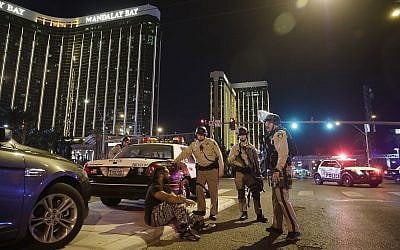
Regardless, Nevada law has a clear definition of terrorism: “The use or attempted use of sabotage, coercion or violence which is intended to cause great bodily harm or death to the general population.”
The mayor of Las Vegas, Carolyn Goodman, made no reference to that on Monday, simply describing the shooter as “a crazed lunatic, full of hate.”
Whether a crime is called terrorism has important practical implications, as Connecticut Representative Jim Himes, whose state endured the mass killing at Sandy Hook elementary school, in 2012, pointed out.
“Now we’re obsessing over whether the (Nevada) carnage was ‘terrorism,'” he wrote in a tweet. “If we decide it is, we’ll mobilize untold resources. If not, nothing.”







The Times of Israel Community.