

The day Obama awarded Iran hegemony in the Middle East
Op-Ed: July 14, 2015 may prove to be one of the darkest days in the region’s history, especially for moderate Arab Sunni states and Israel

Avi Issacharoff, The Times of Israel's Middle East analyst, fills the same role for Walla, the leading portal in Israel. He is also a guest commentator on many different radio shows and current affairs programs on television. Until 2012, he was a reporter and commentator on Arab affairs for the Haaretz newspaper. He also lectures on modern Palestinian history at Tel Aviv University, and is currently writing a script for an action-drama series for the Israeli satellite Television "YES." Born in Jerusalem, he graduated cum laude from Ben Gurion University with a B.A. in Middle Eastern studies and then earned his M.A. from Tel Aviv University on the same subject, also cum laude. A fluent Arabic speaker, Avi was the Middle East Affairs correspondent for Israeli Public Radio covering the Israeli-Palestinian conflict, the war in Iraq and the Arab countries between the years 2003-2006. Avi directed and edited short documentary films on Israeli television programs dealing with the Middle East. In 2002 he won the "best reporter" award for the "Israel Radio” for his coverage of the second intifada. In 2004, together with Amos Harel, he wrote "The Seventh War - How we won and why we lost the war with the Palestinians." A year later the book won an award from the Institute for Strategic Studies for containing the best research on security affairs in Israel. In 2008, Issacharoff and Harel published their second book, entitled "34 Days - The Story of the Second Lebanon War," which won the same prize.

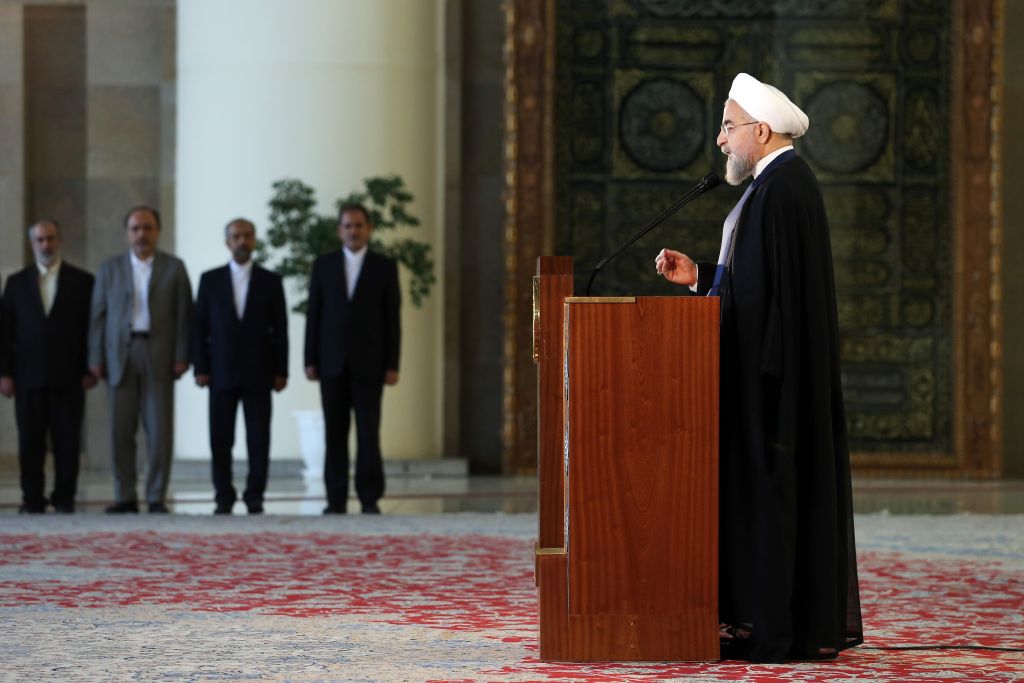
Iranian President Hasan Rouhani’s passionate speech Tuesday hailing the nuclear deal with world powers underlines the scale of Iran’s achievement facing the West and the Middle East, and his own victory against more conservative forces at home. As Rouhani put it, “Today we stand at a fateful, historic crossroads for our state and for the revolution. It is the start of a new chapter.”
The agreement Iran struck with the P5+1 powers ensures Rouhani’s political survival; more significantly, it ensures the survival of the ayatollah regime.
US President Barack Obama and Secretary of State John Kerry essentially determined the future of the Middle East, and established Iran’s hegemony in the region at the expense of Saudi Arabia and the Sunni world. Rouhani and Iran’s Supreme Leader Ali Khomeinei, who approved the accord, understood that they didn’t need to get the bomb in order to become the key regional power. It would be enough to become a nuclear threshold state with billions of additional dollars at its disposal and to achieve greater influence in the Middle East.
True, the agreement could have been far worse in terms of Iran’s direct nuclear weapons ambitions. It doesn’t stop Iran’s nuclear program, but it slows and delays it. If it honors the deal, Iran will not be able to manufacture a nuclear bomb for a decade, and it will remain under an arms embargo for the next five years.
Will the Iranians honor the deal? That’s a different question. International inspectors are supposed to supervise it, but it’s doubtful that they will succeed in doing so. After all, the Iranians have deceived the international community in the past.
Israel needs to be honest, too. The alternatives to an agreement were probably worse. The sanctions regime delayed the Iranians a little, but they were still just months from producing sufficient enriched uranium for a bomb. Even with sanctions in place, the Iranians did not stop enrichment; the new imposes a breakout time of one year from breakout capability.
Another alternative, an American or Israeli military strike, would have led to all-out regional war, including missile attacks on Israel from Hezbollah and others. The danger of war has not been averted, but it has been postponed.
The greater danger of this accord, however, is that far from being the least of all evils, it is the very epitome of evil when it comes to the future of the Middle East. It has determined the result of the Sunni-Shiite struggle; July 14, 2015 is likely to resonate as one of the darkest days in the history of this region, especially as regards the moderate Arab Sunni states.
For several years now, countries such as Egypt, Saudi Arabia, Jordan and the Gulf States have been struggling against Islamic extremism from the likes of Al Qaida and the Islamic State on the one hand, and the Iranian Shiite axis on the other. Now that struggle will become far more complicated.
Iran emerges from this accord strengthened, stable and with endless resources that will be directed to weaken those countries by every means possible. By bringing hundreds of millions of dollars to Iran, this agreement will enable the regime to extend its influence throughout the region, to establish areas of influence even in areas where it has hitherto not been involved. That adds up to the worst possible news for the Saudi royal family, the Egyptian presidency and of course, for Israel.
The clearest current example of this is that after four months when Iran delayed transferring financial assistance to Hamas and Islamic Jihad because of budgetary concerns, it has in the last few days renewed the flow of money to Palestinian terror groups in Gaza — precisely because the accord gave it the confidence to do so.
It is hard to believe that anybody in this region — Israeli, Palestinian, Arab or Iranian — was surprised that an agreement was reached. Both sides, and especially the two key players, the US and Iran, wanted it. President Obama sought a foreign policy achievement. Rouhani and Foreign Minister Zarif wanted the support of their people.
And both sides will reap the benefits. Obama will win public approval for the agreement, and Rouhani will likely be re-elected president in 2017. It is the people of the Middle East who will pay — and mainly the Sunnis and the Israelis.
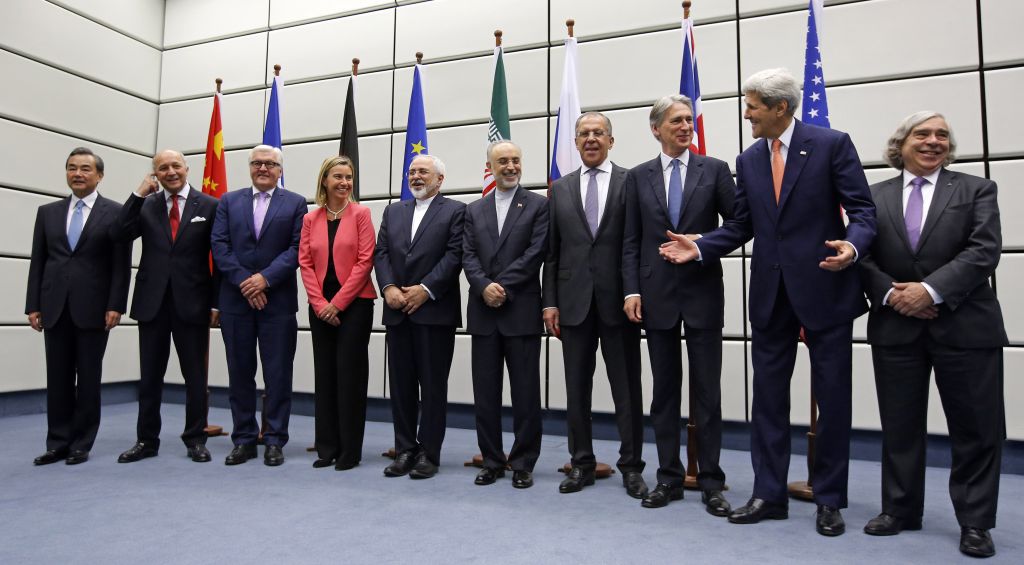
One can understand why Obama wanted an achievement like this, that would push Iran away from a nuclear bomb. But the price is extremely heavy. To some extent Obama chose the “Great Satan,” Iran, over the “Little Satan,” Islamic State. That is to say, he allowed some 20,000-30,000 IS fighters to push him into the arms of one of the biggest military powers in the region, with hundreds of thousands of soldiers and a devastating military arsenal that can also hit Europe.
If anybody thought that it was only in the Middle East that logic and common sense can be absent, they discovered on Tuesday that those problems also apply on Pennsylvania Avenue. Somebody in the White House forgot their elementary school arithmetic.




The Times of Israel Community.