 Add ToI as a Preferred Source on Google
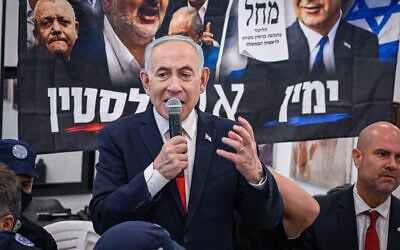
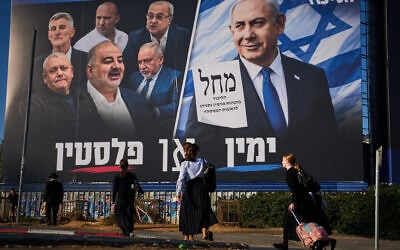
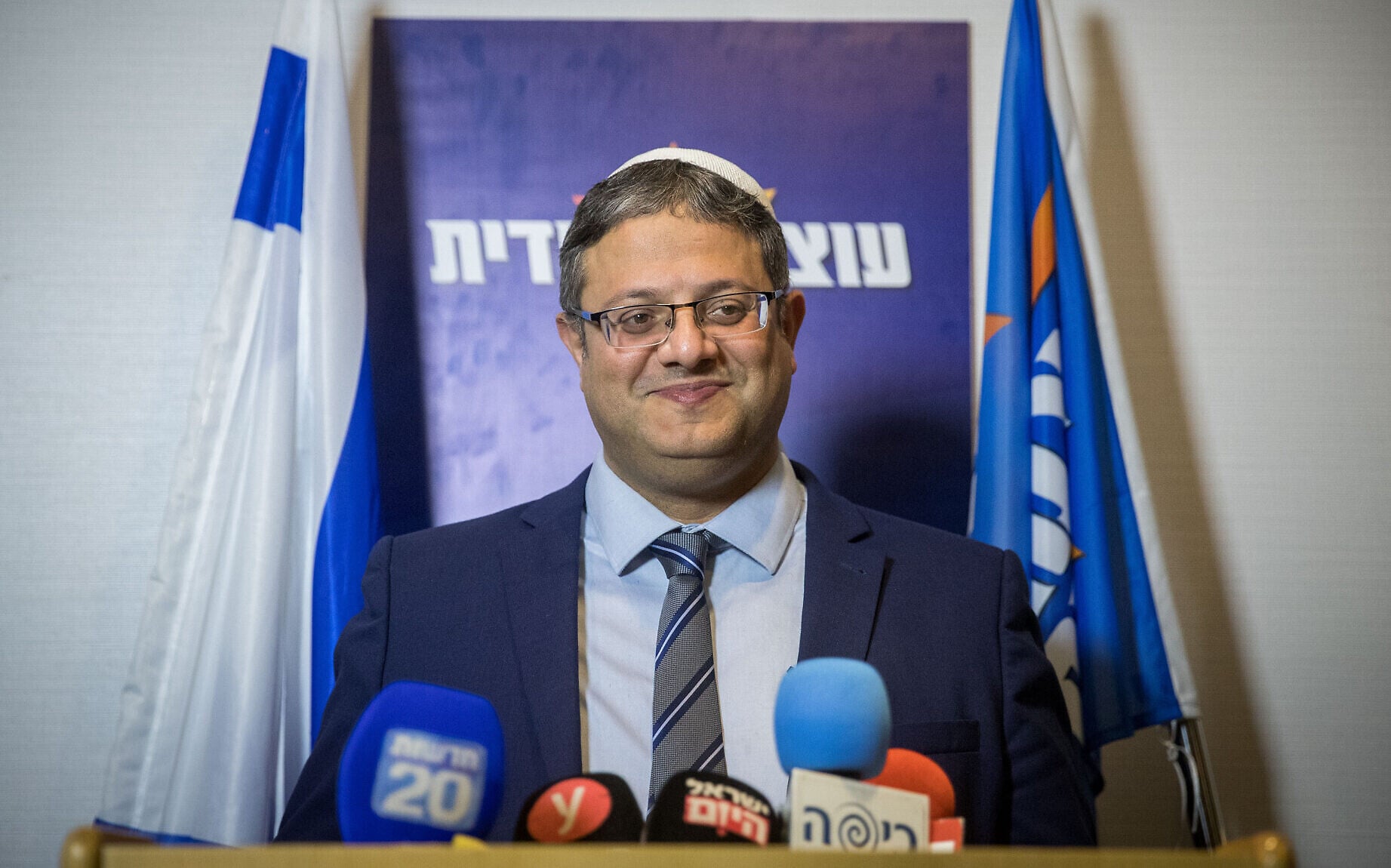
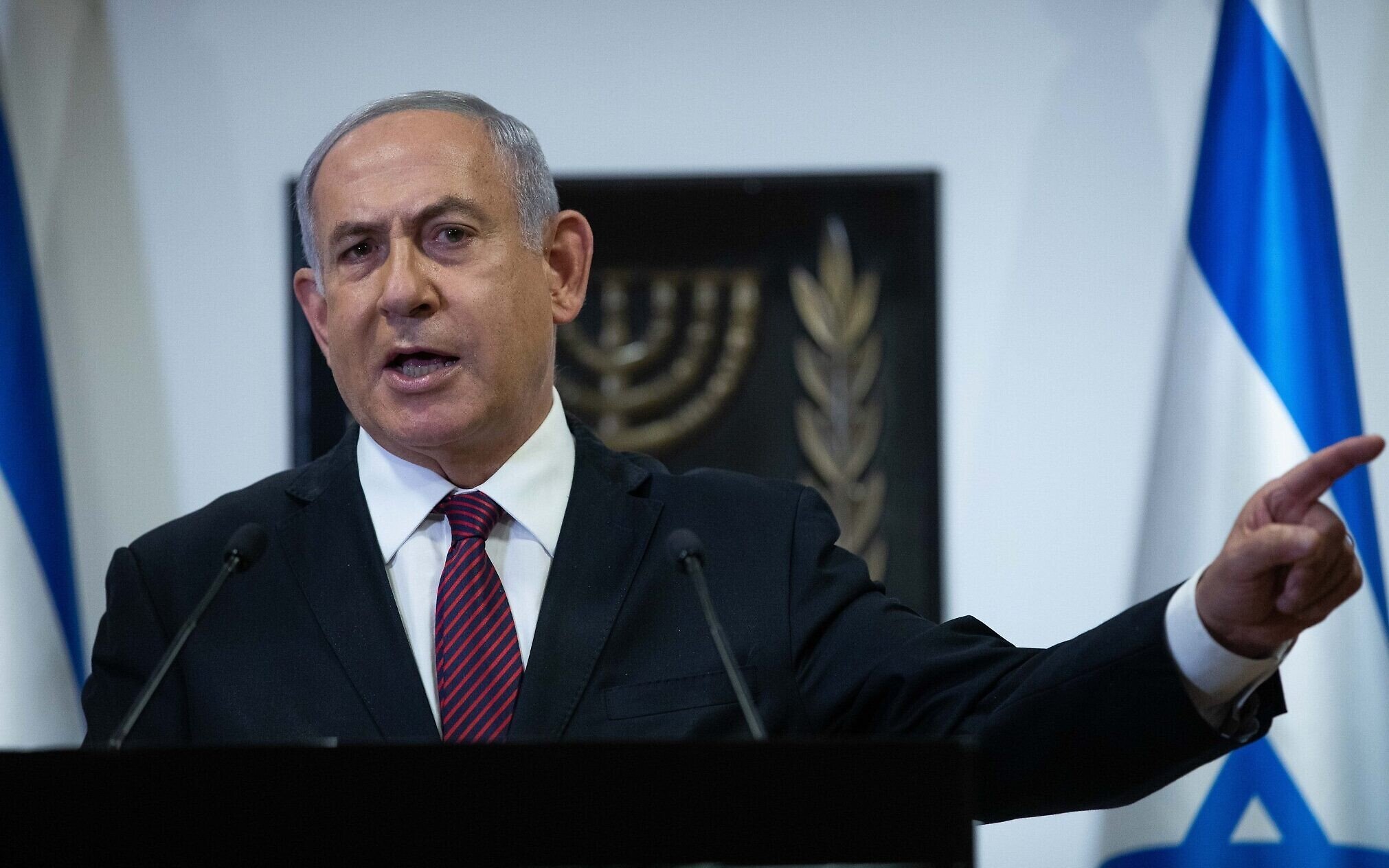
Prime Minister Benjamin Netanyahu has invested hours of effort over the last two weeks in ensuring that Otzma Yehudit, Israel’s most extremist right-wing faction — at least, the most extremist faction not actually outlawed on grounds of racism or support for terrorism — succeeds in getting elected to the next Knesset.
Betzalel Smotrich’s right-wing Religious Zionism faction has been polling below the 3.25-percent electoral threshold. If Smotrich fails to clear that line, as many as three Knesset seats that would have gone to the pro-Netanyahu right could be lost.
Facing a race that polls suggest may be very close indeed, Netanyahu has looked for ways to bolster Smotrich’s election showing.
His solution: Encourage Smotrich to unify his slate with that of the extremist Otzma Yehudit. Each has polled recently at slightly above the 2% mark. A union, Netanyahu hopes, might push both over the threshold, adding four or even five seats to the right-wing camp in the 24th Knesset.

Netanyahu’s eagerness for the union, including promises of cabinet posts and the assurance to Smotrich that he will be able to appoint one lawmaker to Likud’s slate – compensating for a seat lost to Otzma Yehudit on his own list – did the job.
Smotrich and Otzma Yehudit leader Itamar Ben Gvir signed a shared slate agreement on Wednesday.
The effort makes perfect sense in terms of electoral math. But as many have already noted, there’s a grotesque moral compromise underlying it all
The effort makes perfect sense in terms of electoral math. But as many have already noted following Netanyahu’s past efforts to help Otzma Yehudit win seats in parliament, there’s a grotesque moral compromise underlying it all, one Netanyahu’s opponents and supporters alike, including Likud lawmakers, all acknowledged on Thursday.
Opposition leader Yair Lapid didn’t mince words: “The fact that Netanyahu is doing everything to push Kahanists and terror supporters who glorify Baruch Goldstein into the Knesset is a national disgrace. He has no shame,” he tweeted.
Yair Lapid:
“The fact that Netanyahu is doing everything to push Kahanists and terror supporters who glorify Baruch Goldstein into the Knesset is a national disgrace. He has no shame.” https://t.co/ZcvBckxn0B
— Yesh Atid English ???? (@YeshAtidEnglish) February 3, 2021
Likud Knesset Speaker Yariv Levin, in an interview with Israel Radio Thursday, prefaced his defense of Netanyahu’s efforts to “unite all the forces” of the right with, “of course, Itamar Ben Gvir’s path isn’t my path and his views aren’t my views.”
In 2019, when Netanyahu engineered a similar deal to try to get Otzma Yehudit into the Knesset, even the American Israel Public Affairs Committee broke from its typical aversion from commenting on internal Israeli politics, announcing that it has “a longstanding policy not to meet with members of this racist and reprehensible party.”
Poster of a terrorist
It’s hard to exaggerate the extremism of Ben Gvir’s views, past and present.
In his teens, Ben Gvir led the youth wing of the racist Kach movement founded by Rabbi Meir Kahane until it was outlawed following the 1994 massacre by Kach activist Baruch Goldstein of 29 Muslim worshipers at the Tomb of the Patriarchs in Hebron.
That record of extremist activism, including his leadership role in Kach at an early age, led the IDF to reject him for military service.

In the run-up to the assassination of former prime minister Yitzhak Rabin, the young Ben Gvir was among the most vociferous activists orchestrating attacks on Rabin’s motorcade, calling the prime minister a “traitor” and threatening him openly. He helped organize a protest-turned-attack on Rabin’s motorcade in 1995 in which the car’s emblem was ripped off by the assailants.
As he told a Channel 1 news crew at the time, holding the emblem in front of the camera: “People managed to take this emblem off the car. The emblem is a symbol that symbolizes that just as we could get to this emblem, we can get to Rabin.”
נתניהו משקיע מאמצים חסרי תקדים כדי להכניס את האיש הזה לכנסת.
"כמו שהגענו לסמל, אנחנו יכולים להגיע לרבין"צפו עד הסוף בבקשה והפיצו, כי יש מאות אלפי ישראלים שלא מכירים את הקטע הזה: pic.twitter.com/5n2y3sgLH9
— שלום עכשיו (@PeaceNowIL) August 1, 2019
A short time after the broadcast, Rabin was assassinated by a far-right Jewish activist opposed to his policies.
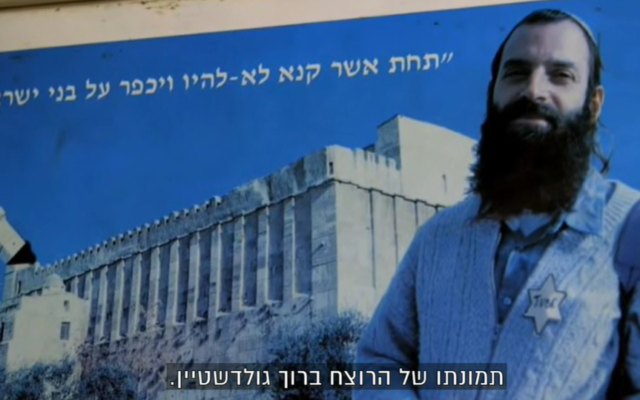
But Ben Gvir’s extremism didn’t end in the mid-1990s. Ahead of the March 2020 election, Yamina leader Naftali Bennett vetoed Ben Gvir’s inclusion in his right-wing slate. One reason cited by Bennett: Ben Gvir had a portrait of Baruch Goldstein hanging in his living room.
Ben Gvir reportedly took down the portrait in an unsuccessful attempt to mollify Bennett. It is not clear if the portrait was returned to his living room wall after the election.
Black sheep
Yet Ben Gvir poses another problem for Netanyahu. Beyond the moral and public-relations costs of openly working to legitimize and enhance Ben Gvir’s extremist politics, there’s the simple fact that Ben Gvir can’t be trusted to reciprocate the favor.
Asked by the religious-right Srugim website on Thursday about his future membership in a Netanyahu-led coalition, Ben Gvir sounded less than grateful for Netanyahu’s help. Netanyahu, he explained “always has excuses” for failing to establish a “true right-wing government.”
“Will you recommend Netanyahu for prime minister?” Srugim’s Bentzi Rubin asked.
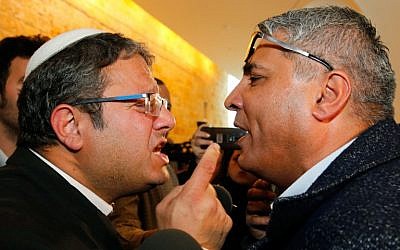
“I’ll recommend whoever can form a right-wing government,” he replied.
Likud doesn’t want to be painted with the Ben Gvir brush, and every defender of Likud on Thursday took the same line. To paraphrase: “Ben Gvir is terrible, sure, but leftists willing to sit with Balad MKs who support Palestinian terrorists don’t have a right to criticize.”
As historian and right-wing pro-Netanyahu pundit Gadi Taub put it, “I don’t have any good words to say about Itamar Ben Gvir, but those now publicly fainting over their moral horror at racism, while explicit anti-Jewish racism on the other side of the map appears to them forgivable, are themselves distinguishing between one kind of blood and another. They’ve lost the moral right in my view to publicly faint. Spare us your histrionics.”
Even Betzalel Smotrich himself is uncomfortable with the union and tried to avoid it until the last minute. Smotrich has sought to transform his far-right image into one of a competent mainstream leader and only agreed to hitch his horse to Otzma Yehudit when the polls showed that rebranding hadn’t worked.

Smotrich “has worked hard to improve his public image,” noted Atara German, political analyst for the right-wing newspaper Makor Rishon, on Thursday. “But his union with Ben Gvir sets him back.”
Tangled webs
Why, then, is Netanyahu sacrificing so much for so little? Why tie himself to extremists even the religious-right dislikes and his most avid supporters struggle to defend? Ben Gvir may carry Smotrich over the threshold, and then, without batting an eyelash, refuse to support a Netanyahu-led government if he believes it isn’t sufficiently right-wing.
Netanyahu may also be aiming for a bigger prize, a larger, broader coalition. And having Ben Gvir as a bogeyman could get him there
The simplest explanation is because even if Ben Gvir goes to the opposition, Netanyahu still has three reliable seats from Smotrich and whoever else he brings in. Seats don’t grow on trees and if Netanyahu wants to stay in power, he’ll need every one he can scrounge up.
But he may also be aiming for a bigger prize, a larger, broader coalition. And having Ben Gvir as a bogeyman could get him there.
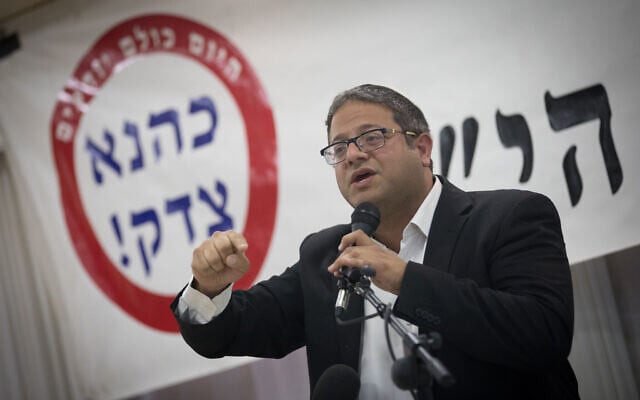
It’s happened before, with Ben Gvir’s former boss, one-time MK and ex-Otzma Yehudit head Michael Ben Ari.
Ben Ari entered the Knesset in 2009 as the fourth-placed member of the four-seat National Union faction. He appointed Ben Gvir, a fellow Kahanist and activist, as his parliamentary aide.

Following the February 2009 election, Netanyahu was given the nod by President Shimon Peres to try to form a coalition. The Israeli center-left, then represented by Kadima and Labor, announced they would not join it.
Netanyahu signed his first agreement with Yisrael Beytenu, his second with Shas, bringing his coalition to 53 seats. Netanyahu now had a path to a majority: Jewish Home would give him three more seats, and United Torah Judaism another five, for a razor-thin majority of 61 seats.
He then turned to Labor’s Ehud Barak, who led a 13-seat faction. As Laborites now remember it, Netanyahu’s case might be paraphrased thusly: “I have enough votes for a rightist-Haredi coalition, but I want a more balanced government. Join me, Ehud, so I can build a government not dependent on far-right National Union and its Kahanists.”
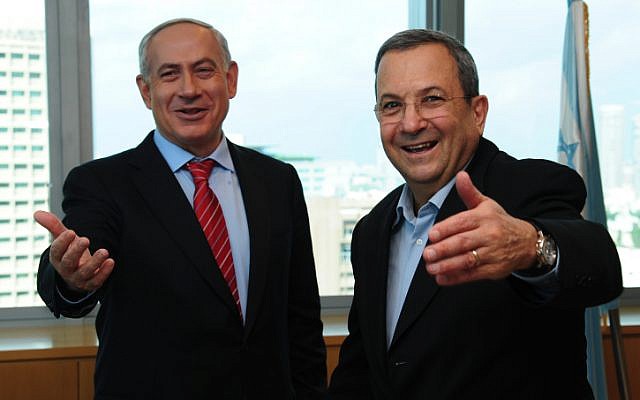
It worked. Barak leaped at the chance, becoming Netanyahu’s defense minister and an avid early supporter of Netanyahu’s Iran policy. Netanyahu used Ben Ari to help make the case for Labor to join and “balance” his government. Barak in turn made that same case — the responsibility of the left to keep the Kahanists out of the halls of power — to convince Labor’s central committee to approve the party’s joining the coalition by a vote of 680 to 507.
Could that explain Netanyahu’s strange eagerness to get Kahanists elected to the 24th Knesset – Kahanists who won’t be loyal to him in return, and whose legitimation by him will be remembered by his many critics for a long time to come?
In 2009, a Kahanist got himself elected to the Knesset without Netanyahu’s help, but his very extremism proved a useful card in Netanyahu’s negotiating hand. Twelve years later, could the prime minister be trying to engineer a similarly narrow win dependent on extremists — as leverage to pressure centrists or even leftists to take their place and balance out his next government?

The Times of Israel Community.