

An offensive film and its fallout
Why should the American administration apologize for a film it never produced, asks one columnist
Elhanan Miller is the former Arab affairs reporter for The Times of Israel
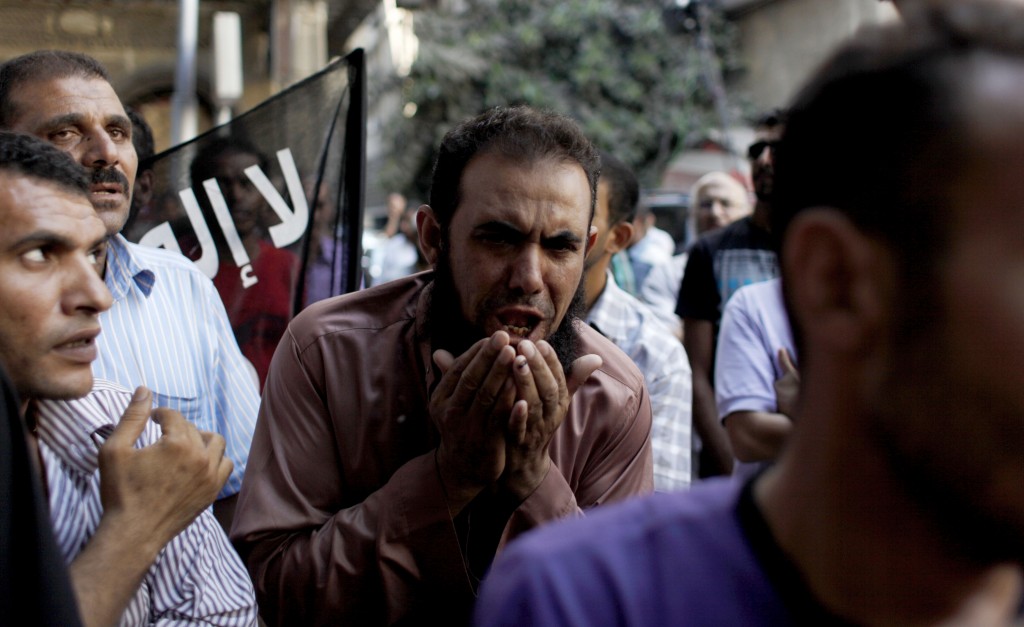
The killing of American ambassador to Libya Chris Stevens and three embassy staffers on Tuesday night leads the news in all major Arab dailies Thursday.
“The attack on the American consulate opens the issue of jihadists in Libya,” reads the headline of London-based daily Al-Hayat. The daily reports that although the incident is not expected to ruin US-Libyan diplomatic relations in light of the widespread Libyan condemnation of the attack, the US intends to send spy planes to eastern Libya to collect intelligence on jihadist activity in the region.
The daily claims that the film was produced by an “American-Israeli” last year but no one paid any attention to it until a number of expatriate Egyptian Copts translated it to Arabic, evoking “a wave of rage among Muslims worldwide.”
Egyptian President Mohammed Morsi instructed his embassy in Washington to take legal action against the producers of the film
Saudi-owned daily A-Sharq Al-Awsat reports that the “film protests are widening,” noting that the killing of Ambassador Stevens has sparked a wave of anger in the US despite the conciliatory speech of President Barack Obama who contended that the event will not affect bilateral relations.
The daily reports that protests against the film took place in Tunis, Casablanca, Khartoum and Gaza. Afghanistan decided to block YouTube, which excerpts from the film.
Egyptian President Mohammed Morsi instructed his embassy in Washington to take legal action against the producers of the film, A-Sharq Al-Awsat reported, as hundreds of Egyptians demonstrated outside the American Embassy in Cairo Wednesday, burning the American flag. The Muslim Brotherhood called for mass protests across the country following Friday prayers tomorrow.
‘The storming of the two embassies in Cairo and Benghazi… is a reminder to the American administration that its country is still hated among wide sectors of the American and Islamic nations’
Al-Azhar, the highest Islamic teaching institution in Egypt, issued a statement Wednesday condemning the film and arguing that it was not “regular people” who stood behind the film but rather “the institutions of colonial hegemony” including “Zionist political institutions.”
Dubai-based news channel Al-Arabiya reports that Sam Bacile, the “Israeli-American” producer, writer and director of the film is unknown to its 80 actors and crew members.
Al-Quds Al-Arabi editor-in-chief Abd Al-Bari Atwan claims that while the attack on the American Embassy in Cairo was a spontaneous expression of anger, the attack on the consulate in Benghazi was premeditated to coincide with the 9/11 anniversary.
“The storming of the two embassies in Cairo and Benghazi… is a reminder to the American administration that its country is still hated among wide sectors of the American and Islamic nations, despite its claims and interventions alongside the Arab Spring revolutions,” Atwan writes.
‘Why should the American administration apologize for a film produced by an imbecile, or an ignorant group and not by the the American administration?’
A-Sharq Al-Awsat editor-in-chief Tareq Homayed, on the other hand, criticizes the protests as an emotional overreaction, claiming that most of the protesters in Cairo were not even aware of the offensive film.
“Does it make sense for the world to go up in flames every time some silly person offends the Islamic faith or one of its symbols?” asks Homayed, adding that the “problem in Egypt is deeper than an offensive film,” and that wild protesters reacted similarly to the arrest of an Egyptian national in Saudi Arabia a few months ago.
“Why should the American administration apologize for a film produced by an imbecile, or an ignorant group and not by the American administration? Would it be reasonable for the Obama administration to ask the Egyptian government or people to apologize for the fact the Ayman Zawahiri, the current leader of al-Qaeda, is Egyptian? This is unreasonable and unacceptable.”
Egypt to Iran: Give up Assad for relations upgrade
A-Sharq Al-Awsat reports that Egypt is trying to entice Iran to forgo its ally Bashar Assad by easing the international isolation of Iran and resuming full diplomatic relations with it, relations which were all but severed almost 30 years ago.
Al-Azhar, the highest Islamic teaching institution in Egypt, issued a statement Wednesday condemning the film and arguing that it was not ‘regular people’ who stood behind the film but rather ‘the institutions of colonial hegemony’ including ‘Zionist political institutions’
Meanwhile, the former head of the opposition Syrian National Council tells the daily that Egypt’s proposal to include Iran in negotiations over the future of Syria is futile, since “Iran is part of the problem and not part of the solution.”
International envoy to Syria Lakhdar Brahimi is expected to land in Damascus Thursday, his first trip to Syria since assuming his position. He will reportedly meet with President Bashar Assad on Friday.







The Times of Israel Community.