

Empowering olim — so they’ll stay
Five years after presenting his first plan to ease aliyah, Guy Seemann on Wednesday launches Kol Oleh, a movement to give olim issues prominence in the Tel Aviv elections campaign
 Add ToI as a Preferred Source on Google
Michael Bassin is a founding member of the Gulf-Israel Business Council, a co-founder at ScaleUpSales Ltd, and the author of "I Am Not a Spy: An American Jew Goes Deep In The Arab World & Israeli Army."
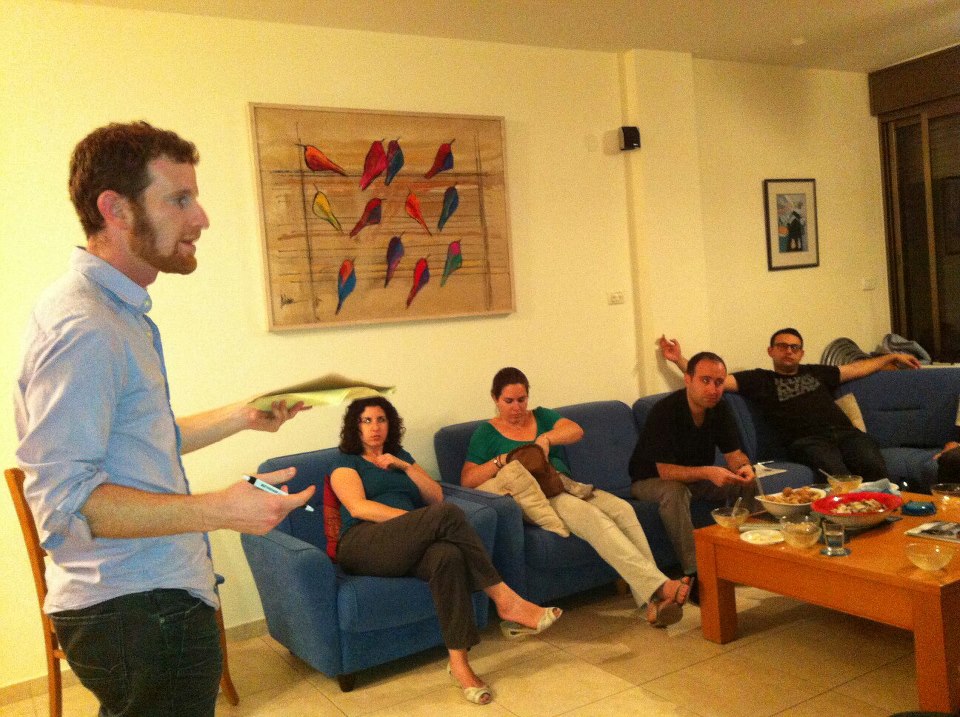
In February 2008, a recent Jewish graduate of American University named Guy Seemann came to Israel for five months on an internship program with Masa Israel Journey, an umbrella organization of long-term programs in Israel for Jewish young adults.
Raised in a Reform Jewish community in Hillsboro, New Jersey by an Israeli mother and an American father, Seemann, like many Masa participants, was keenly interested in exploring his Jewish identity and seeing what life in Israel had to offer.
“I went on Birthright trips in college as both a participant and as a group leader,” Seemann explained. “There were times when I would be asked by my participants about various historical sites and Jewish topics. More often than not, I couldn’t offer up any answers. That bothered me. So I knew I had to come back eventually to find out more about this place, my heritage, and decide what role Israel would play in my life.”
By day, Seemann interned at the Government Press Office, learning how politics and the press work together. By night, he studied Hebrew, learned Torah, and spent hours conversing with Israelis about every facet of their lives, including their opinions about their own society. Seemann identified with the people he was meeting and with the life he was leading. It didn’t take long for him to consider making aliyah himself.
“But when I began to approach the topic of aliyah seriously, I realized how big a jump aliyah is from the world of structured programs,” Seemann said. “Programs like Masa provide a nice sheltered bubble for an experience. Unfortunately, they don’t prepare you for building a real life in Israel. I decided that the Jewish Agency, Masa, and even the Prime Minister’s Office needed to be shown that something needed to be done to help bridge this gap.”
‘The statistics aren’t clear on what percentage of young olim with professional degrees leave Israel within 3 years of making aliyah, but everyone’s sure it’s high. It could even be as high as fifty percent’
And so, Seemann surveyed 400 Masa participants about what they felt they needed in order to consider potentially making aliyah and staying in Israel. He presented the survey’s findings at the Prime Minister’s Office to representatives of former prime minister Ehud Olmert, the Jewish Agency, and the CEO of Masa.
“People wrote that they wanted information on jobs, social networks, more Hebrew instruction, IDF service, and bureaucracy,” Seemann recounts. “I suggested that the government automatically grant every Masa participant a one-year work visa, housing options, and connections to job networks.”
“I told them that if the people telling young Jews to make aliyah don’t prepare us two months beforehand, it’s a disgrace. The information we get before making aliyah is wholly insufficient. Only when people do it do they find out what’s really going on and start to learn from their mistakes.”
“I emphasized to them then that people considering aliyah don’t have a problem going through hardship. They just want to look forward to a smooth aliyah process and absorption so they gain the tools to create the best lives for themselves.”
Since Seemann finished his Masa internship, he’s proven he has the tools to succeed in Israel. Following a three-month break in the US where he worked for the Obama presidential campaign as a special projects coordinator, Seemann officially made aliyah in July 2009, and was immediately drafted by the Israeli army into the International Cooperation unit of the Civil Administration.
After his service, Seemann found his way back to the Prime Minister’s Office as junior advisor to National Security Adviser Yaakov Amidror. In January 2012, he was sent to Haiti for 10 months to serve as the director of all Israeli relief organizations operating there, post-earthquake. He only returned to Israel, and subsequently to Tel Aviv, this past November.
If the Kol Oleh launch party sees massive turnout, local political parties may begin to actively court the olim vote
While Seemann may have been able to rise to the top of his chosen professional field of government in the five years since he first came to Israel with Masa, he believes his story is more of the exception than the rule.
“The statistics aren’t clear on what percentage of young olim with professional degrees leave Israel within 3 years of making aliyah, but everyone’s sure it’s high. It could even be as high as fifty percent,” Seemann claims.
“The information young, qualified olim don’t receive is detrimental. Olim find themselves making mistake after mistake for two years. They’re tired of making mistakes at that point. Why couldn’t they simply get the information they needed up front so they could do their proper research and begin adequately planning their lives.”
“Many institutions exist to help olim. But I’ve seen that the existing institutions are doing very little to streamline the aliyah and klitah [absorption] processes. In order to change things and effectively advocate for their needs, olim must get politically active. It’s the only way.”
This past March, five years after he first attempted to tackle the issues facing potential olim, Seemann began the process of creating Kol Oleh, a new grassroots Tel Aviv-focused movement whose two stated goals are to bring the ideas that olim have to improve Tel Aviv to the forefront and to help its olim solve the issues they specifically face.
“If there’s anywhere in this country where people can push something forward in a grassroots fashion, it’s Tel Aviv,” Seemann attests. “Tel Aviv is the center of social movements. It brings together a diverse and eclectic group of people from all backgrounds. There are municipal elections here are on October 22. We want the needs of olim to be recognized.”
“In order to succeed, we have to start locally, which is why this is for Tel Aviv only for now. Kol Oleh supporters want to see a representative on city council that understands the issues of olim and who will service as someone whom olim can voice their concerns to and their ideas for building the city.”
Since he began building the movement a few months ago, Seemann has spoken to hundreds of olim and native-born Israelis at dozens of parlor events held at people’s homes. He estimates that he has communicated with over 1,000 people, emailed with 250 people, and garnered 400 likes for Kol Oleh’s Facebook page.
By engaging with Tel Aviv’s residents, Seemann says he and his inner circle of seven volunteers have been able to pinpoint the kinds of practical services Kol Oleh should lobby for with the next Tel Aviv city council.
“We know that what olim need is the creation of one-stop-shop for all olim services,” he says. “The city of Tel Aviv must take up the torch of showing successful absorption is in Israel. This one stop shop would include providing accountants and lawyers to be there to explain to olim how the system works so they don’t necessarily trip over their own feet. It would include providing job counselors to expand information on what jobs exist, who to talk to, and what to do.”
Seemann states that the hardest thing about creating the Kol Oleh movement so far has been convincing olim that by getting involved politically, they can have a massive impact. Until Election Day, Kol Oleh’s cadre of volunteers will be holding multiple events to inform and engage people.
“People have to know who is running, who the parties are, and how to vote,” Seemann emphasizes. “People must be aware of the services the city can provide. Kol Oleh is going to create a list of people pledging to vote on Election Day. We want there to be no less than 7,000 names on it.”
Election Day festivities may still be over three months away, but Kol Oleh’s official launch party is coming up Wednesday July 10 at 9:00 pm at Barbara Frye, a hip pub at the corner of Dizengoff and Frishman. Seemann is convinced that if the launch party sees massive turnout, local political parties may begin to actively court the olim vote and could potentially offer an oleh a place on a party list.
If that were to happen, Seemann is placing himself in the best possible position to be offered that opportunity.
“The top priority for me is the movement,” Seemann insists. “I’ve given up a lot to pursue it and I’d like to take somewhere great. However, if an offer was made to run for city council and it presented a real opportunity to bring the dreams of Kol Oleh to fruition, it would obviously have to be considered very seriously.”









The Times of Israel Community.