

Hadassah’s hospital wars
Hebrew-language papers are dominated by the ongoing crisis between doctors and management at Jerusalem’s pediatric cancer ward
 Add ToI as a Preferred Source on Google
Tamar Pileggi is a breaking news editor at The Times of Israel.
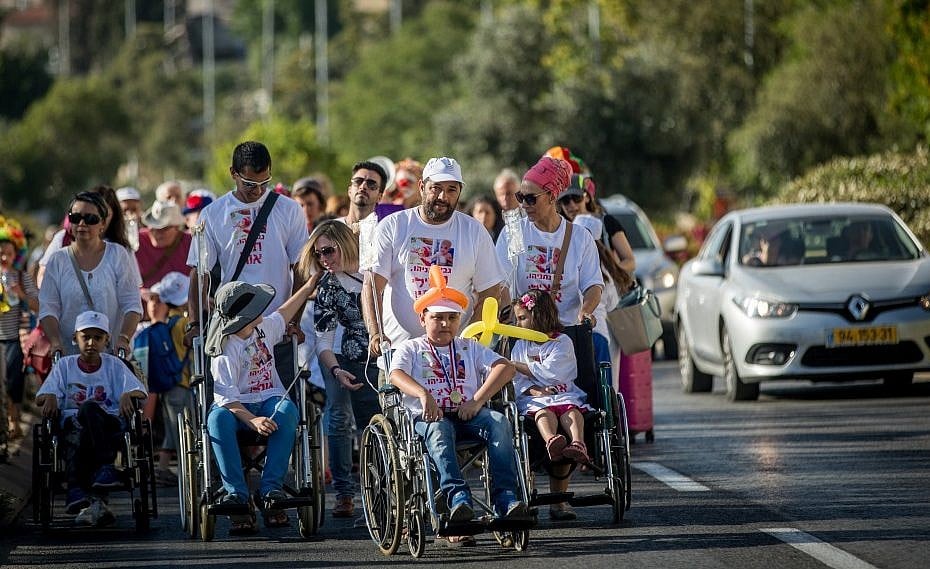
Taking a break from reporting on the latest political scandal to roil Israel, the Hebrew-language media on Wednesday harshly criticizes doctors from Hadassah’s pediatric cancer unit over an ongoing management crisis.
Yedioth Ahronoth‘s front page story claims the dozen or so doctors from the pediatric hemato-oncology ward who quit in recent months never intended to reach a compromise with hospital management.
In what it calls an exclusive — although much of the story was on Channel 2 News on Tuesday evening — the paper reports that one of the chief doctors planned to dismantle Hadassah’s entire hemato-oncology ward and move it entirely to another hospital in Jerusalem.
Under the front page headline “The truth comes out,” Yedioth publishes a series of emails appearing to reveal that Dr. Michael Weintraub was engaged in negotiations with Shaare Zedek management to hire staff from the Hadassah unit, including nurses and social workers.
If his plan had succeeded, the paper says, it would have resulted in the immediate closure of Hadassah’s pediatric cancer ward, and the “massive abandonment of sick children.”
Yedioth charges that Weintraub was driven by personal and professional motivations, and not the wellbeing of his young cancer patients.
Over the last several months, most of the ward’s senior doctors and residents have quit their jobs, leaving only the nurses and a handful of replacement doctors to staff Jerusalem’s only cancer ward for children. The physicians quit over their objection that would allow doctors to operate on pediatric bone marrow transplant patients in the same department as the adult patients, a practice that the resigning doctors said was likely to increase the children’s mortality rate.
Yedioth’s scathing criticism of the former Hadassah doctors includes a prominently featured page 2 op-ed by a bereaved father whose son died of cancer earlier this year.
Avidan Kalfa describes the ongoing management crisis with Hadassah’s doctors as “waking up to a nightmare.”
“I understand the struggle of the parents,” writes Kalfa. “The same parents who received news that no parent ever wants to hear are now being told by their physician who is supposed to be saving their child’s life that if they stay at Hadassah, their child could die.”
The ongoing management crisis is also featured on the front page of Israel Hayom, which highlights victims of the ongoing spat: Hadassah’s youngest cancer patients.
“I and hundreds of other pediatric patients in Jerusalem are left without a ‘home’ for our cancer treatment,” says 17-year-old patient Ofer Avraham in a special column. “I just want to yell at all of them and tell them to grow up! We’re the ones who are kids, you’re supposed to be the adults here.”
“We’re fighting for our lives, we suffer a lot and we simply want someone to hear our plea for help,” he writes. “I really hope they don’t wake after it’s too late.”
Wednesday’s papers are also dominated by the investigation into Israel’s largest telecommunications operator by the Securities Authority.
Along with Haaretz, Yedioth reports that Shaul Elovitch, the controlling shareholder and chairman of Bezeq, was questioned for over 15 hours on Tuesday, after the company’s Tel Aviv offices were raided by the ISA.
At the center of the probe is the NIS 680 million ($193 million) cash acquisition of Yes shares by Bezeq from Elovitch in 2015, Calcalist reported, a deal that was opposed by many of Bezeq’s institutional investors.
The merger deal also got the go-ahead in 2015 from then-acting communications minister, Prime Minister Benjamin Netanyahu. Elovitch is a personal friend of Netanyahu, and the prime minister was later ordered to refrain from dealing with matters relating to companies controlled by Elovitch to avoid a conflict of interest.
Both papers note that ISA chairman Shmuel Hauser said Tuesday that the high profile of the suspects would not affect the investigation into the suspected criminal irregularities at Bezeq, suggesting Elovitch’s connection to Netanyahu won’t earn him any favors with the state regulator.
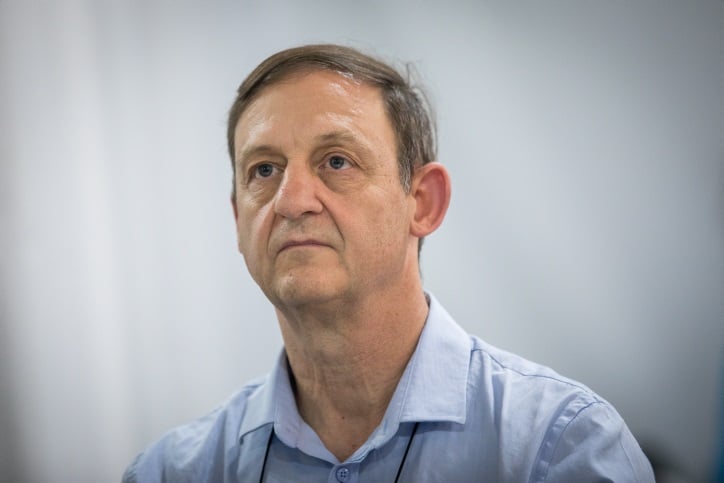
“We do not go easier on celebrities either in enforcement or treatment. We go easy on regulation where possible and we enforce the law when we need to. It always disappoints us to find that controlling shareholders in public companies forget that the shareholders in the public are their partners,” he said.







The Times of Israel Community.