

Jordan reinstating envoy after recall over Temple Mount tensions
Three months after spat over status of holy site, Ambassador Obeidat slated for return to Israel; Netanyahu welcomes ‘important step’
 Add ToI as a Preferred Source on Google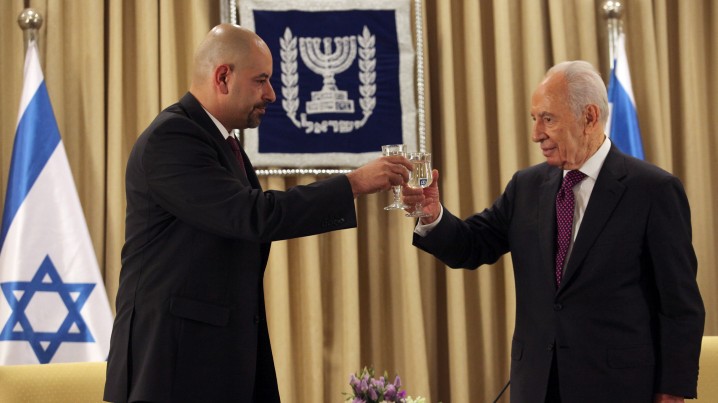
AMMAN, Jordan — Jordan announced on Monday that its ambassador to Israel would return to his post in Tel Aviv, three months after he was recalled over “violations” at Jerusalem’s Temple Mount.
“We have asked Ambassador Walid Obeidat to return to Tel Aviv,” government spokesman Mohammad al-Momani told AFP.
Jordan recalled Obeidat on November 5 after police clashed with stone-throwing Palestinians inside the flashpoint site, also known as the Al-Aqsa mosque compound, with Foreign Minister Nasser Judeh describing Israeli actions as “violations” and “way beyond the limits.”
The recall reportedly came after reports surfaced that Israeli police had entered the al-Aqsa Mosque on the compound and clashed with protesters inside the building.
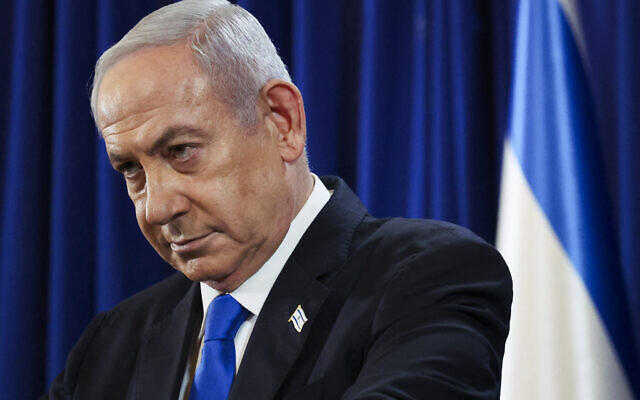
Prime Minister Benjamin Netanyahu welcomed the development and called it “an important step that reflects Israel’s and Jordan’s joint interests, chief among them stability, security and peace.”
It was not immediately clear when Obeidat would return.
During the latter half of 2014 the Temple Mount became a source of friction between Israel and the Palestinians, with Palestinians frequently clashing with police in protests against Jewish visitors to the compound and Israeli politicians calling for Jews to be allowed to pray there in a change to the status quo, which allows only Muslim worship on the site.
During the period of violence, Netanyahu met with Jordan’s King Abdullah and US Secretary of State John Kerry, vowing that Israel had no intention of changing the status quo and appealing for calm.
The Waqf, the Muslim administration overseeing the Temple Mount, claimed that Israeli police went deep into the mosque during its crackdown, all the way to the preacher’s pulpit — the furthest Israeli security forces have ventured since the 1967 Six Day War, Israel’s Channel 2 reported.
A week before the Jordanian recall, Rabbi Yehudah Glick, an activist who campaigned for greater Jewish freedom to pray on the site, was shot and seriously wounded by East Jerusalem resident Mu’taz Hijazi in an attempted assassination.
Hijazi was killed the next morning in the Jerusalem neighborhood of Abu Tor, after allegedly opening fire on officers who came to arrest him.
Jews revere the Temple Mount as the site where the Jewish temples in ancient Jerusalem once stood. It is the holiest location for Jews and contains Islam’s third holiest site, the Al-Aqsa Mosque.
Jordan has responsibility for managing the mosque compound and other holy sites in the eastern part of the city. Its status as custodian is enshrined in the 1994 peace treaty with Israel.





The Times of Israel Community.