

Netanyahu said to halt progress of controversial West Bank and Gaza antiquities bill
Legislation to create new authority under the Heritage Ministry, opposed by IDF and many archaeologists, was pitched by sponsors as a step toward annexation
 Add ToI as a Preferred Source on Google
Rossella Tercatin is The Times of Israel's archaeology and religions reporter.
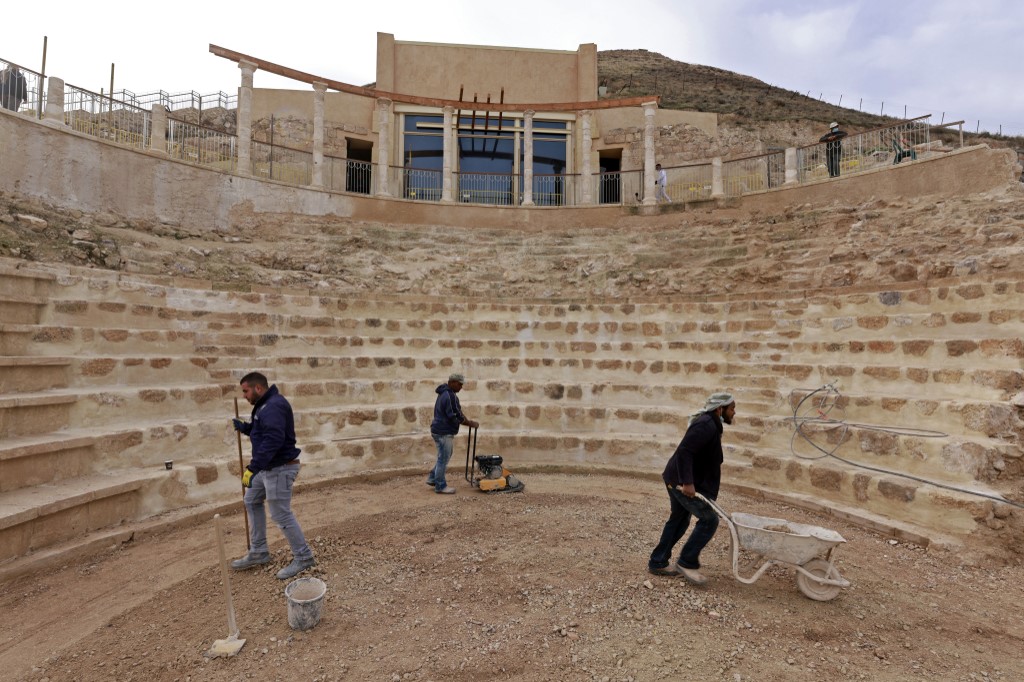
Prime Minister Benjamin Netanyahu halted the legislative process of a controversial bill seeking to extend direct Israeli civilian control over antiquities in the West Bank and Gaza, an unnamed source from the coalition told the Haaretz news outlet on Tuesday.
The bill, which aimed to establish a “Judea, Samaria and Gaza Heritage Authority” under the Heritage Ministry, was widely seen as a step toward annexation of the disputed territories, with sponsors of the bill openly naming that as one of its goals.
The Knesset Education, Culture and Sports Committee had scheduled a meeting Tuesday morning to vote on amendments to the bill as part of the work to prepare it for its final readings in the plenum, but the meeting was canceled shortly before it started.
A new meeting on the bill had not been scheduled as of Tuesday evening, though this is not out of the ordinary, as usually the committee’s schedule for the following week is published on Wednesdays and is always subject to change, even at the last minute.
The Israel Defense Forces has officially stated its opposition to the proposal, and the committee’s legal adviser warned that if passed into law, it would violate Israel’s international commitments and reinforce claims of “creeping annexation.”
Last week, a National Security Council official told the Knesset committee that Netanyahu had asked Cabinet Secretary Yossi Fuchs to examine the controversial bill and present him with the government’s conclusions.
During the meeting, the bill’s sponsors, MK Zvi Sukkot of Religious Zionism and Amit Halevi of Likud, expressed hope that the bill could be advanced to the plenum for its final readings within days, but Sukkot said he would abide by Netanyahu’s request if the prime minister wished to delay.

The vast majority of archaeologists agree that antiquities in the West Bank have been significantly impacted by looting, vandalism and neglect; however, the bill has faced backlash from the outset.
Many archaeologists have said the new system would not help care for the antiquities, in light of the complexity of the area, but would rather further expose Israeli academics to boycotts and cuts to international funding.
Others pointed out that, according to prevalent interpretations of international law, Israel is not allowed to conduct academic excavations in the disputed areas, but only salvage excavations.
And many charged the coalition with using the field of antiquities to advance a policy of annexation, without explicitly labeling it as such.









The Times of Israel Community.