Lazar Berman is The Times of Israel's diplomatic reporter
Franz Kafka in 1906. (Public domain)
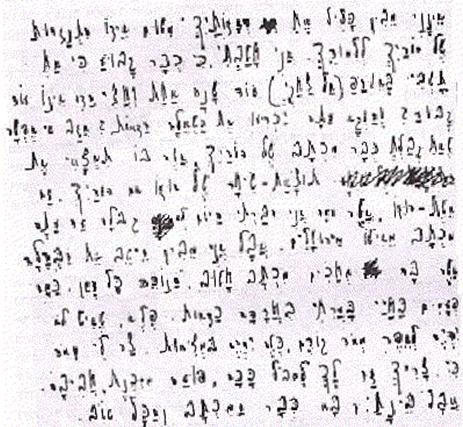
Pages from the notebook used by Czech Jewish author Franz Kafka for his Hebrew language classes will be available for public viewing this week at the National Library in Jerusalem. The display is part of the Open House Jerusalem 2013 program taking place this weekend, the Yedioth Ahronoth newspaper reported Sunday.
Kafka, who wrote in German, is regarded as one of the greatest writers of the 20th century. He planned on moving to Israel, and began looking for a Hebrew tutor. He was introduced to one Puah Manchel, who had moved to Prague from Mandate-era Jerusalem to study at the Charles University in Prague.
When their sessions ended, Kafka gave her some of his notebook as a memento, with columns of words in Hebrew facing their German translations. Manchel donated the pages to the National Library.
Kafka and Manchel also corresponded by mail in Hebrew. Manchel ultimately cut off contact between them, but Kafka continued to inquire about her to their mutual acquaintances.
Kafka died in 1924, and most of his work was published posthumously by his friend Max Brod against his express wishes.
Get The Times of Israel's Daily Editionby email and never miss our top stories
A Hebrew letter sent from Franz Kafka to his Hebrew tutor Puah Manchel (photo credit: Nurit Ashkenazi: public domain)
Manchel went on to run a high school in Beersheba, where she revolutionized the educational philosophy. Her son Ehud Netzer, a prominent archaeologist, discovered King Herod’s grave in the Judean Desert, and died at the site in a 2010 accident.
Help us report truthfully on social media
As a multimedia journalist, my job is to take the quality, fact-based journalism produced by The Times of Israel newsroom and make it accessible across every platform — from Instagram posts to podcasts to short-form videos.
This is how many, especially young people, consume news these days. But misinformation is rampant on social media. Our team at ToI produces accurate, responsible short-form reporting on Israel and the Jewish world.
If you believe in the importance of factual social media journalism, please consider joining our reader support group, The Times of Israel Community. Your financial support is essential to sustain responsible multimedia reporting.
We’re really pleased that you’ve read X Times of Israel articles in the past month.
That’s why we started the Times of Israel - to provide discerning readers like you with must-read coverage of Israel and the Jewish world.
So now we have a request. Unlike other news outlets, we haven’t put up a paywall. But as the journalism we do is costly, we invite readers for whom The Times of Israel has become important to help support our work by joining The Times of Israel Community.
For as little as $6 a month you can help support our quality journalism while enjoying The Times of Israel AD-FREE, as well as accessing exclusive content available only to Times of Israel Community members.
Thank you, David Horovitz, Founding Editor of The Times of Israel


 Add ToI as a Preferred Source on Google