

Netanyahu chooses condescension over confrontation
In a brief Saban Forum speech a day after Obama’s appearance, the prime minister opts not to exacerbate the US-Israel dispute on how to thwart Iran

 Add ToI as a Preferred Source on Google
David Horovitz is the founding editor of The Times of Israel. He is the author of "Still Life with Bombers" (2004) and "A Little Too Close to God" (2000), and co-author of "Shalom Friend: The Life and Legacy of Yitzhak Rabin" (1996). He previously edited The Jerusalem Post (2004-2011) and The Jerusalem Report (1998-2004).
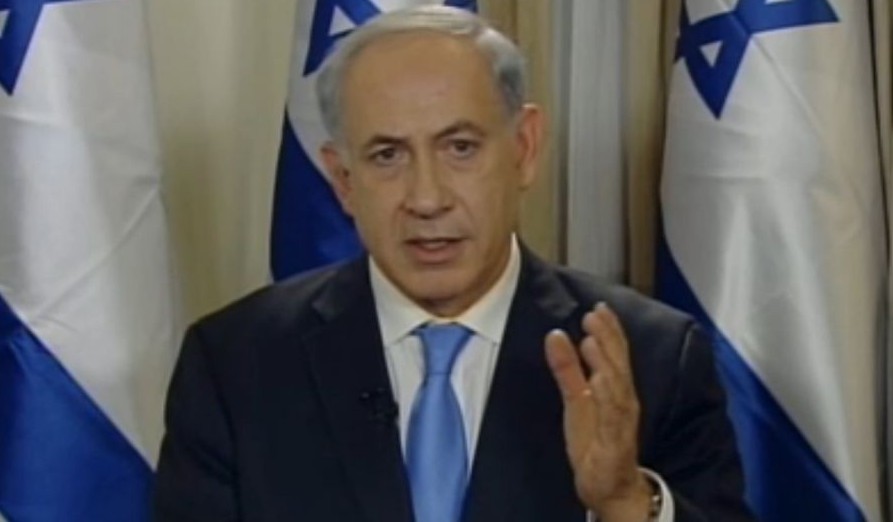
The prime minister did not take the bait.
On Saturday, answering questions for an hour at the Saban Forum in Washington, DC, President Barack Obama had all but ridiculed Benjamin Netanyahu’s desire to apply more and more economic pressure on Iran until the regime broke and ditched its entire nuclear program. That kind of thinking just wasn’t realistic, said the president. Obama had laughed out loud when asked whether he and Netanyahu had different analyses of the interim accord reached in Geneva last month with Iran. “That’s probably a good bet,” roared Obama, a striking response given that Netanyahu sees the battle to thwart Iran’s rogue nuclear program as an existential issue for Israel. And the president had preached that, in the fast-changing Middle East, it simply wasn’t appropriate anymore to assume that countries — even countries like Iran — can’t change.
Netanyahu might have chosen to hit right back — to ridicule some of Obama’s assessments, to castigate the terms of the interim deal, to stir up sentiment against the president’s tactics.
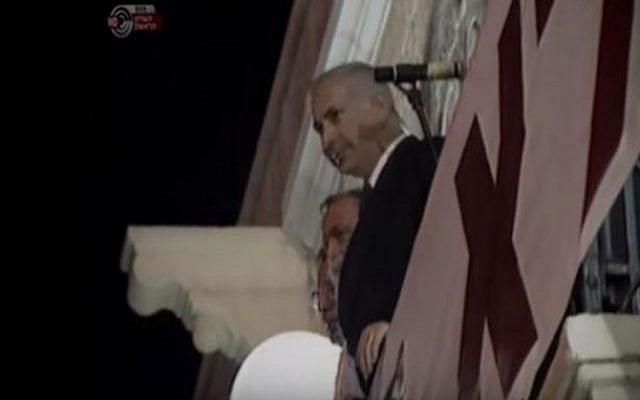
Instead, Netanyahu delivered a notably brief address, opted not to take questions, and did not betray the slightest hint that he had been moved by any of Obama’s assessments and suggestions from the previous day. He chose not to be interviewed, as was the original plan, but rather to deliver his remarks and sign off. Full stop. End of conversation.
At times, he sounded a little patronizing, condescending even — trying to educate his audience, including Obama administration officials, about the true, nefarious face of the Iranians. Don’t be fooled by the suits and the fluent English, he preached.
But he didn’t pick a new public fight.
He breezed over the Geneva deal rather than dwelling again on what he sees as its dismal failures, and simply said that any final arrangement must bring about the complete “termination” of Iran’s military nuclear capacity. Instead of directly and crudely confronting the president’s claim that Iran wouldn’t “cave” under ever-stronger sanctions, he offered a nuanced formulation, arguing that it would be wrong to assume that more and better sanctions wouldn’t yield a better permanent deal. He stressed that he too preferred a diplomatic resolution to the crisis, though noting that a credible military option was necessary for diplomacy to prevail.
And most importantly, he opted to begin his brief remarks with a robust declaration of faith in the US-Israel relationship, and the cooperation between the current governments. They might sometimes have “different perspectives,” he allowed. But on most matters, the US and Israel “see eye to eye.”
After the open sniping of recent weeks between Obama and Secretary of State John Kerry on one side, and Netanyahu and his ministers on the other, there can be no disguising that the current American and Israeli administrations are a disquieting distance apart as regards the tactics for thwarting Iran.
There can be little doubt that Netanyahu, who believes that Iran’s nuclear program is a challenge to the very existence of Israel — a “beleaguered democracy… threatened like no other country on earth” — will continue to utilize every opportunity to push for a harder stance in the face-off with the ayatollahs, including via Obama’s domestic political rivals and opponents. His final comments, that history would judge how the world faced what he called the greatest challenge of the era, underlined how high he regards the stakes to be, and were geared to encourage Obama to give some further thought to the way his presidency will be remembered.
But overall on Sunday, the prime minister emphatically chose the path of public conciliation — to the relief of those who believe that the more daylight there is between Washington and Jerusalem, the happier they are in Tehran.





The Times of Israel Community.