

‘Slain Hezbollah commander held key role in drone program’
Israel widely blamed in killing of Hassan al-Laqis; retaliatory attack from Lebanese territory deemed a likely scenario


 Add ToI as a Preferred Source on Google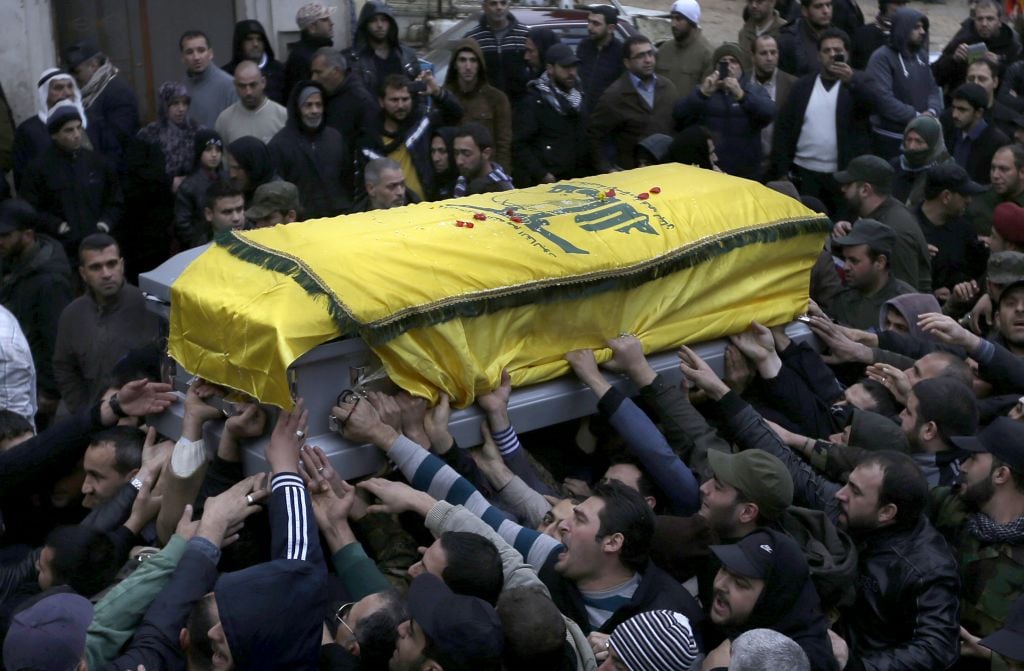
Hassan al-Laqis, a top operative Hezbollah who was assassinated on Wednesday morning, held a “key role” in the Lebanese terror organization’s drone aircraft program and was pivotal in other technological aspects of its ongoing fight against Israel, a Lebanese report confirmed.
Sources close to Hezbollah told the Daily Star that Laqis was responsible for smuggling weapons into the Gaza Strip and Egypt in addition to his work in technology and research. He was at one point one of the main commanders of Hezbollah’s rocket division, which fired hundreds of missiles at Israel.
“[Laqis] was involved in scientific development and played a key role in developing Hezbollah’s unmanned aerial vehicles program,” an anonymous source close to Hezbollah was quoted as saying.
Israeli intelligence analyst Ronen Solomon told The Times of Israel that Laqis was in charge of procuring Iranian armaments for Hezbollah, including high tech communications equipment, missiles and unmanned aerial vehicles.
Hezbollah made two known attempts in the past year to send drones into Israeli airspace. In April, an unmanned aircraft was downed by an IAF jet off the coast of Haifa. Another drone was shot down in southern in October 2012.
Both Hezbollah and its sponsor states, Iran and Syria, accused Israel in the slaying. On Wednesday afternoon, more details emerged about the assassination of Laqis, who was shot dead as he sat in his SUV in the parking lot in front of his apartment building in the Hadath neighborhood, some three kilometers (two miles) southwest of Beirut. A statement released by Hezbollah said Laqis was killed as he was coming home from work.
According to the report, the assassins used a silenced 9-millimeter pistol and shot Laqis five times in the head and neck. There were conflicting reports as to whether two or three people were involved in the attack. Laqis was rushed to a nearby hospital but died from his wounds, officials said. They spoke on condition of anonymity in line with regulations.
Hezbollah claimed the mode of operation indicated that Israel was behind the assassination. “Israel is automatically held completely responsible for this heinous crime,” the organization said in a statement, warning that Israel would “bear full responsibility and all consequences” for the hit.
The statement from Hezbollah was unusual in its haste to place blame on Israel, as Hezbollah normally waits several days before pointing an accusatory finger. It also unusually included a picture of Laqis, who was not widely known before his death.
Israeli Foreign Ministry spokesman Yigal Palmor denied Israeli involvement. “Israel has nothing to do with this incident,” he said. “These automatic accusations are an innate reflex with Hezbollah. They don’t need evidence, they don’t need facts; they just blame anything on Israel.”
Hezbollah said that Israel had made “numerous” attempts on Laqis’s life in the past. He “escaped with his life on nine occasions, including twice in south Lebanon,” according to a source close to Hezbollah that was quoted by the Daily Star. “Laqis’s car was targeted on the old Sidon road during an air raid in 2006,” at the height of the Second Lebanon War, Israel’s three-week military engagement with Lebanon, the source said.
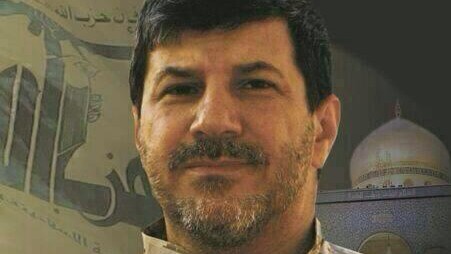
The Hezbollah statement said Laqis had “dedicated his life to resistance.” He was reportedly close to Hezbollah chief Hassan Nasrallah.
On Wednesday afternoon, Col. (res) Ronen Cohen, a former director of the terror desk in the Military Intelligence Directorate, said a retaliatory attack from Hezbollah was quite possible, in particular now that there was less pressure on its backer Iran following the nuclear agreement reached in Geneva last month.
“The security establishment fully understands the change and, therefore, as opposed to recent years — during which the assessment was that the response will not be on the Israeli-Lebanese border — now they will allow themselves to respond based on the understanding that the Iranian issue is off the table,” he told Army Radio. That response, he noted, could also be an attack on Israeli or Jewish interests abroad.
Laqis was Hezbollah’s chief procurement officer during the 1990s, according to national security researcher Matthew Levitt, whose new book “Hezbollah: The Global Footprint of Lebanon’s Party of God” examines the group’s activities.
According to Levitt, Laqis played a role in funding Hezbollah activities in Canada in 1994. One of his operatives, Mohamad Dbouk, told US investigators in 2001 he worked under Laqis. Laqis’s son was killed during the Second Lebanon War in 2006.
Israel’s spy service has been accused of assassinating Hezbollah commanders for more than two decades. In 2005, Hezbollah blamed Israel when Imad Mughniyeh, a top military commander, was killed by a bomb that ripped through his car in Damascus.
Hezbollah has recently come under pressure in its home base in south Beirut, with a series of attacks thought to be tied to the group’s support for Bashar Assad in neighboring Lebanon.
In the past, Hezbollah has issued warnings to its senior officials concerning plots by Sunni groups to attack them.
On Tuesday, Nasrallah gave an address in which he blamed Saudi Arabia for being behind a twin bombing outside the Iranian Embassy in Beirut last month.
Mitch Ginsburg, Yifa Yaakov and AP contributed to this report.




The Times of Israel Community.