

Sleep with one shoe on
Papers print plenty of opinions and analyses on the Syria strikes, but one wonders if anybody really knows anything
Joshua Davidovich is The Times of Israel's Deputy Editor
Say what you will about Israeli journalists, they have a magical ability to fill reams and reams of newspaper pages with Seinfeld-like pabulum about nothing at all.
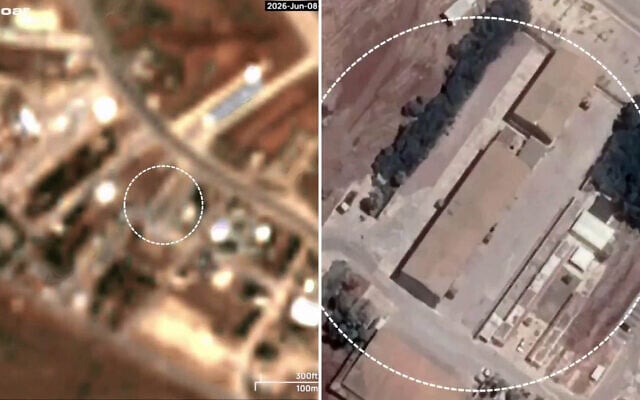
Take Monday’s papers for example (please!). The four major dailies feature headlines and pictures from the reported Israeli strike outside Damascus early Sunday morning and 12 analysis/opinion pieces between them. On the front pages alone.
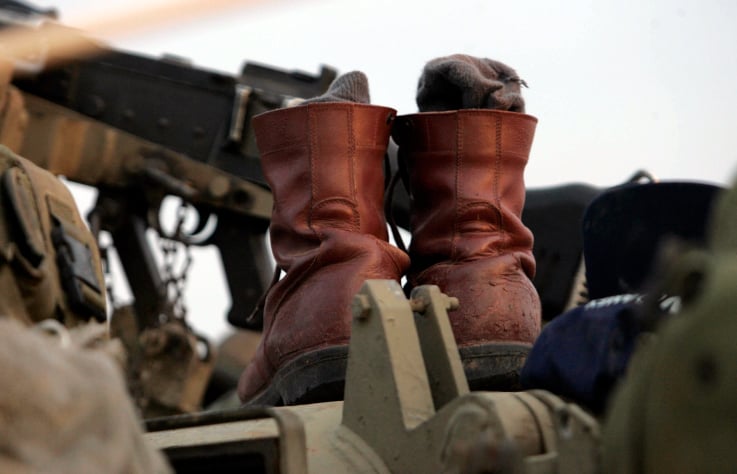
Yedioth Ahronoth is first in line for the Pepto Bismol, with verbal diarrhea exploding out of each of the paper’s seven pages of Syria coverage (not including the front). Nahum Barnea writes that despite the increase in tensions, Benjamin Netanyahu’s trip to China is proof that there won’t be a war anytime soon, unless there will be a war soon. “In military parlance, you can go to sleep without your shoes. On the other hand, Netanyahu pushed off his trip to convene a special cabinet meeting. Meetings like these hint at war.”
So maybe sleep with one shoe on? Perhaps Smadar Peri, writing about Assad’s dilemma, can be a little more concrete. No. Of course she can’t. “On the one hand, Israel has given Assad a thousand reasons to respond. On the other, he has deep motivation not to get involved.” So how many shoes should Assad wear?
In Israel Hayom, with a modest six pages of coverage and two front page analyses, Dan Margalit writes that Israel had no choice but to attack and should be beyond reproach, at least when it comes to anyone who backs the rebels. “The form and righteousness of Israel’s strike isn’t up for debate. Western countries are using Israel as a hired sword to weaken Assad, and to that end should be ready to back and justify Israel’s air operations.”
Maariv, meanwhile, takes the bold step of sending a correspondent up north and not just quarterback from his easy chair. Ahikam Moshe David juxtaposes the armored troops massed on the northern border as a precautionary measure with the tourists roaming around the Golan, and calls Sunday the most tense day up north since the Second Lebanon War.
‘In the Golan Heights, the area most prone to unrest following the Syria attacks, there was a pastoral atmosphere yesterday’
“In the Golan Heights, the area most prone to unrest following the Syria attacks, there was a pastoral atmosphere yesterday. At the Kuneitra lookout foreign tourists listened to guides while looking out over the Israel-Syria border. They converged on a peddler. The Druze were surprised. They couldn’t believe that on a tense day like this they could make money and sell a good amount of apples and honey. The border area, which once saw nearly free movement, is closed by large yellow gates and entrance is not allowed. A few bulldozers work along the border positions, running over the flowers and greenery. From the road you can see the tanks of the 7th battalion and a large tent the soldiers sleep in geared up and ready for anything that might come.”
Haaretz’s Chemi Shalev writes that Israel’s strikes have put pressure on US President Barack Obama to make a decisive move on Syria, and describes a New York Times story in which Obama was portrayed as somebody who drew a red line without meaning to as “disingenuous.” However, he points out that though politicians are hounding the Oval Office, most Americans don’t actually care whether Syria goes to pot.
“US public opinion, after all, is far from convinced that the US should lend a helping hand to the Syrian rebels and is only slightly more favorable towards a military effort against Assad’s chemical arsenal. … And everyone agrees that there should be no American boots on the ground, under almost any circumstances,” he writes. “Americans are tired of the toll taken by Iraq and Afghanistan — 11 soldiers were killed over the last weekend alone — and are widely aware of the crippling economic burden that these two wars have placed on the US economy for many years to come. Obama knows full well that public support for a campaign in Syria is limited — and that the same people who are now egging him on will be the first to blast him when things go wrong.”
Drug problems
Things look bad in the north, and Yedioth reports they could also not be so sunny at the pharmacy, as officials are speaking of a possible drug shortage. According to the report, the drugs have to be packaged with Arabic and Russian instructions by law, but many companies have taken their time implementing it. And, the report says, the problem could worsen as companies decide it’s not worth the money to provide drugs with the extra instruction. “We support the language reform,” said a spokesperson from the Clalit health fund, which needs to sort through 9 million boxes of drugs to see which can be provided to the public with the right languages. “But this has created a situation that will hurt the public” due to serious shortages of over-the-counter drugs.
All politics is local they say, and one MK says that cliché extends to the Israeli-Palestinian conflict, which Google has no business butting into. Israel Hayom reports that MK Ze’ev Elkin has turned to Google to ask it to do away with its new “Palestine” edition, which was rolled out last week in place of “Palestinian Authority.” “The decision was surprising, given the fact that it means the mixing in of an international company in local politics,” the paper quotes Elkin saying.
You know who else didn’t speak Hebrew well? Herzl
If even Google has taken a stand on the issue, it’s time for opposition chief Shelly Yachimovich to do the same, Shlomo Yerushalmi writes in Maariv, taking an unnecessary swipe at new immigrants along the way, because hey, why not kick people who turned their whole lives upside down to come to Israel and contribute to the Zionist dream but are so horrible as to not be able to pronounce the “resh” correctly?
“Yachimovich has one problem,” he writes. “Whoever never delves into and never seriously relates to the Palestinian-Israeli conflict sounds untrustworthy on the matter. Her rebuke regarding the two-state issue seems disconnected and is reminiscent of a new immigrant who comes to Israel and refuses to learn correct Hebrew.”
Haaretz, meanwhile, calls for Israel to talk softly but carry a big F-16, saying in its editorial that the country should be careful not to let things up north get out of hand: “Force must be used with discretion. The Israeli government must make sure that its military operations will not spark an escalation that could set the whole region aflame. Even when its attacks achieve their objectives, it’s best not to boast or to view the successes as legitimizing the continued use of uncontrolled force.”





The Times of Israel Community.