

Small coffins, big questions
The burial of the Toulouse victims is the main story; while news of the Tal Law and nuclear goings-on take up inside real estate
Joshua Davidovich is The Times of Israel's Deputy Editor
The killings in Toulouse are still major front-page stories Wednesday morning, with three of the four dailies leading with pictures of coffins and stories related to the funerals taking place Wednesday in Israel.
Only Haaretz breaks the mold with a picture of students and politicians (among them French President Nicolas Sarkozy) holding a moment of silence in a school courtyard, and a headline that the French “fear another attack.”
Maariv and Yedioth Ahronoth both open with the same picture of the coffins on an airport tarmac before being placed onto planes for a flight to Israel, where they will be buried. “Sad return home,” Yedioth splashes across its front, while Maariv runs the headline “France stands quiet, coffins fly to Israel.”
Israel Hayom goes an even more heartbreaking route with the simple headline “Three small coffins,” and a picture of three small coffins and one large one, highlighting the enormity of the tragedy that left three small children, and one young rabbi, dead. Both Maariv and Israel Hayom run a grainy picture from the Toulouse school’s security camera showing the gunman on a motorcycle.
In Israel Hayom, Boaz Bizmuth writes about the sheer senselessness of the atrocity. “’Why,’ asked one of the eulogizers. ‘Why,’ asked the whole Jewish community at a heartbreaking goodbye service. ‘Why,’ asked all of France. But the coffins remained silent. Only for the killer… is there an answer to the questions ‘why,’ but for all of history there were people like him who did not need a reason to kill Jews.”
EU foreign policy chief Catherine Ashton, possibly the second most reviled person in Israel Tuesday (after the killer himself), also gets major coverage, as she was forced to clarify her statements from the day before that many said compared the killings to Toulouse to fighting in Gaza.
Speaking to Yedioth Ahronoth, Ashton denied making any such comparison and said doing so would not be right in her eyes. “I condemn without reserve the murder in Toulouse. If the things I was quoted saying hurt somebody, I request to express my regret. A comparison like that is forbidden to make,” she said (in a free translation of her French words via a translation into Hebrew.)
In Israel Hayom, Dan Margalit uses the Ashton comments to tackle the elephant in the room, saying that she is no friend of Israel. The things she said, “revealed what is truly in her inner heart,” he writes. “She is not neutral.”
Back to Ben-Gurion
Moving away from France, Maariv has a story that a proposed replacement to the Tal Law, which had given ultra-Orthodox yeshiva students army exemptions, would cut down on the number of black hats getting free passes. Instead of the estimated 6,000 annual exemptions given out, the state would allow 2,000, according to the proposal from MKs Shaul Mofaz, a former defense minister, and Yohanan Plesner. The model would bring the number of army exemptions for religious young men closer to the plan envisioned by David Ben-Gurion when he a made a deal with religious leaders at the founding of the state on the matter.
Alongside the Toulouse coverage in France, anti-settler paper Haaretz runs an above-the-fold fold front-page story saying that the Knesset Finance Committee approved NIS 61 million for areas in the West Bank and Golan Heights, in a meeting lasting just over an hour and with only five committee members present. The money includes allocations for security in settlements and a Golan Research Institute.
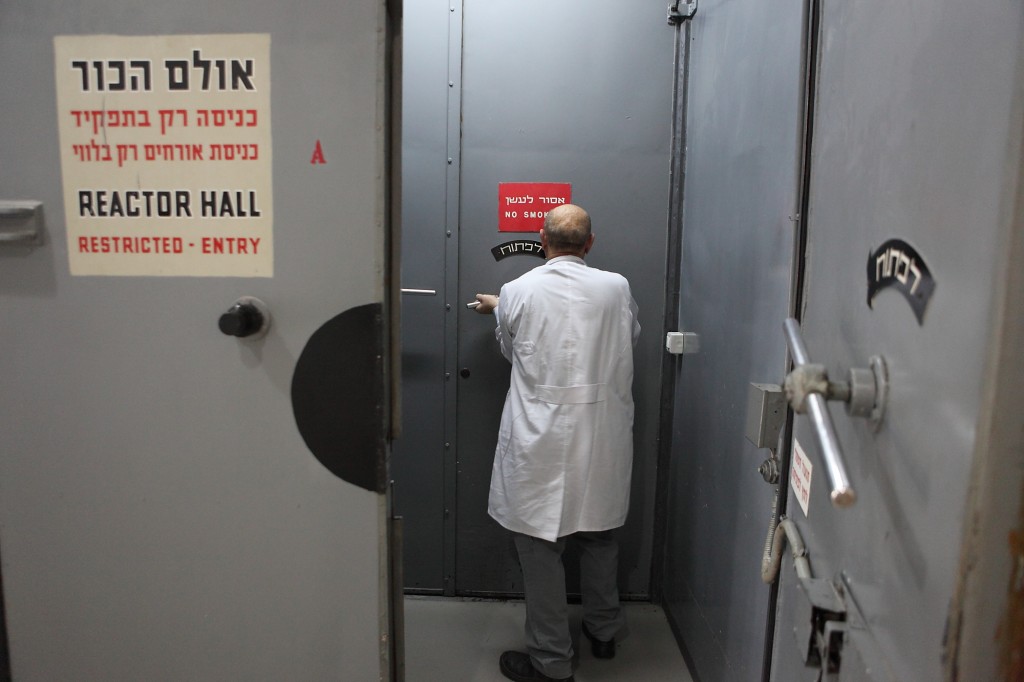
Yedioth has stories that electricity prices in Israel, already skyrocketing, will be going up yet again as gas prices continue to rise. Israeli consumers can expect a 10% rise in electricity rates in the coming weeks. At the same time, the Sorek nuclear research center in Yavneh was closed down earlier in the month, for fear that rockets from Gaza would strike it, causing a major disaster. The reactor is already scheduled to shut down completely in 2018.
Israel Hayom, and others, report that the cottage cheese production stoppage is being expanded into chocolate milk. Tnuva chocolate milk will not be available on store shelves beginning today as workers and chocolate cows move closer to an all-out strike.
How low can they go?
In Maari’vs op-ed section Guy Meroz takes Israeli bureaucrats to task for balking at dispensing funeral expenditure money for Rabbi Jonathan Sandler, killed in the Toulouse shooting, because he wasn’t an Israeli citizen. While in the end the National Insurance Institute agreed to pay for his funeral in Israel (the other three victims are Israeli so there was no issue), the hemming and hawing showed how low bureaucracy here can sink. “Did nobody from the National Insurance Institute maybe think it would be better to first fly the bodies to Israel in peace and only later worry about finding the appropriate clause?” he asks.
Israel Hayom features a tasteless political cartoon showing a street sign in Toulouse with a stick man shooting a stick child. Alongside that is an op-ed by Raed A’amar saying it is clear Iran is trying to build a nuclear bomb, arguing that the Islamic Republic wouldn’t act the way it does for a few research isotopes or cheap electricity. “Does anybody really believe Iran would act this way and be willing to absorb sanctions and ostracism if it weren’t for a good and deep reason?”
In Haaretz, Yitzhak Laor says cryptically that Israelis need to remember Dimona in the context of tensions with Iran. “The Dimona reactor is missing from discussion of the Iranian nuclear program, just as the back of your neck is missing when you look in the mirror. Or maybe it’s because for years, it has been taken for granted, viewed as something there is no possibility of questioning. Even those now offering the Iranians love via Facebook don’t remember it.”






The Times of Israel Community.