

UNESCO set to pass yet another critical resolution on Jerusalem
Cultural agency’s World Heritage Committee advances date of planned debate over Old City walls; softened text likely to pass
 Add ToI as a Preferred Source on Google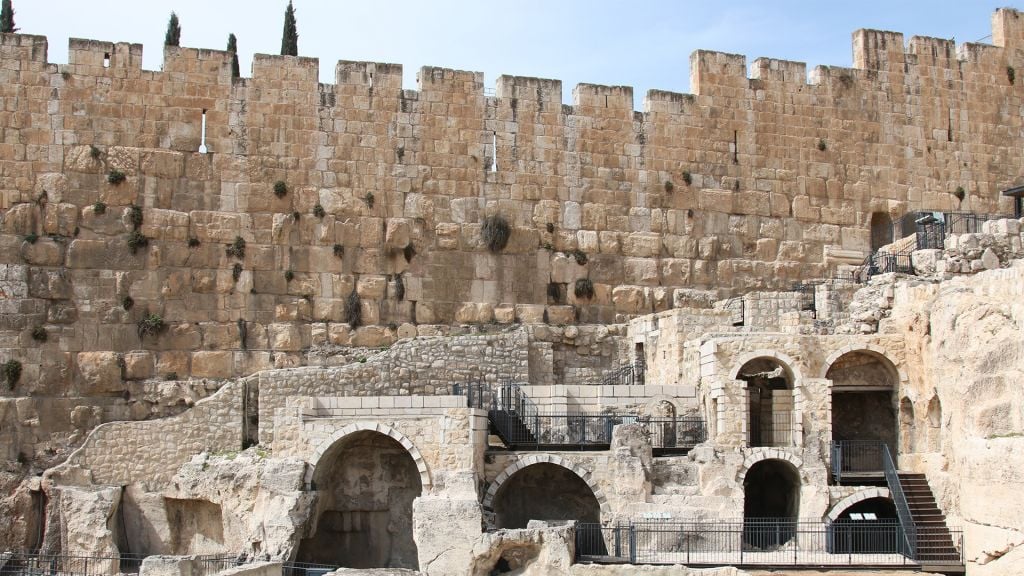
An important committee of the United Nations’ cultural agency is set to pass on Tuesday evening a resolution critical of Israeli actions in the Old City of Jerusalem.
The annual vote on a Jerusalem-themed resolution at UNESCO’s World Heritage Committee, which is meeting in Krakow, Poland, was originally scheduled to take place next week. But Palestinian diplomats advanced the debate, presumably to blindside Israeli officials who are currently busy fighting another Palestinian initiative at UNESCO regarding Hebron.
A vote to inscribe the Old City of Hebron on UNESCO’s World Heritage List is scheduled for Friday.
The Jordanian-sponsored resolution on the “Old City of Jerusalem and its Walls” is much softer than last year’s text, but Israel rejects any attempt to politicize the issue of the holy sites in its capital in international bodies.
This year’s resolution still calls Israel “the occupying power” and reaffirms previous UN resolutions denying the country’s claims to East Jerusalem, echoing a resolution passed in May by UNESCO’s executive board. It also “regrets the failure of the Israeli occupying authorities to cease the persistent excavations, tunneling, works, projects and other illegal practices in East Jerusalem, particularly in and around the Old City of Jerusalem, which are illegal under international law.”
However, Decision 41 COM 7A.36 stresses “the importance of the Old City of Jerusalem and its Walls for the three monotheistic religions,” language not found in last year’s text. It also does not refer to the Temple Mount compound solely by its Muslim names, “Al-Aqsa Mosque/Al-Haram Al-Sharif,” as the 2016 resolution did, defining it only as “a Muslim holy site of worship.”
“The Palestinians moved to advance the discussion because they believe that by softening the text on the subject of Jerusalem they will reach consensus in favor of the proposal so that no voted will be required,” Israel’s ambassador to UNESCO, Carmel Shama-Hacohen, told The Times of Israel on Tuesday morning.
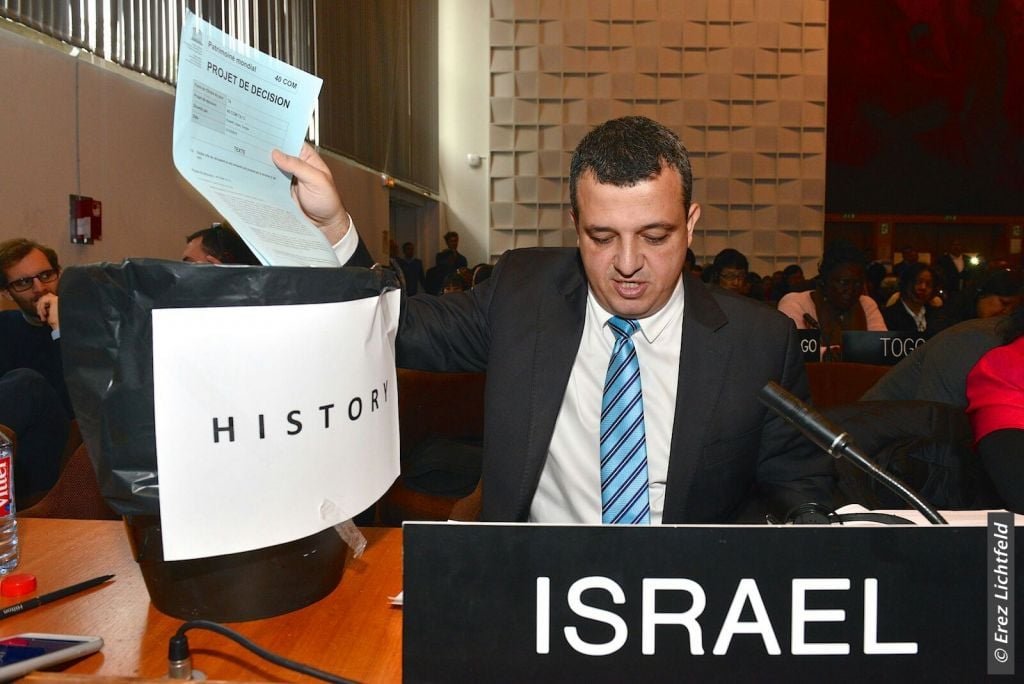
He vowed to use the remaining time to fight the Palestinians’ move and seek to open the discussion, thus forcing a debate he said he believed would thwart a consensus.
The chairperson of UNESCO’s World Heritage Committee can propose to adopt a resolution “by consensus,” which would give it the appearance of a unanimous decision. But if Israel manages to recruit at least two member states to request a secret ballot, the decision can no longer be passed by consensus, paving the way for “no” votes and abstentions.
At last year’s convention in Paris, the much harsher text was accepted by a large majority, after Tanzania and Croatia had asked for a secret ballot. Ten countries voted in favor, eight abstained and two opposed the text. Eight “yes” votes were needed for the resolution to pass.
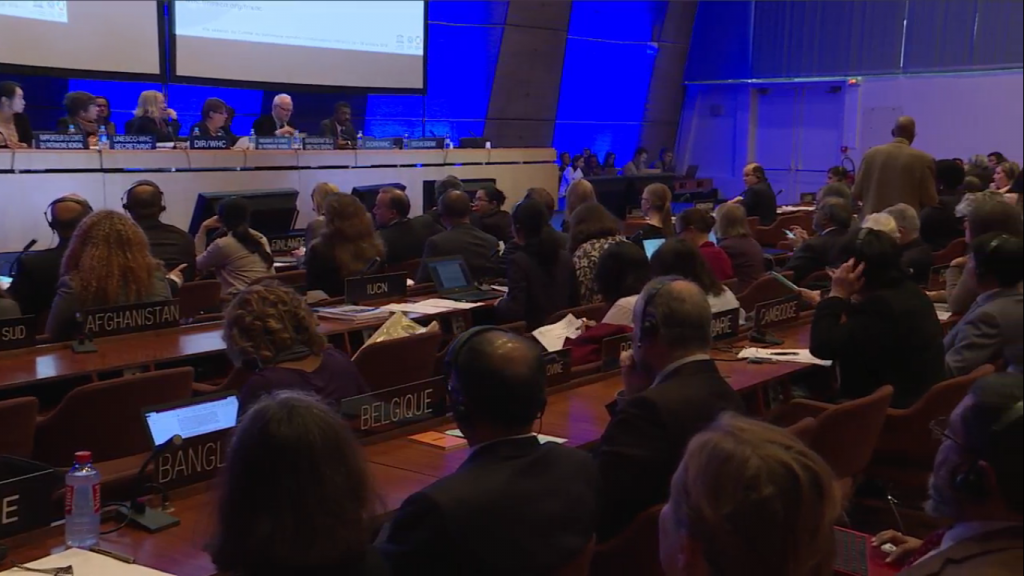
The 21 members of this year’s committee are Angola, Azerbaijan, Burkina Faso, Croatia, Cuba, Finland, Indonesia, Jamaica, Kazakhstan, Kuwait, Lebanon, Peru, Philippines, Poland, Portugal, South Korea, Tunisia, Turkey, Tanzania, Vietnam and Zimbabwe.
The list includes five countries with which Israel does not have diplomatic ties, and a number of others that routinely support pro-Palestinian resolutions. Even the four Europeans states on the committee are determined to support the decision, The Times of Israel has learned. Its passing thus seems a foregone conclusion.
As much as Israel deplores resolutions denying its claims to East Jerusalem, the government’s main focus remains on thwarting Friday’s expected vote to declare the Old City of Hebron — including the Tomb of the Patriarchs — a Palestinian “world heritage site in danger.”
Israel, the US government and several Jewish groups vociferously object to this move, and have called on UN leaders to prevent the vote.
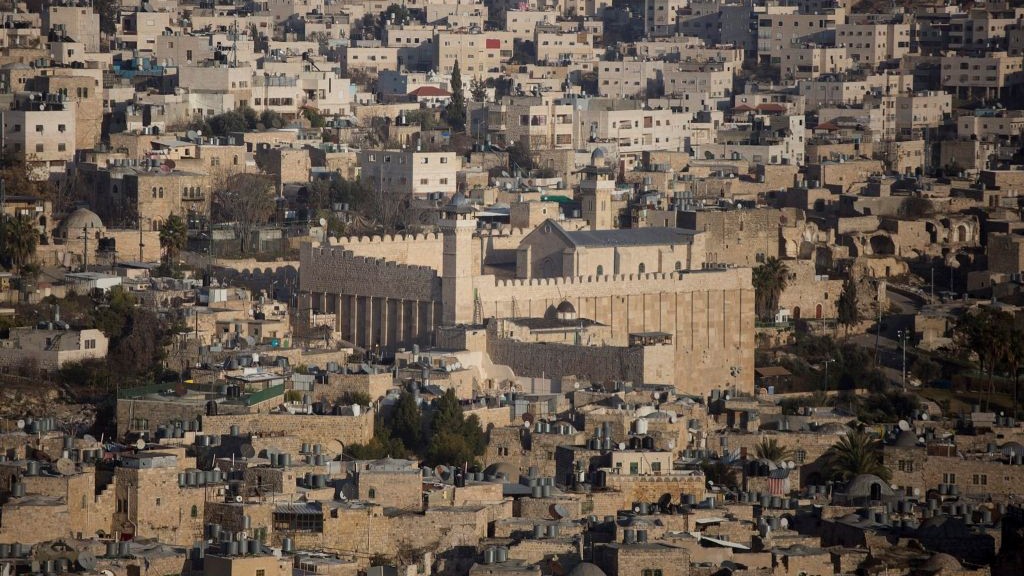
“The Tomb of the Patriarchs, which is sacred to three faiths, is in no immediate threat. Such a designation risks undermining the seriousness such an assessment by UNESCO should have,” US Ambassador to the UN Nikki Haley wrote to UN Secretary-General Antonio Guterres and UNESCO Director-General Irina Bokova.
“Many precious sites — from the Democratic Republic of Congo to Libya to Iraq to Syria — are under real and imminent threat of destruction today. They urgently demand UNESCO’s full and immediate attention, which should not be wasted on this sort of symbolic action,” she added.
On Tuesday, the Palestinian Authority Foreign Ministry hit back at Haley, accusing her of being “racist and anti-Palestinian” and an ambassador for Israel, rather than the US at the UN.
“This is not the first message in which the American ambassador has expressed her hidden malice and hatred toward the Palestinians,” the PA Foreign Ministry said in a press statement on Tuesday. “After she prevented the appointment of Dr. Salam Fayyad as the UN envoy in Libya, she recently affirmed that she would prevent the appointment of any Palestinian in the United Nations and its institutions, confirming her racist and anti-Palestinian position, and its clear hostility to Palestine.”
The statement went on to condemn “the crude intervention of the US ambassador in the work of UNESCO and the attempt to influence the independence of the UN organization by pressing the member countries of the World Heritage Committee to vote against the Palestinian request to put Hebron on the World Heritage List.” It said that was indicative of “nothing less than a complete bias in favor of Israel, and confirms what has been reported in the corridors of the United Nations in New York. Recently, many foreign diplomats have expressed that Haley is an ambassador for Israel, more than an ambassador for her country, the United States of America.”
The PA called on the US State Department to clarify its official position regarding the statements made by Haley on the issue.








The Times of Israel Community.