

If the Mitt fits, wear it
The Republican presidential candidate comes to town, and tax hike trepidation fills the front pages
Ilan Ben Zion is an AFP reporter and a former news editor at The Times of Israel.
Republican presidential candidate Mitt Romney’s visit to Jerusalem on Sunday caught the press’s eye, and anticipated budget cuts and tax hikes have everyone worried.
Each paper chose different aspects of Romney’s speech to highlight in its headline. Israel Hayom opted to play up Romney’s recognition of Jerusalem as the capital of Israel, something the White House and the international community are loath to do. It paraphrases him saying, “It is a deeply moving experience to be in Jerusalem, the capital of Israel.” It also quotes Romney assuring Israel that it is “Israel’s right to defend itself, and it is right for America to stand with you.” Romney’s reference to the Holocaust and Tisha B’Av were icing on the cake.
Romney’s photo at the Western Wall covers the front page of Maariv, but instead of the Jewish angle, the paper opts for the foreign policy perspective. It quotes him saying, “We must lead the effort to prevent Iran from building and possessing nuclear weapons capability.” Inside the cover of Maariv, the article on Romney’s visit leads with a paraphrasing of his statement that “diplomatic distance in public between our nations emboldens Israel’s adversaries.”
It comes at little surprise to some, given the similarity in rhetoric between the two, that the same donors who backed Prime Minister Benjamin Netanyahu showed up to Romney’s $50,000 a plate breakfast at the King David Hotel, Maariv reports. “Most of the donors [for Netanyahu’s campaign] are also those willing to enlist cash for Romney,” it writes.
Surprisingly, Israel Hayom didn’t mention that its financier “Sheldon Adelson arrived in his private jet to Israel with several other donors.” When asked by Maariv what he was doing in Israel, he pithily retorted that he came to eat shawarma.
Haaretz interprets Romney’s above-mentioned statements regarding the strengthening of Israel’s opponents as an attack on President Barack Obama. It quotes him saying, “We cannot stand silent as those who seek to undermine Israel voice their criticisms. And we certainly should not join in that criticism.” By Haaretz’s estimation, Romney’s statement was a veiled assault on Obama’s Israel policy.
The paper then prints a headline in large, bold letters saying, “Among the Israeli right there’s no dispute: Republican candidate Romney is good for the Jews.” It remarks that “Netanyahu hugged Romney like no Israeli prime minister ever hugged an American presidential candidate running against an incumbent.”
Yedioth Ahronoth also mentions a sideshow to the Romney main event that unfolded when the former Massachusetts governor canceled his meeting with Labor Party chairwoman Shelly Yachimovich a mere two hours before they were set to meet. Labor Party bigwigs pointed a finger at the prime minister, “Bibi worked to cancel the meeting because Yachimovich threatens him personally.”
Yedioth Ahronoth’s main interest, however, is Monday’s vote on budget cuts across the board for government ministries. It features a six-panel description of how cuts to different ministries will negatively affect quality of life in Israel. Fewer cops on the street, no light rail in Tel Aviv, and cuts to higher education are a few it names.
Haaretz writes that the three main clauses of the proposal, which will be put forward today, are the tax hikes, budget cuts, and a third for combating the black market. The economic measures are expected to raise a whopping NIS 15.4 billion a year, according to Finance Minister Yuval Steinitz. Haaretz quotes him saying that only NIS 5.8 billion of that will come from the middle and lower classes.
Maariv reports that the price of bread — that age-old benmark of rising costs — is also slated to go up 7% on account of the tax increases. Maariv says that raising the VAT by one point will increase government income by almost NIS 4.5 billion per annum. At least the expected one point increase in income tax will not take effect, if it passes, until January 1.
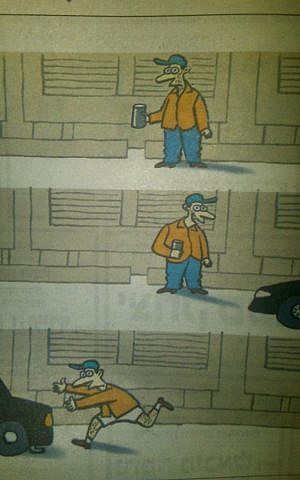
The public mood vis-a-vis the proposed economic changes is best shown through the medium of political cartooning. Maariv has a three-panel showing a beggar asking for change who sees a limousine labeled “the Treasury” approaching. The departing limo takes off with his cup of change and his pants, to boot.
Israel Hayom shows the anticipated effect of the taxes and budget cuts on the lower, middle and upper classes: a nail clipper, butcher’s cleaver, and axe respectively. Above the images reads a caption: “The new economic cuts as I see them.”







The Times of Israel Community.