We at the Times of Israel want you to read the Times of Israel — at home, on the bus, in line at the bank.
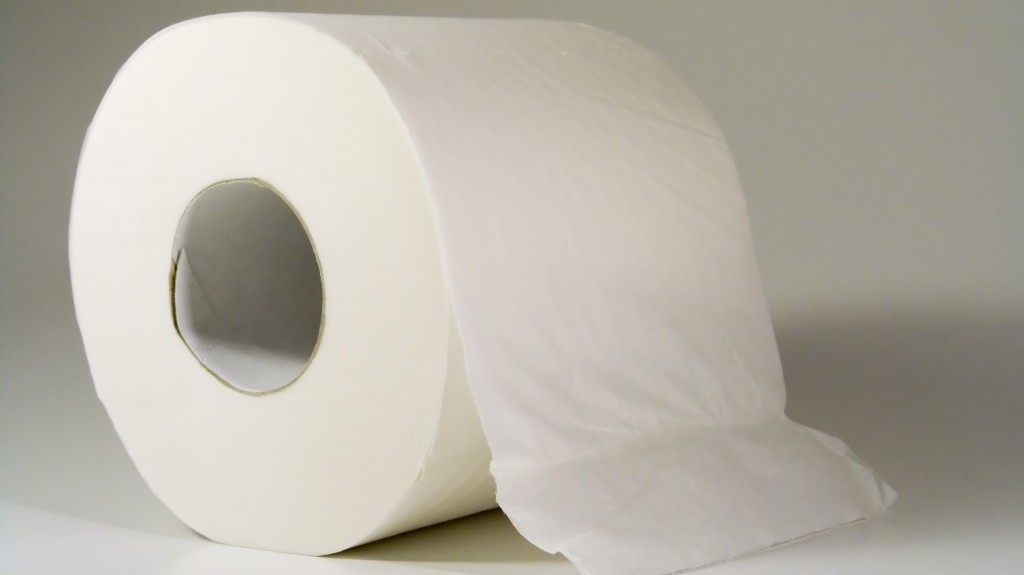
But as hard as it is to tear yourself away, there’s one place you should avoid reading us — on the toilet. Smartphones, e-books and other wireless devices, it turns out, are much more hospitable to bathroom bacteria than old-fashioned newspapers, and now there are gross statistics to prove it.
In an article headlined “Is reading on the loo bad for you?,” England’s Guardian newspaper explores this vitally important topic — and concludes, with the help of an Israeli expert, that reading, beyond its capabilities as a distraction, doesn’t serve much purpose in the bathroom. (Unless you’re trying to get through “Ulysses” and the works of Rabelais, which is apparently how Henry Miller spent his time in there.)
Israelis, as we’ve reported, are globally renowned for their scientific research, and we can now add to that distinguished list Ron Shaoul, a pediatric gastroenterologist in Haifa. A doctor at the city’s Bnai Zion Medical Center, Shaoul is also the author of an academic paper entitled — we s*** you not — “Toilet reading habits in Israeli adults,” a study of 499 of his countrymen. (Key finding: “Toilet reading is a common and benign habit.”)
You can read all of Shaoul’s paper in a back issue of Neurogastroenterology and Motility, which we’re sure you have lying around. But for the sake of your health and hygiene, if you’re going to look at it on a wireless device, please remember where not to read it.
Get The Times of Israel's Daily Edition
by email and never miss our top stories
By signing up, you agree to the
terms
We can't do this work alone.

The war with Iran has been draining for all of us in Israel. But when I heard about a high casualty incident – ballistic missile impacts in Arad and Dimona that left nearly 200 people wounded – I drank a cup of coffee, packed a bag, and headed south.
There, I spoke with Shilgit, the head of an after-school program for underprivileged youth. Standing outside her destroyed center, Shilgit said it was a miracle that no children were hurt and spoke about the community coming together in the hours since.
As a Times of Israel reporter, I’m committed to telling stories of resilience like Shilgit’s. But my colleagues and I can't do this alone. If you value work like this, please consider joining our reader support group, The Times of Israel Community. Your financial support is essential to keep real human reporting like this going.
— Stav Levaton, military reporter
Yes, I'll join
Yes, I'll join
Already a member? Sign in to stop seeing this
You're a dedicated reader

We’re really pleased that you’ve read X Times of Israel articles in the past month.
That’s why we started the Times of Israel - to provide discerning readers like you with must-read coverage of Israel and the Jewish world.
So now we have a request. Unlike other news outlets, we haven’t put up a paywall. But as the journalism we do is costly, we invite readers for whom The Times of Israel has become important to help support our work by joining The Times of Israel Community.
For as little as $6 a month you can help support our quality journalism while enjoying The Times of Israel AD-FREE, as well as accessing exclusive content available only to Times of Israel Community members.
Thank you,
David Horovitz, Founding Editor of The Times of Israel
Join Our Community
Join Our Community
Already a member? Sign in to stop seeing this