

A cold shoulder in the Gulf for UN’s Syrian envoy
Geneva II looks iffy due to Assad’s intransigence, and an Arab columnist accuses the PA of helping settlement expansion
 Add ToI as a Preferred Source on Google
Elhanan Miller is the former Arab affairs reporter for The Times of Israel
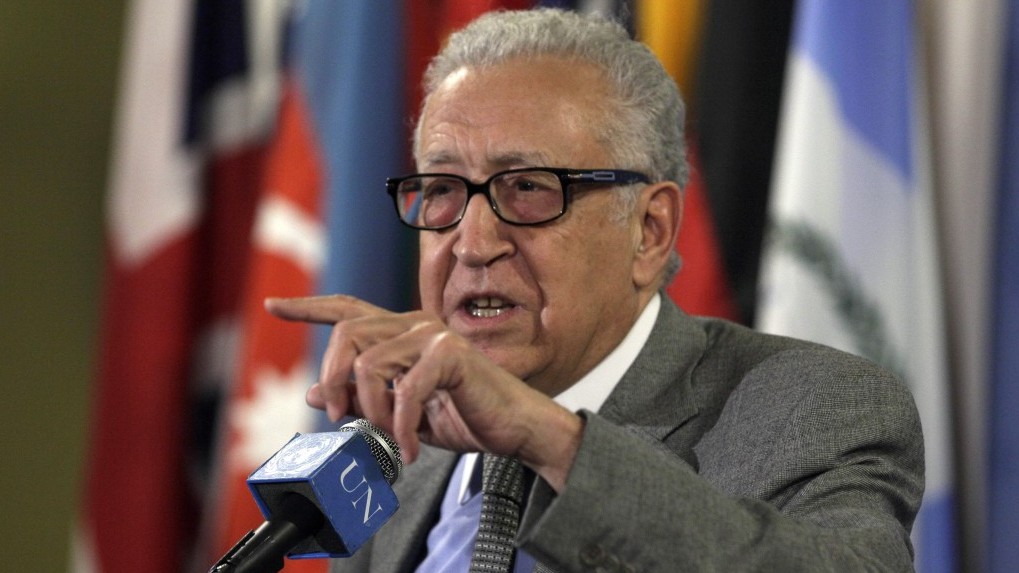
Arab media on Wednesday focused on the hurdles placed by the Assad regime on the road to the Geneva II conference on Syria next month, following the sacking of deputy prime minister Qadri Jamil.
“Assad serves a blow to Geneva II by firing Jamil,” reads the headline in the Saudi-owned daily A-Sharq Al-Awsat, featuring a photo of a pensive-looking Jamil against the backdrop of a portrait of the Syrian president.
The report calls the move “a surprise,” explaining that Jamil, who deals with economic issues, was relieved from duty after meeting non-resident US ambassador to Syria Robert Ford in Geneva last Saturday. Damascus explained in a statement Tuesday that Jamil was sacked for his “absence from his place of work and for holding meetings abroad without coordinating with the Syrian government.”
The London-based daily Al-Hayat notes that another significant event took place on Tuesday, when Damascus informed UN envoy to Syria Lakhdar Brahimi that it intends to participate in the Geneva II conference, on condition that “the discussion is between Syrians and under Syrian guidance.”
Al-Hayat understands that statement as the regime’s insistence on leading the proceedings itself.
“Moallem to Brahimi: The Geneva II conference will be purely Syrian,” reads the headline on the website of Al-Jazeera, a Qatari news channel staunchly supportive of the Syrian opposition.
The channel’s video report features an affirmation by Brahimi that the conference is “essentially between Syrian sides,” amid the refusal of most fighting opposition factions on the ground to take part in it.
Meanwhile, days after the Syrian opposition asked the Arab League to fire Brahimi for his conciliatory stance toward the Assad regime and Iran, Saudi news website Elaph reports that the UN envoy has also alienated Gulf states, and especially Saudi Arabia.
“Elaph has learned from Arab diplomatic sources that Lakhdar Brahimi has evoked dismay in these circles. Gulf states even consider him persona non grata following his statements about the essential and natural participation of Iran in Geneva II when he visited Tehran,” reads the report, featuring a close-up photo of a particularly grim Brahimi.
Brahimi has said many times that he does not place much faith in the Geneva II conference, according to an editorial in the London-based daily Al-Quds Al-Arabi on Wednesday titled “Who wants to go to Geneva II?”
“This makes us wonder why he incessantly travels between Arab and foreign countries if he doesn’t have much hope in the political process,” the article says.
Meanwhile, Syrian oppositionist Michel Kilo expresses concern that Arab interest has moved from Syria to Egypt over the past two months.
“This perception, if it is true, reflects the confusion of Arab political priorities, which are deeply mistaken if they believe that what is happening in Syria is less important to the fate of Arabs than what is happening in Egypt,” writes Kilo.
“The crisis in Egypt is not of the same caliber as the one in Syria, and will not result in the terrifying outcome that the Syrian tragedy has produced. Anyone with two eyes can see this, and I don’t believe that the Gulf does not see what everyone else does.”
‘Palestinian Authority helps settlement expansion’
In a scathing critique of the Palestinian Authority, Al-Jazeera columnist Saleh A-Naami argues on Wednesday that the security cooperation between the PA and Israel has contributed to the growth of settlements in the West Bank.
“There are those who argue that the PA has come to play a central role in strengthening the settlement project in the West Bank and occupied Jerusalem through its important and decisive role in improving the sense of security in the settlements, making them more attractive to new segments of Israeli society,” writes Naami.
The joint Israeli-Palestinian crackdown on “resistance” activists in the West Bank has improved the “sense of personal security” of settlers, he adds.
“The history of the struggle with the Zionist entity proves that Israel’s governing elite does not adopt political solutions when there is security,” Naami asserts.





The Times of Israel Community.