 Add ToI as a Preferred Source on Google
The plan was to sail from the northern port of Haifa down to the coast of Ashkelon. But as the saying goes, “Man plans, God laughs.”
To mark Israel’s 70th Independence Day on Thursday, the Israeli Navy organized a flotilla, mashat in Hebrew, that would see almost every variety of warship in its harbors — from submarines to inflatable commando boats — travel from coastal city to coastal city.
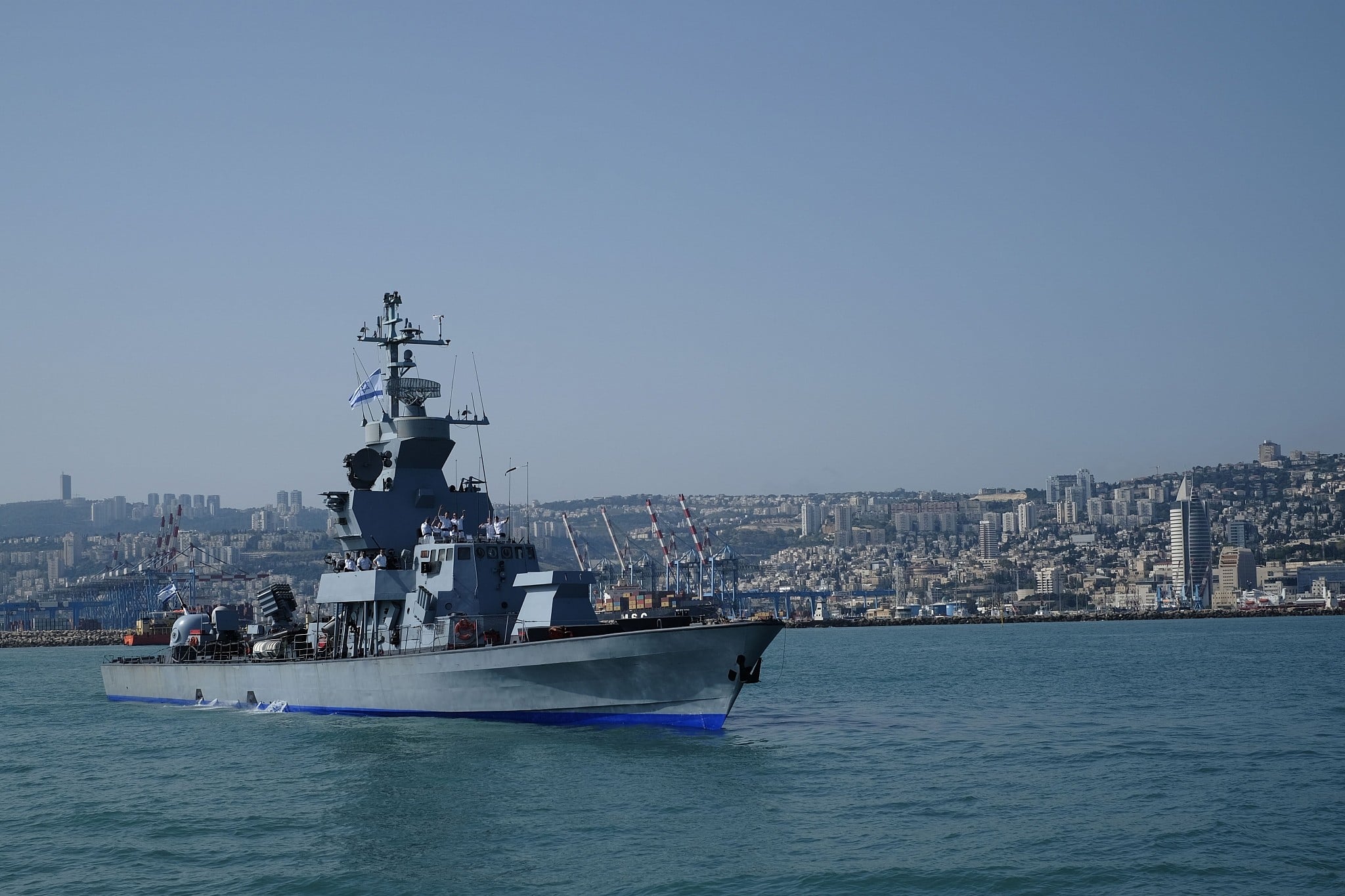
The Times of Israel joined the voyage, traveling on one of the 914 Naval Squadron’s Dvora-class patrol boats, which ordinarily defends Israel’s northern territorial waters. (Thanks for the hospitality, fellas.)
The Dvora is a relatively small boat, mostly used for routine patrols. The skeleton crew — smaller than normal to make room for the photojournalists and army spokespeople — wore dress whites, which quickly turned into dress off-whites. Warships, after all, are greasy places; one brush against a railing is enough to ruin an immaculate white uniform.
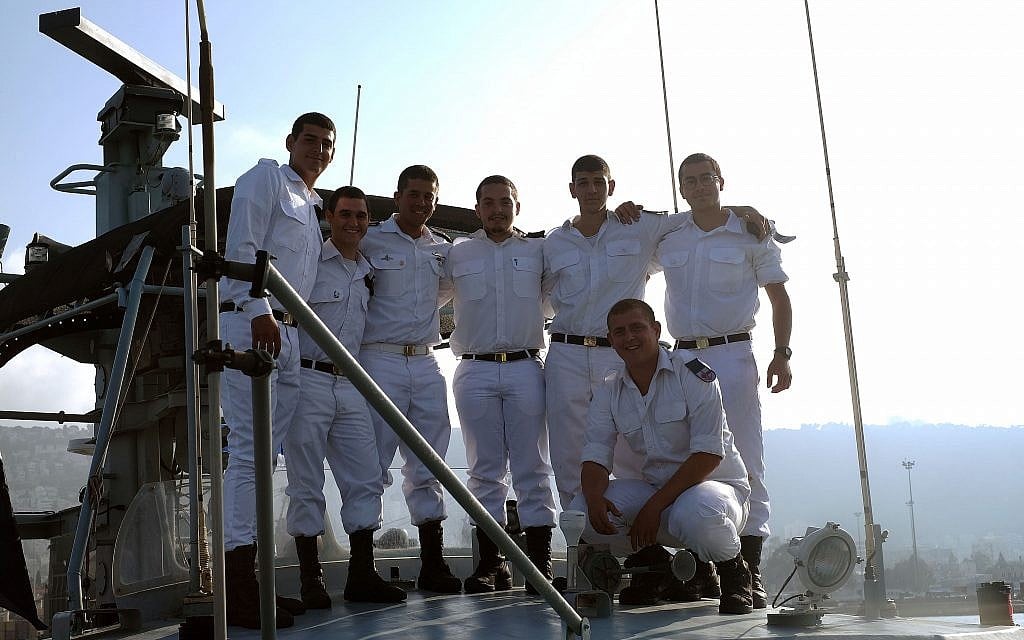
Our ship pulled out of the Haifa port shortly before 10 a.m. and leisurely made its way to the waters across from a nearby beach to await the first act of the flotilla: a group jump by current and former IDF paratroopers into the sea.
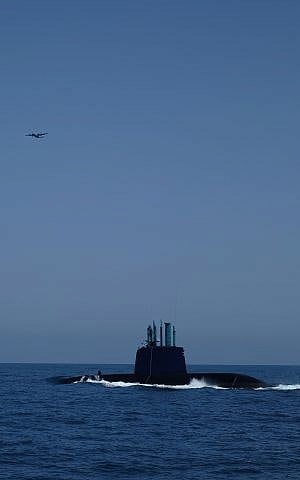
A few minutes later, their C-130J Super Hercules appeared overhead. As it made a pass over one of Haifa’s beaches, the paratroopers came out, one by one, and floated down gracefully with their distinctive, four-cornered chutes. A successful jump.
What a start to the day.
Unfortunately, around this time, the Dvora’s crew noticed that something was wrong with our engine, or at least something seemed to be wrong with it. And when it comes to the one thing between you and drowning in the Mediterranean Sea, you don’t take chances.
So the rest of the boats traveled on, while we tried to figure out what was up with the motor. Multiple checks found nothing out of the ordinary, which is, counterintuitively, a bigger problem. If an obvious issue were spotted, that would be the end of it. It could be repaired. But when nothing is found, that could mean either nothing is wrong, or there is something wrong but you just haven’t found it yet.
And like I said, you don’t take chances. So more tests, more consultations.
In the meantime, we were just floating, rocked gently by the tide.
Two years ago, on Israel’s 68th Independence Day, I accompanied the air force on its annual fly-by. It was a moving experience, albeit one that made me lose my lunch, repeatedly. I was determined to not have a similar issue with the navy, but the heat and the swaying weren’t helping.
Luckily, I remembered a trick to stave off motion sickness — focusing on a single point on the horizon. My stomach settled.
About half an hour of speaking by radio with mechanics on shore had failed to yield results, so it was decided that instead one of them would come to us, making his way in a little tug boat.
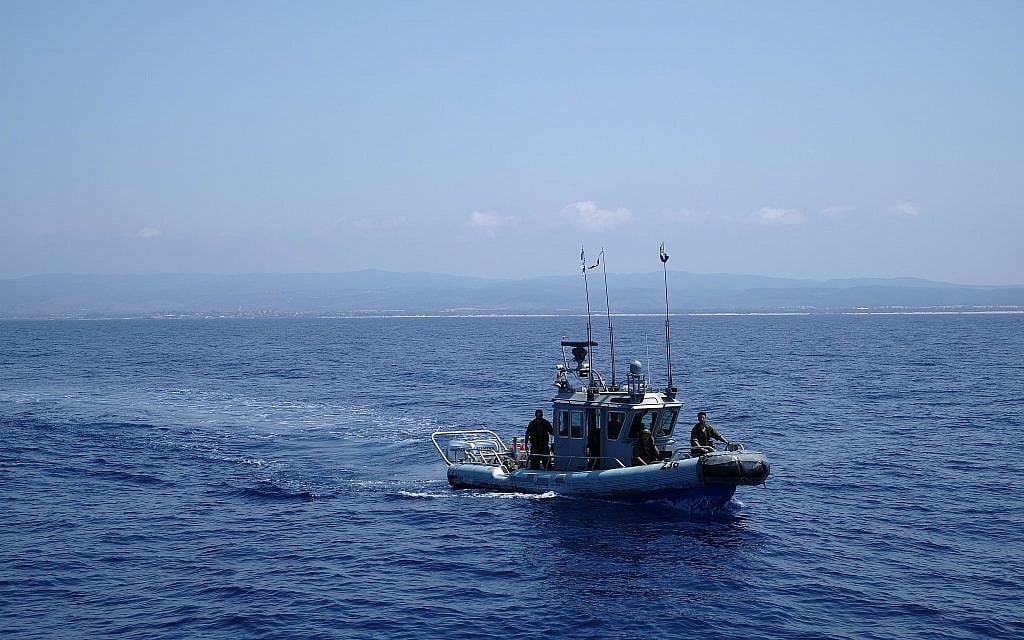
After he inspected the engineering room, the mechanic determined that nothing was wrong. The motor’s earlier weird behavior was just weird behavior. We got the all-clear.
In total, we’d idled just south of Haifa for nearly an hour, and the rest of the ships were nearing our main stop of Tel Aviv.
Relieved to learn that the motor was fine, the captain put it to use, opening the throttle and pointing the ship due south so we could catch up with the rest of the mashat.
The boat’s white wake cut through the sapphire of the Mediterranean, making a sort of abstract Israeli flag, as we barreled past the old Roman city of Caesarea and the posh beaches of Herzliya.
Along the way, we honked at the families sailing their yachts off the coast. Seeing the navy ship, they waved hello and brandished Israeli flags.
Finally, we made it to Tel Aviv’s Gordon Beach and joined the rest of the flotilla. There were two Dolphin-class submarines, a massive Sa’ar 5-class missile boat, two Sa’ar 4.5-class gun boats, two other Dvoras and a few Morena rigid inflatable boats, used by the elite Shayetet 13 seal unit for its covert operations.
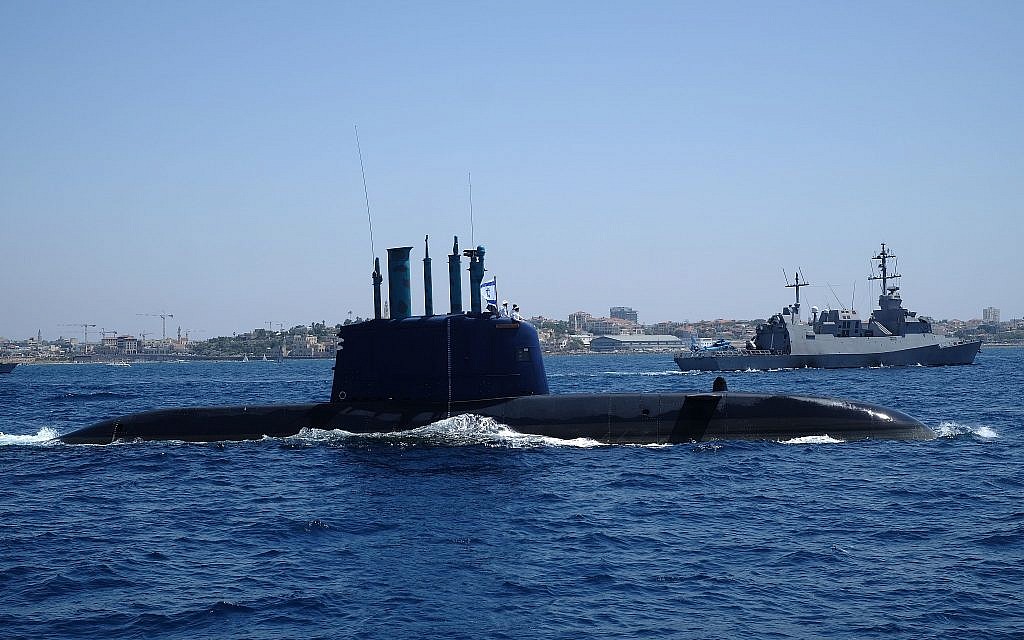
Maj. Tal Cohen, who planned the mashat, said one of the driving forces behind it was bringing the oft-forgotten navy into the spotlight.
“Normally, we perform a lot of activities that are out of sight,” he said over the phone.
The navy was definitely on display on Thursday. Darting between the massive gun boats in Tel Aviv’s waters were jet skis, sailboats and catamarans.
Soon after we arrived in Tel Aviv, the navy’s mashat was joined overhead by the air force’s matas.
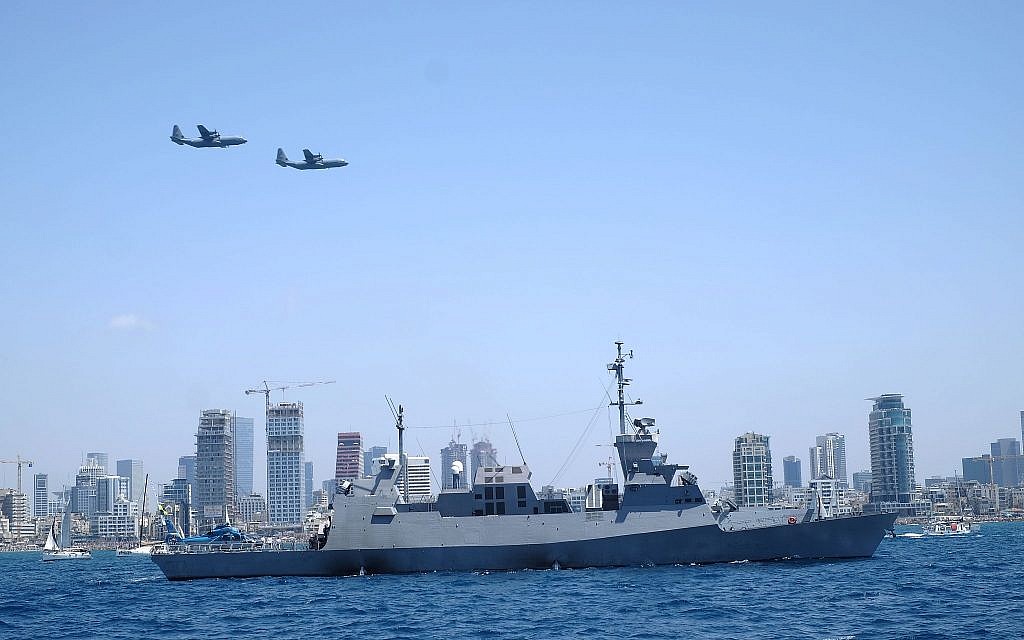
F-16, F-15 and F-35 fighter jets shrieked across the sky, followed by lumbering C-130J Super Hercules and a Boeing refueling jet.
Unlike the mashat, the matas is an annual tradition. But this year, for Israel’s 70th Independence Day, the air force decided to do something special.
Israeli airmen reached out to their counterparts abroad to participate in the fly-by. Five countries agreed: Austria, Canada, Poland, the United Kingdom and Greece all sent representatives, mostly transport planes, said Lt. Col. “Gimel,” the head of the air force’s exercises department, who organized the matas. (For security reasons, the officer can only be identified by the first Hebrew initial of his name.)
After the fly-by, the flotilla traveled south toward Ashdod and then Ashkelon, Israel’s southernmost coastal city before the Gaza Strip.
But while our Dvora made it to Tel Aviv in time for the air force’s fly-by, we missed the navy’s. You see, the Sa’ar 5 corvette is equipped with a landing pad for a Eurocopter AS565 Panther, and as a special treat for Tel Aviv beach-goers, the helicopter had lifted off, made a loop and landed back on the ship.
Unfortunately, this happened before we’d arrived, and since our Dvora was carrying six photographers who’d driven to Haifa first thing in the morning specifically to take pictures of the flotilla, it was not an ideal situation.
“Pics or it didn’t happen,” as the kids say.
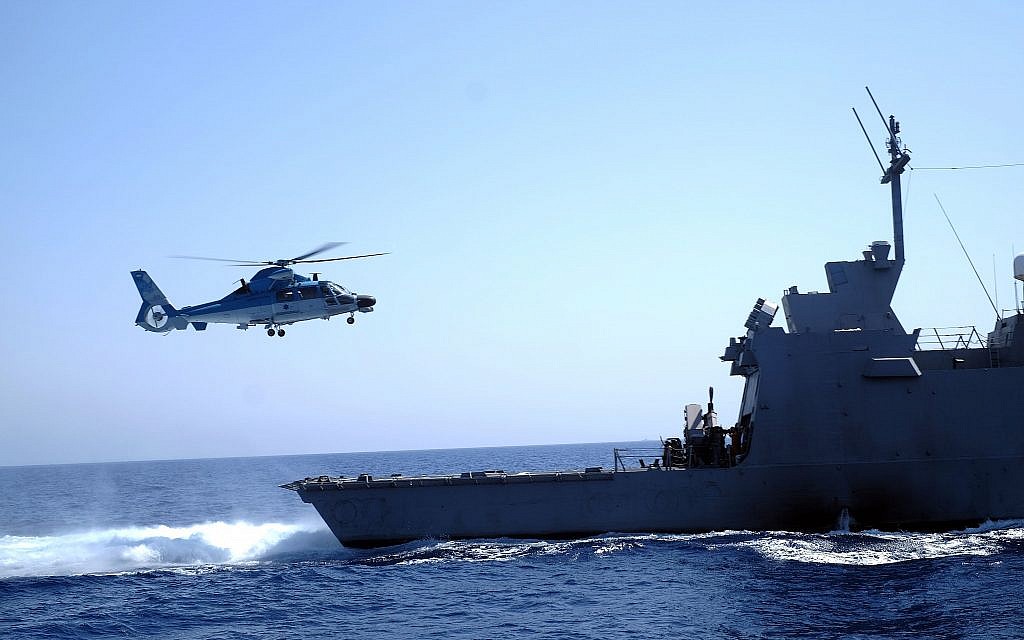
And so it was decided that the helicopter would give another demonstration for our benefit. (Israeli taxpayers, don’t think about how much that cost. Tell yourself that Israel only turns 70 once and that the pilot probably had flight hours he had to perform anyway.)
So while the rest of the flotilla hugged the coast so that Israelis could watch as it passed, our Dvora and the Sa’ar 5 broke off from the pack and traveled a bit farther out to sea.
Near Ashdod, the Eurocopter took off and buzzed overhead. The photographers snapped pictures with their cameras, everyone else with their smartphones.
And that effectively brought to a close our mashat. Before the helicopter even touched back down, one of the sailors who’d taken over for the captain made a U-turn and set us on a northerly course, back to Haifa.
What an end to the day.
We got back to the port almost two hours later than was originally planned. I was sunburnt, starving and exhausted.
But at least this time I didn’t puke.
The Times of Israel Community.