

‘A very bad year’: Despite Gaza truce, academic boycotts pile on, threatening Israel’s future
Laws promoting academic freedom have limited the fallout in the United States and Europe, but some schools have found creative ways to isolate Israel under the radar
 Add ToI as a Preferred Source on Google
Zev Stub is the Times of Israel's Diaspora Affairs correspondent.
In early November, the University of Naples Federico II, the oldest public university in the world and one of the largest in Europe, signed a resolution to boycott cooperation with Israeli institutions. The boycott came weeks after a ceasefire in the two-year Israel-Hamas war took hold in the Gaza Strip.
The resolution announcing the measure expressed “hope that the truce will lead to a real turning point toward conditions of stable and lasting peace.”
Henceforth, it said, the university would suspend “the signing of new scientific and educational collaboration agreements with Israeli universities, institutions, and public and private companies.”
The statement, which followed an appeal to the university’s administration in August from more than 230 professors and faculty members, may have been surprising in its timing. But it followed a clearly established pattern among universities worldwide over the past two years.
Academic boycotts of Israeli institutions and professors have intensified since October 7, 2023. And despite laws prohibiting such boycotts in both the US and Europe, those involved in fighting them say universities have been developing new tactics to distance themselves from Israeli academia without being penalized by regulators and funders. That has left Israeli academics, their schools and those supporting them to innovate their own ways of safeguarding their place in higher education.
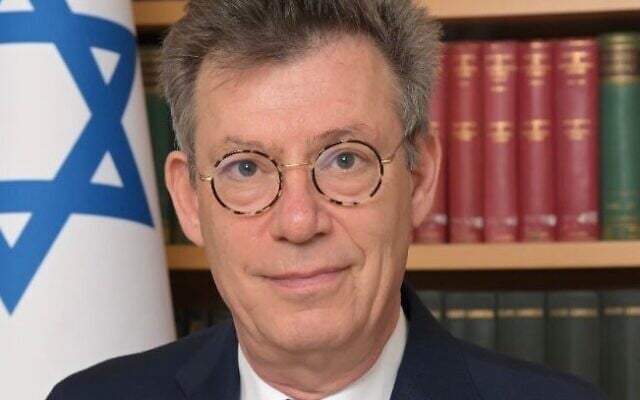
“Last year was already a very bad year for boycotts, and we saw it get even worse at the beginning of 2025,” said Emmanuel Nahshon, head of an Association of Israeli Universities task force for combating academic boycotts, in a telephone interview.

His organization tallied 300 instances of boycotts in the year following the Hamas-led October 7, 2023, attack that launched the war in Gaza. The following year, the number more than doubled to 700.
The instances include hundreds of boycotts of individual researchers, as well as restrictions on working with institutions and international programs. The ceasefire in Gaza may eventually help lower the temperature of anti-Israel boycotts around the world, Nahshon said, but he doesn’t expect improvement in the near term.
“And that is only the number of overt boycotts that are clearly defined,” he said. “On top of that, you have cases where things are less clear, like when an Israeli submits an article to a publication but doesn’t get a response, or if they are not invited to speak at a conference on a topic where they are an expert. These are harder to pinpoint, but no less damaging.”
Boycotts at dozens of universities
Israeli academia has been subject to boycotts for decades, particularly after the pro-Palestinian Boycott, Divestment and Sanctions (BDS) campaign made it a central target of its anti-Israel strategy in 2004. It’s a trend that BDS has pursued in other fields as well, with actions to target Israel being promoted by Hollywood actors, sports associations, and cultural institutions.
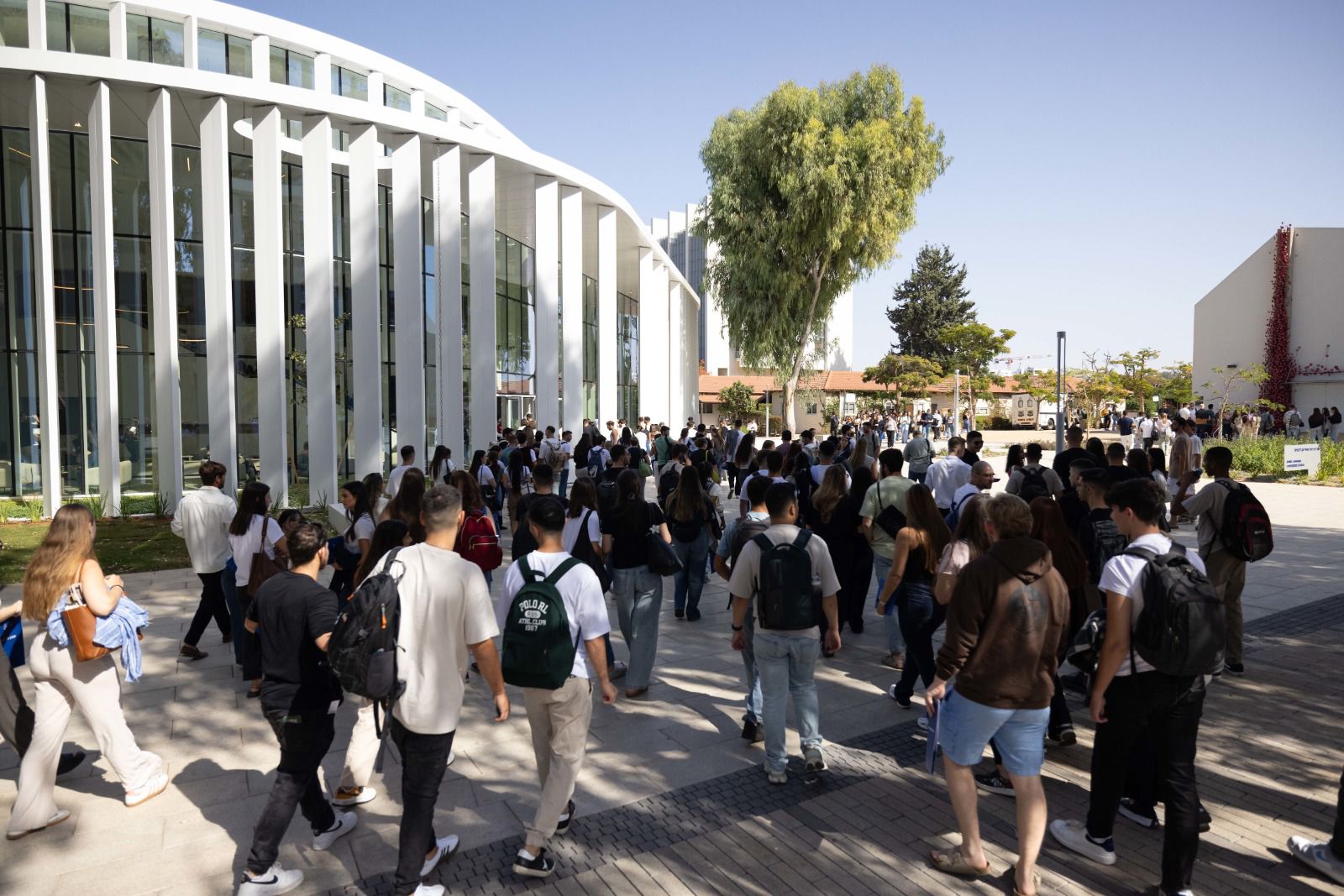
Israeli academia relies heavily on international cooperation, with some 38 percent of Israeli research conducted in cooperation with European academics, the Innovation, Science and Technology Ministry has said. Many Israeli tech companies, including in the defense industry, have lucrative contracts with universities.
Much of that cooperation is anchored in European Union programs like Horizon Europe and Erasmus, which support research, innovation, and educational programs across the continent. Those programs require universities to commit to principles like promoting academic freedom and cross-border collaboration. Formally boycotting Israel would mean forgoing access to billions of euros earmarked for research and development.
According to Nahshon, the reliance of European universities on funding from those same programs has curbed boycott efforts. An attempt to cut off Israel from the EU research funds earlier this year fell short.
The prospect of an expanded embargo on Israel’s academic institutions would ‘strategically damage Israel’s scientific future and threaten its security, high-tech sector, and the entire economy’
However, Nahshon said, at least one school, the University of Ghent in Belgium, has openly stated that its commitment to the anti-Israel boycott movement outweighs the importance of receiving EU funding. It is not exactly clear what the university is doing to make up those losses, he noted.
Overall, more than 30 universities across Europe have voted to boycott Israel on an institutional level, Nahshon said, primarily in Belgium, the Netherlands, Italy, and Spain.
In recent months, boycotts have gained particular momentum in Italian universities. Decisions to suspend agreements with Israel have come from the Universities of Pisa, Bologna, Siena, Cagliari, and Milan, in addition to the campus in Naples, according to Nahshon’s task force.
The prospect of an expanded embargo on Israel’s academic institutions would “strategically damage Israel’s scientific future and threaten its security, high-tech sector, and the entire economy,” a recent report by the task force to university presidents concluded.
‘Shadow boycotts’ and student demonstrations in Europe
To get around the funding restrictions, universities that institute boycotts use “devious, problematic” tricks, Nahshon said. In some cases, they have set up ethics committees that recommend cutting ties with Israeli institutions, allowing administrators to claim the decision had been made for them.

In other cases, known as “shadow boycotts,” schools simply “ghost” Israeli researchers or avoid engaging in joint projects without giving any reason, providing a defense against any accusation of deliberate isolation.
“These are much more serious than student protests,” Nahshon said. “These are decisions organized at the university level, with entire institutions making the commitment to sever ties with their Israeli counterparts.”
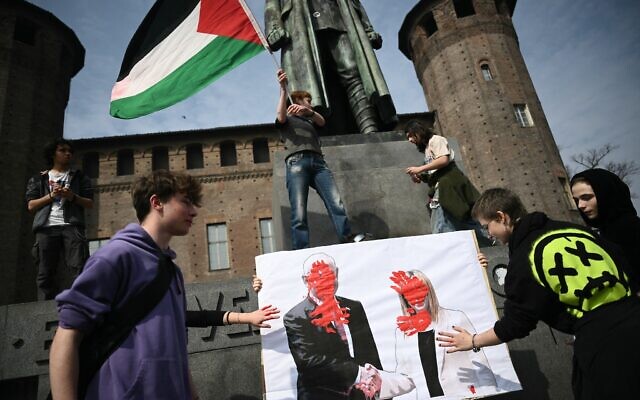
Often, it is those student protests that lead to boycotts. A key motivator for the wave of boycotts in Italy was the pro-Palestinian flotilla that attempted to breach Israel’s blockade of Gaza and deliver a small amount of humanitarian aid. The activists on the boats included several dozen Italians, including elected officials, and the flotilla was accompanied for a time by an Italian naval vessel.
“The Global Sumud Flotilla this summer galvanized the support of many Italian students, and they were able to pressure university administrators to boycott Israel, even though the administrators themselves were against it,” said Serena Di Nepi, a history professor at La Sapienza University of Rome.
“Students are very passionate,” she added. “They think that by protesting, they can make a difference, like the anti-Vietnam War protests in the US in the 1970s.”
But she said that the boycotts are still a minority of cases. Most universities are reluctant to participate in boycotts, she asserted, and most university leaders are still dedicated to maintaining academic freedom in the face of the student demonstrations.
“There’s a heavy atmosphere on campus, but even in schools that have signed the boycott, I think many university governments won’t actually participate,” she predicted.
External pressure adds to the heat
Sometimes, the pressure comes from outside the university. In Ireland, a number of public figures, including actress Olwen Fouéré, recently rejected honorary doctorates from the University of Galway due to a research partnership it has with The Technion – Israel Institute of Technology in Haifa, studying sustainable seawater technologies.
Galway’s president has said that the school would not participate in any new research agreements with Israeli partners, but that it was contractually obliged to continue the existing partnership with the Technion.

Israeli academics have also faced boycotts at gatherings and pan-European associations. In one case, in February 2024, Gilad Hirschberger, a psychology professor at Reichman University, was disinvited from giving a keynote address to a conference in Norway because the organizing committee decided “to avoid collaboration with representatives of countries involved in ongoing warfare,” according to the text of a letter that he posted on social media.
In September of this year, Guy Stiebel, the chairman of Israel’s Archaeological Council, and 22 other Israeli academics were told by the European Association of Archaeologists that they would be allowed to attend the organization’s annual meeting only if they hid their affiliations with Israeli universities.

“My initial gut reaction was: ‘I do not wish to belong to any club that is willing to have me as a member,’ Stiebel wrote in a letter to the EAA following that decision. “A boycott contradicts all that defines academia and academic freedom, and undermines everything that academia seeks to achieve.”
A deluge of protest letters from others in Israel eventually led the association to reverse its decision, and it announced the day before the conference that the ruling was “rushed and misjudged.” But Stiebel is not resting easy.
“We were ‘successful’ in this case, but no one can assure what will happen next time,” Stiebel told The Times of Israel. “This is just one example of something happening every week in Israeli academia, and it’s a very slippery slope for everyone.”
Fewer boycotts in the US
Across the Atlantic, a stronger culture of academic integrity in the US has made the fight against boycotts somewhat less charged than in Europe, according to Miriam Elman, executive director of the Academic Engagement Network (AEN), which works to counter antisemitism and anti-Israel activities on American campuses.
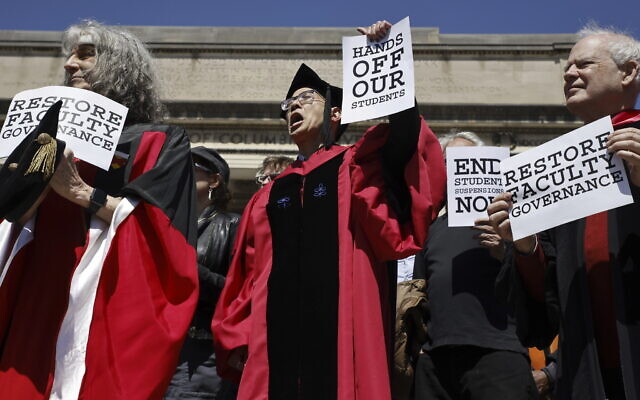
Boycotts have not taken hold despite student governments nationwide voting, across recent decades, in favor of BDS resolutions.
“In the United States, we have held the line,” Elman said. “There’s not a single university — at the [official] university level, from president to chancellor — where the administration has adopted an academic boycott of Israel.”
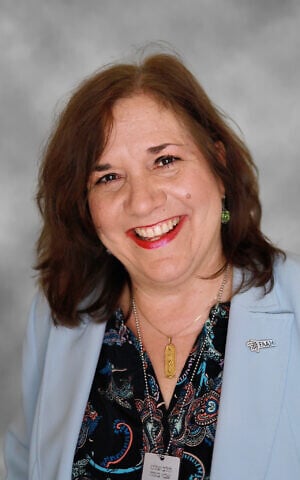
This is in part due to sustained, coordinated efforts by organizations such as her own, alongside groups including Hillel International, American Jewish Committee, and the Jewish Federations of North America, Elman said.
“Our argument is always that academic boycott is antithetical to the academy,” Elman said. “We continue to be successful in making the case for open inquiry and the free exchange of ideas.”
Many US states have also enacted so-called “anti-BDS” laws over the past decade, prohibiting or penalizing state institutions for supporting or participating in boycotts of Israel.
Under US President Donald Trump, anti-discrimination regulations are being enforced much more aggressively on the federal level as well, with federal grants and funding tied to compliance with their standards.
The Trump administration has repeatedly cited campus antisemitism in its moves to withhold federal funds from universities, and the release of those funds has come alongside the school taking steps to counter anti-Jewish discrimination.
“Trump clamped down strongly on a lot of the causes of the problem,” Elman said.
Shunned on campus and amid colleagues
That’s not to say that Israeli professors are welcome on campus. A recent survey conducted by AEN and the Anti-Defamation League (ADL) found that a large majority of Jewish and Zionist American faculty reported experiencing shunning and exclusion, including smear campaigns, boycotts, and doxxing efforts carried out by colleagues and administrators.
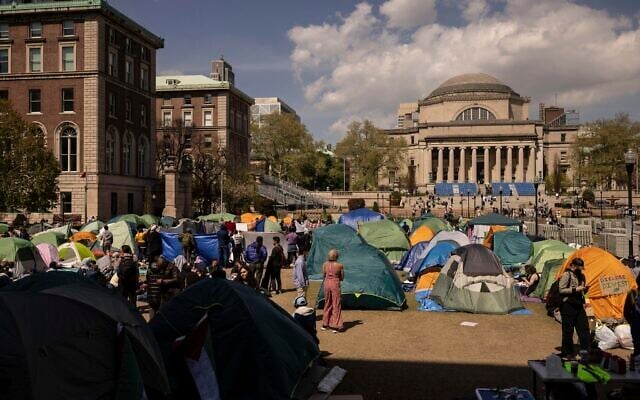
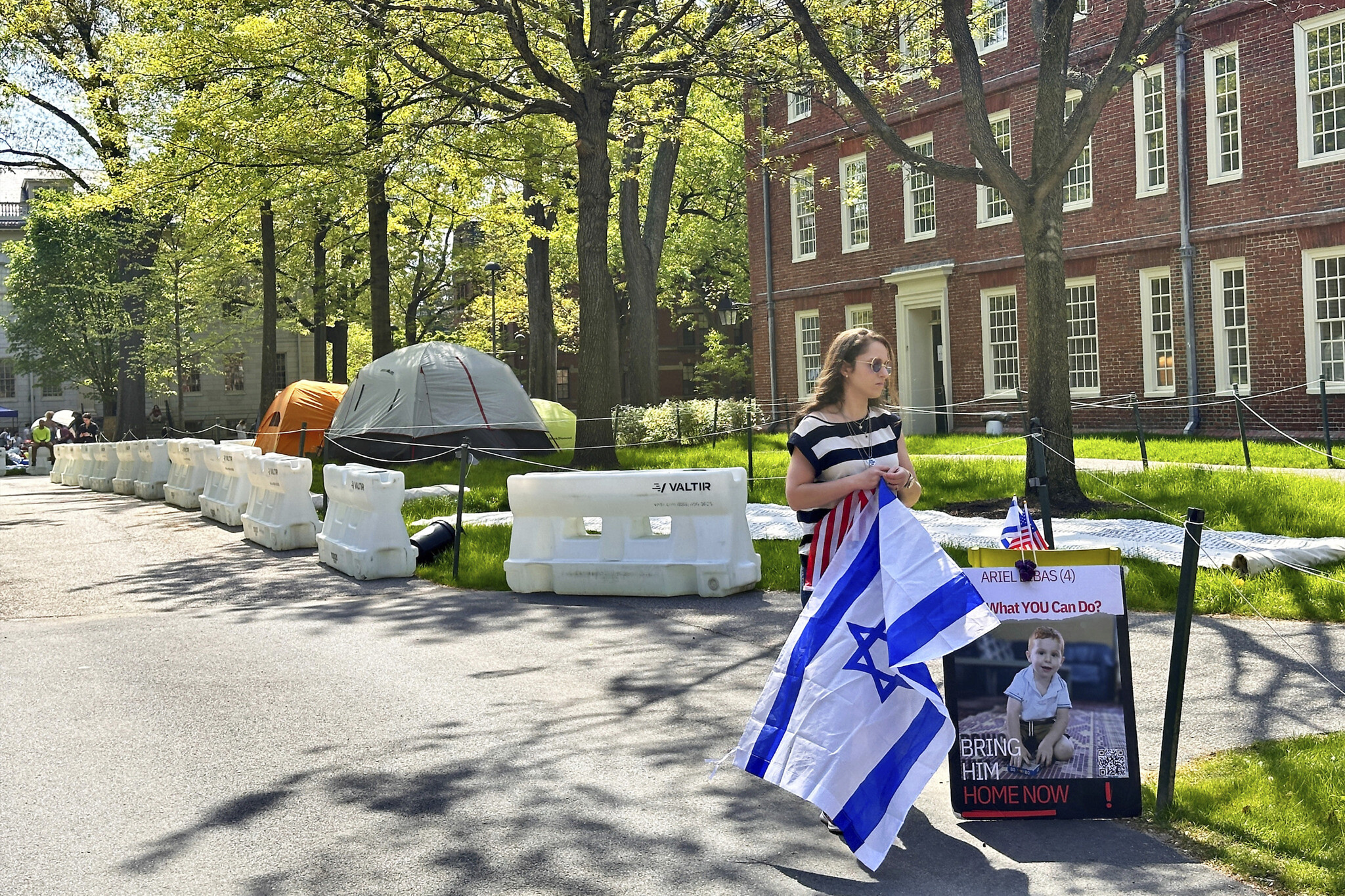
Student protest movements, particularly the anti-Israel encampments that exploded on American campuses in the spring of 2024, have also contributed to a toxic environment on many campuses.
“I saw faculty standing at protests, protecting demonstrators, writing screeds about Israel, condemning anyone who didn’t support Hamas or ‘Free Palestine’ as being on the ‘wrong side of history’ — and this included people at the senior level in my school,” one respondent to that survey recalled.
Several academic associations, faculty departments, student governments, and unions have adopted their own anti-Israel policies, including boycotts. Many predated October 7, but some have come afterward.
These people were very organized, and clearly had a list of people they were looking for
Michael Saenger, a professor of English at Southwestern University in Texas, helped co-found the Faculty Against Antisemitism Movement, a network of academics fighting against antisemitism on campus, after he saw professional groups like the Modern Language Association (MLA) become battlegrounds for efforts to endorse BDS. (The MLA eventually blocked a BDS resolution.)
“I would see demonstrations on campus, public statements denouncing individuals, and people trying to ambush professional organizations trying to enforce ideological conformity,” Saenger said. “These people were very organized, and clearly had a list of people they were looking for.”
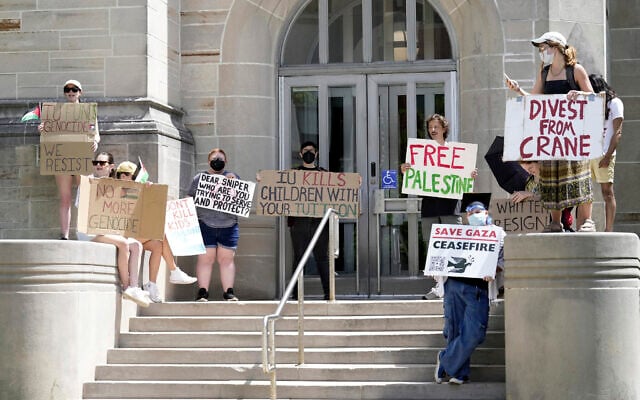
Last August, the American Association of University Professors, the largest organization of academics in the United States, sharply reversed its decades-old stance against academic boycotts of any sort. While it didn’t explicitly single out Israel, it did say that it now considers boycotts “legitimate tactical responses to conditions that are fundamentally incompatible with the mission of higher education.”
More recently, a survey of 20 US professional academic associations, released in mid-November by the ADL, found that Jewish members at half the associations surveyed complained of a hostile internal climate. A quarter of Jewish respondents said they felt the need to hide their Jewish or Zionist identity.
“Unlike colleges, most associations have failed to take the fight against antisemitism seriously,” ADL vice president of advocacy Shira Goodman said in the report. “This needs to change if we want to disrupt the exclusionary trends we’ve tracked in academia in the past two years.”
Fighting back
Nahshon says his task force has had numerous successes pushing back against boycotts by threatening legal action.
“We’ve had some clear victories where we simply contacted the universities and pointed out the violations of European law in their actions,” he said. “We recently overturned a threat to exclude Israelis from the European Association of Archaeologists, among others, using this tactic.”

The group also works to monitor the social media activity of pro-Palestinian organizations on campuses to gather information and prepare for upcoming boycott events, Nahshon said. And they are also working to develop stronger networks with local Jewish communities in university neighborhoods to find an additional entryways into the schools.
“This is a long-term effort, and it will take time to produce results, but it’s something that is necessary,” Nahshon said.
Meanwhile, Israeli universities have ramped up their own efforts. The Technion’s Samuel Neaman Institute has launched a program called “Scholar Shield” to track and respond to boycott activities. It provides institutions with a dashboard for monitoring academic BDS activities, along with suggestions for how to fight them.
The government hasn’t done a thing on the BDS issue, but we hope that now this will be a wake-up call
Its toolbox includes suggested templates for communicating with journal editors and foreign organizations, a database of relevant incidents and legal precedents, and a repository of articles and declarations that oppose academic boycotts.
And following the October 7 attack, Ben-Gurion University in Beersheba set up a team led by President Daniel Chamovitz and other administrators to address academic boycotts. The university told The Times of Israel that it was “closely tracking indications of academic boycott and coordinating with the other Israeli universities and with the Committee of University Presidents to present a united front to combat them.”
Chamovitz’s name was recently included on a hit list made by an anonymous organization, which offered money in exchange for the murder of Israeli academics.
“There have been threats against us for two years already,” Chamovitz told the Kan public broadcaster last month. “The government hasn’t done a thing on the BDS issue, but we hope that now this will be a wake-up call.”
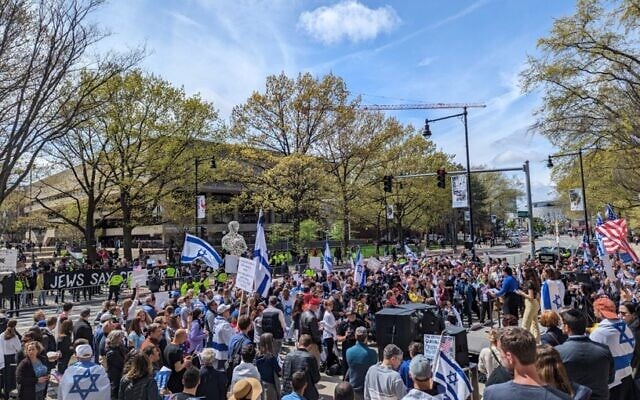
In the US, a group called Kalaniyot is working to deepen ties with Israeli academia by bringing young early-career academics from Israel to top American universities. The name is the Hebrew word for anemones, the flowers that bloom in southern Israel.
First launched by faculty members at the Massachusetts Institute of Technology, Kalaniyot has now expanded to include such schools as Harvard and Columbia, with plans to expand further in the coming year.
“The universities like this program a lot,” Elman said. “They want to provide more educational opportunities for students, and they don’t support an academic boycott. We engage with thousands of university administrators every year, and I have yet to meet a single administrator on a US campus who supports the idea of an academic boycott. What they want is more educational programs like this for students, to bring more Israelis to learn with them.”
Despite efforts such as these, most of the people working to fight boycotts agree that they won’t end anytime soon.
“We will likely be facing isolation for many years to come,” Nahshon said. “What we need to do is learn to adapt to this situation and develop better tools to deal with it.”
WATCH for more on this topic:








The Times of Israel Community.