

Amid pandemic, some Israelis find solace in forced career changes
After losing jobs in restaurants, tourism and industry, some are finding a new path working in nature, while others have turned to high-tech
 Add ToI as a Preferred Source on Google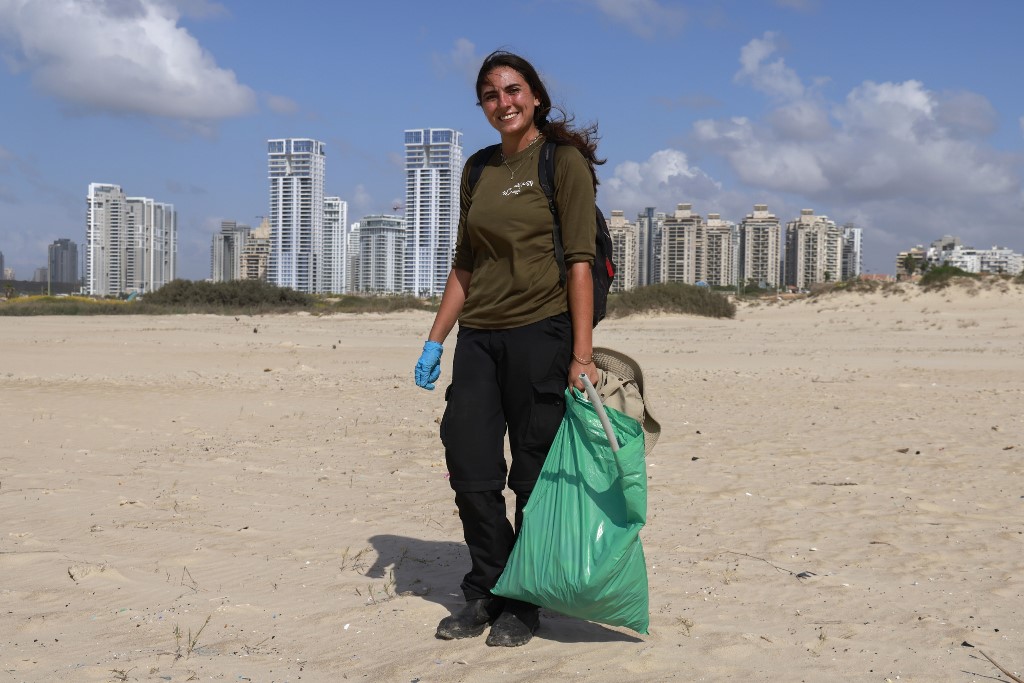
AFP — Back when Israeli bartender Lotem Benbenishti was mixing cocktails for a living, the beach was where she went for fun.
But on a recent sunny morning in northern Israel, she was hard at work — scooping plastic off a sandy beach and stuffing it into a garbage bag.
Benbenishti’s transition from the bar to the beach was forced by the coronavirus pandemic that has devastated Israel’s economy and left hundreds of thousands jobless.
Like many Israelis, the 28-year-old found her unemployment benefits did not cover her expenses, and she didn’t know when her restaurant pay would resume.
“I found myself sitting at home for nearly half a year,” she told AFP.

In switching jobs, Benbenishti chose a path taken by increasing numbers of Israelis, some of whom have had government help.
The head of Israel’s Nature and Parks Authority, Shaul Goldstein, saw an opportunity in the labor market challenges caused by the pandemic.
“I thought about all the people sitting at home doing nothing, getting their unemployment wages — but at the end of the day, they have no reason to get up in the morning,” he told AFP.
He asked Israel’s finance ministry for funding to hire 50,000 unemployed people to clean sites and remove invasive flora.
He got money for just 500 and launched a hiring drive, targeting people ranging from DJs to dishwashers and fitness instructors.
Seized opportunity
Benbenishti was drawn to the role through her love of nature.
While the job is more physically demanding than bartending, she said she finds it “much more satisfying”.
For Goldstein, the program offered a sudden influx of manpower to Israeli national parks in serious need of a cleanup.
“This is a project I would have wanted regardless of the coronavirus,” he said. “We seized the opportunity.”
According to the Central Bureau of Statistics, 19 percent of Israel’s labor force — some 750,000 people — remain either unemployed or on unpaid leave because of the pandemic.

Before Israel recorded its first coronavirus case in February, the unemployment rate was three percent.
Official statistics on those who have switched careers or taken vocational training during the pandemic were not available, but the trend is spreading.
Served me well
Lidor Cohen, 30, had worked as a videographer for television shows, including the Israeli version of “Survivor”, a job that saw him traveling to the Philippines.
“When the coronavirus pandemic began, I realized the industry was taking a few steps back,” he said from the Tel Aviv high-rise where he currently works.
“I spent two months at home, I saw things weren’t going anywhere.”
A series of tests revealed Cohen had an aptitude for computer technology, so he started a training course and applied for a job.
He was hired by Cybereason, a firm specializing in cyber defense.
The change has been “crazy,” he said. “My backside wasn’t acquainted with this kind of routine.”
But he also told AFP he plans to stay in high-tech even after the pandemic, in part thanks to the newly discovered peace of mind offered by a steady office job.
While the pandemic has caused economic pain across the Jewish state, it has forced some towards positive career changes.

Medan Press, who now prepares saplings for delivery, has no nostalgia for his factory job where he cut aluminum on a heavy machine.
“You couldn’t stop for a minute once you start until you leave,” the 22-year-old said, speaking of his old job. “Here I have my quiet.”
Press’s career shift, after an extended period on unpaid leave, was helped by a civil society group called Hashomer Hachadash, which recruits for Israel’s agriculture industry.
A spokeswoman said it had helped 500 people find temporary or permanent work since the start of the pandemic.
“The coronavirus served me well,” Press said.
“It made me leave the factory, find something that’s good for me, good for my soul. Growing plants — is there anything that can beat it?”










The Times of Israel Community.