

As a key figure turns, papers stay locked on Netanyahu
The prime minister isn’t implicated in the submarine scandal, but with middleman Miki Ganor mulling singing for the prosecution, media sonar picks up echoes of Netanyahu
 Add ToI as a Preferred Source on Google
Joshua Davidovich is The Times of Israel's Deputy Editor
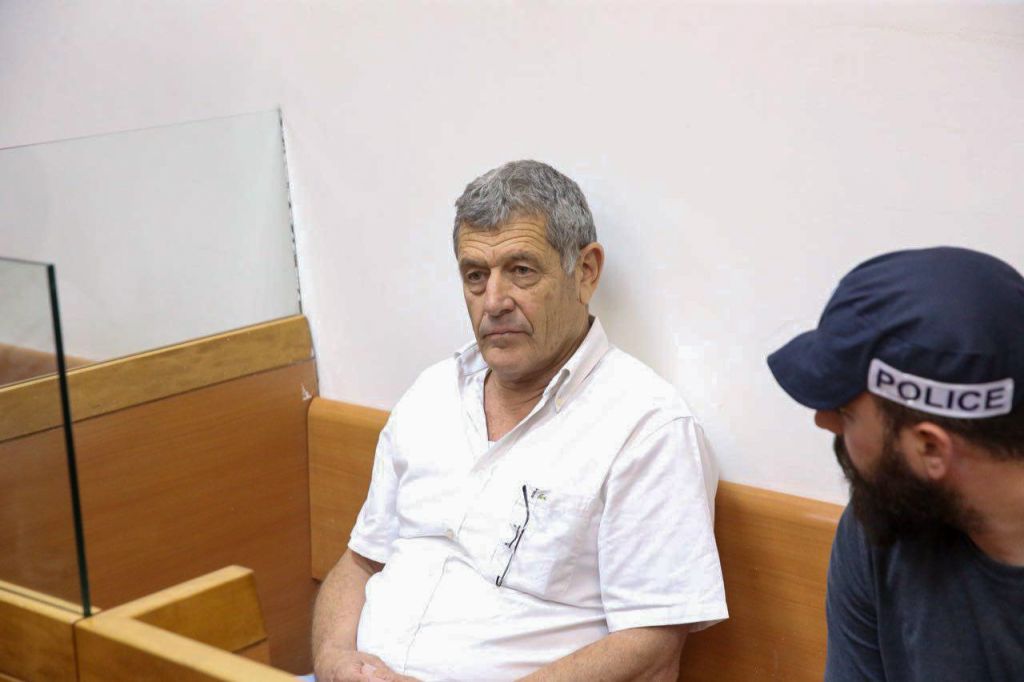
A year ago, most Israelis had never heard of businessman Miki Ganor. On Tuesday, his name and face are splashed across every front page of Israel’s daily newspapers, anchoring the news that he may turn state’s witness in the submarine scandal. But while it’s Ganor’s expressionless face and graying hair that that tattoos each A1, if anyone looks closely and squints just right, they can see the ghostly guise of Prime Minster Benjamin Netanyahu lurking on the white courtroom wall behind him.
There are still a lot of ifs surrounding Ganor, the middleman in an Israeli deal to buy German naval vessels. There’s the big if of whether he will even agree to testify for the prosecution. There’s the if of whether what he has to say can incriminate top officials involved in the deal, the if of whether he will have solid enough evidence to confirm suspicions that there’s a whole lot of graft and corruption behind the multi-billion-shekel deal and the biggest if, of whether the suspicions will climb all the way up to Netanyahu. But the very whiff of Ganor having the ability to bring the whole case — called the largest corruption scandal in the country’s history — crashing down is enough to buoy the papers — even Netanyahu-friendly Israel Hayom.
Though the case reaches those close to Netanyahu, including his lawyer David Shimron and his former national security adviser pick Avriel Bar-Yosef, the prime minister is not a suspect, a fact made plainly clear by Israel Hayom’s treatment of the case (and perhaps the reason it has no compunction about playing it up — a distraction of lesser evil, like a misspelled Trump tweet). The only times the prime minister is mentioned is to explain that he’s not a suspect and no indictment against him is expected.
Nonetheless, columnist Yoav Limor does admit for the paper that the scandal could be problematic for the prime minister.
“Given the scope of the suspicions of corruption in different deals and the influence of the suspects, Netanyahu will not be able to claim that the decisions he made were proper even if it becomes clear he didn’t receive anything himself,” he writes.
There’s no shying away from linking Netanyahu to the case in Haaretz, which puts the prime minister’s name in its front page headline and leads off its news story with a report that police will now quicken the pace of investigations against him to free up resources for the sub scandal.
“Based on a situational assessment made by the police and state prosecution, it was decided that Case 1000 would be given top priority so the investigation could be wrapped up within a month,” the paper reports, referring to an investigation into gifts Netanyahu and his wife allegedly received from wealthy businessmen.
Netanyahu’s name also comes up a lot in Yedioth Ahronoth, which is known for having a bone to pick with the prime minister and clearly smells blood, devoting 10 pages to coverage of the case.
The paper goes through the various suspicions of corruption and the “sea of connections” Ganor has with government officials and other important people and breaks the news that in the wake of the scandal, the German company has decided to freeze the deal.
Through it all the paper makes like David Simon and manages to stuff some drama into what could easily be a boring stuffy police procedural.
“Nati Simhoni didn’t see it coming. For months he had been accompanying Miki Ganor to testimonies over the submarine case and whispering in the ear of the key figure in the case that turned last week into suspicions over graft and bribery,” the paper writes about Ganor’s lawyer. “He was the closest person to him, but at their Friday morning meeting Ganor managed to surprise him — and the lead counsel replied that he could no longer represent him. But that was just the start of the drama that was revealed yesterday.”
The paper also devotes a story to former national security adviser Uzi Arad telling them that in 2009 Netanyahu “approved” ThyssenKrupp selling vessels to Egypt without getting anything in return — clearly hinting at some sort of quid pro quo.
On Yedioth’s op-ed page, another former national security adviser, Giora Eiland, writes that a commission should be set up to investigate Israel’s other defense purchases as well to see if there is baksheesh there too.
“The budget given by the state for defense purchases is a loaded thing. Not managing it smartly, buying things earlier than needed, purchasing things not really needed, denying a tender to help one company — all these things add up to billions and operational damage that is hard to quantify,” he writes. “Is it not correct to set up a committee to investigate this? The investigators from the police’s 433 anti-fraud units are experts in the field, but are they the body that should be checking, for instance, into discreet agreements with foreign countries regarding arms sales to another country, like Egypt?”
It was partially all the media attention on the sub scandals and others that have caused Netanyahu to embark on a campaign against the press in recent days, including his claim that he is being lynched by journalists. In Haaretz’s op-ed page, Nitzan Horovitz, a reporter-cum-politician-cum-analyst, says Netanyahu is paranoid, as neither the media nor police or prosecutors are out to “drink his blood,” and would actually rather he stay on the straight and narrow so they don’t have to deal with the “headache” of uncovering all the wrongdoing.
“Anyone who has ever come to one of these organizations with information about senior officials is very familiar with the reaction of hesitation, suspicion and rejection of the hot potato. The media isn’t crazy about it either,” he writes. “For the most part the Israeli media has neither the capability nor much desire to do such research, which is expensive and accompanied by lawsuits and intolerable pressure. If there are investigations and research, they certainly don’t stem from the system’s great enthusiasm for investigating, but on the contrary: It’s a kind of miracle that they happen at all.”









The Times of Israel Community.