

Satellite images appear to indicate damage at IAF base following Iranian missile attacks
Low-res pictures taken Monday seem to show damaged hangar at Ramat David airbase, IDF did not report impact in area; Iran says 2 of its air defense soldiers killed in IDF strike
 Add ToI as a Preferred Source on Google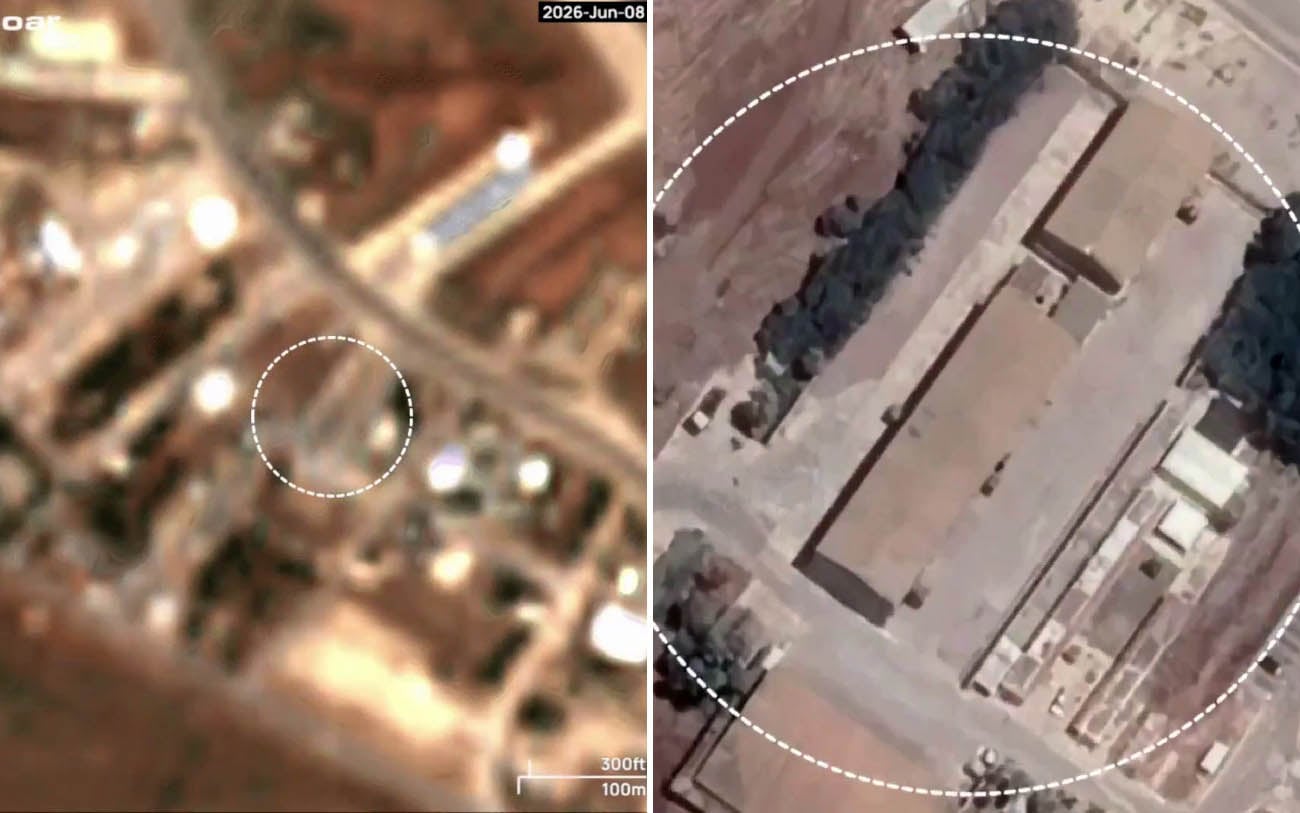
Satellite imagery taken Monday appeared to indicate that damage was caused at the Israeli Air Force’s Ramat David Airbase in northern Israel during Iran’s ballistic missile attacks Sunday night.
Low-resolution images dated June 8 from the European Commission’s Sentinel-2 satellite, processed by the Copernicus Browser site, showed a discolored patch where a hangar is located at the airbase, possibly indicating that it was hit during the attacks.
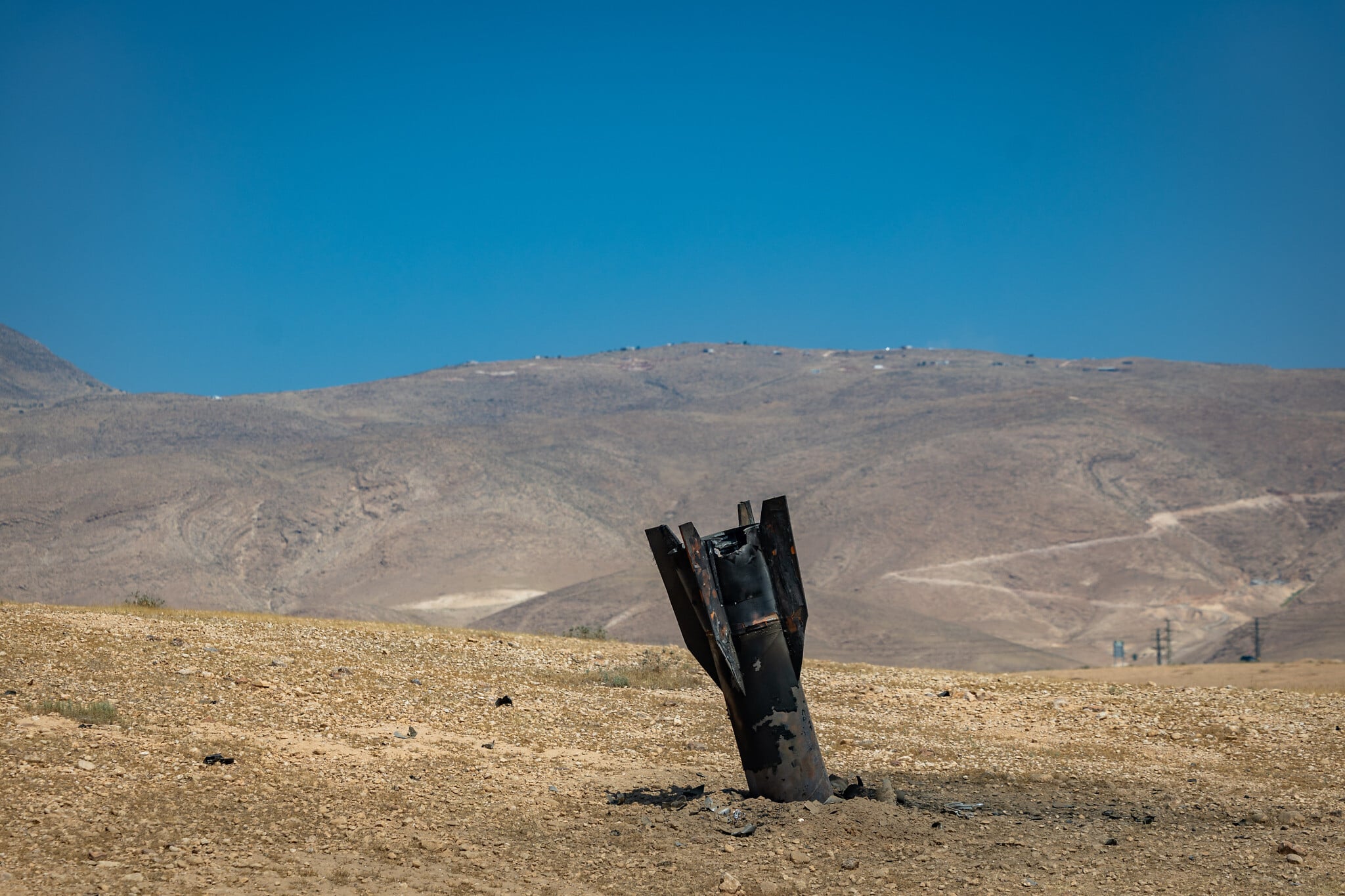
Iran launched 24 ballistic missiles at Israel on Sunday night and Monday morning, with many of them aimed at northern Israel. In addition, the Iran-backed Houthi rebels in Yemen fired two ballistic missiles at Israel on Monday morning.
The IDF reported that all of the missiles fired on Sunday night were either intercepted or landed in open areas, and many of those fired Monday were also shot down. No Israelis were hurt in the attacks.
The army did not report any impacts in the area, and the extent of the damage at the base, if any, was unclear.
According to Iran’s Islamic Revolutionary Guard Corps, Iranian forces launched at least one ballistic missile at the northern airbase during its Sunday night barrage. Unconfirmed footage posted to social media claimed to show a missile striking in the area.
Satellite imagery from June 8 shows a possible strike at Ramat David Airbase.
Explore and Compare: https://t.co/4foamTEXty
Although the imagery is low-res, a white patch where the hangar previously stood is visible. Thanks @tom_bike for the find.#MiddleEast #Israel #IranWar https://t.co/NtOlkFdU7E pic.twitter.com/JJmGcv4x8E
— Soar (@SoarAtlas) June 9, 2026
The airbase, located some 15 kilometers (10 miles) southeast of Haifa, is believed to house three F-16 fighter jet squadrons and a secretive drone squadron.
In the past, the IDF has acknowledged that some of its military bases were hit by Iranian missiles, saying that the facilities remained fully functional.
Israel’s military censor generally bars the publication of the exact locations of missile impacts, particularly those that hit sensitive sites, over fears that doing so will aid Israel’s enemies in refining their targeting.
Iran says 2 air defense soldiers killed in Israeli strike
As for Israel’s strikes on Iran, Iranian state television announced Tuesday that at least two members of the army’s air defense force were killed in Israeli strikes the day before.
“These esteemed martyrs of the Army Air Defense Force attained martyrdom while carrying out their mission of defending the country’s skies during yesterday’s aggression by the Zionist regime,” state television said.
Funerals for the two soldiers were set to be held in Tehran on Tuesday afternoon.
According to the IDF, dozens of Israeli Air Force fighter jets struck nine Iranian air defense systems in western and central Iran on Sunday night and early Monday.
The IDF later published footage showing a strike on one of the systems, which the military said was armed with anti-aircraft missiles.
????FIRST FOOTAGE: Watch IDF strikes targeting aerial defense systems in Iran, which housed missiles intended to target aircraft. pic.twitter.com/7pWhnOuSGV
— Israel Defense Forces (@IDF) June 8, 2026
“The destruction of the systems further expands the Israeli Air Force’s aerial superiority in the skies over Iran, with the goal of continuing to remove threats to the citizens of the State of Israel,” the military said.
On Monday morning, Israeli fighter jets also struck three factories at a petrochemical complex in southwest Iran, targeting infrastructure that Iran used to make raw materials for missiles, according to the IDF.
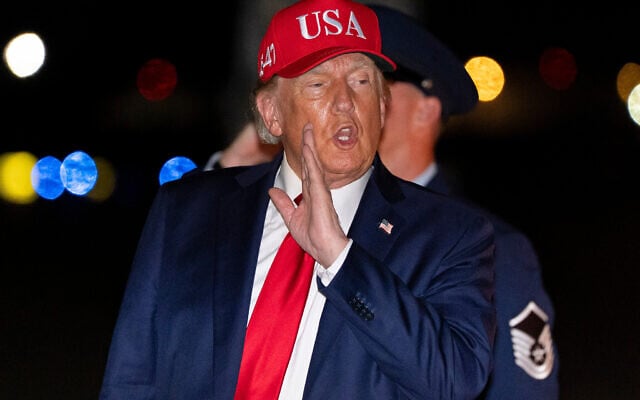
The exchange of strikes Sunday night and Monday morning were the first between Iran and Israel since April 8, when US President Donald Trump announced a halt in the joint US-Israeli military campaign against Iran launched February 28. Trump has since doggedly pursued a deal to end the war, seeking the reopening of the vital Strait of Hormuz, a global economic chokepoint, to commercial maritime traffic, but also demanding a halt to Iran’s nuclear ambitions.
Iran has insisted that any deal include an end to Israeli attacks on Lebanon’s Hezbollah terror group, which is backed by Tehran. It said Sunday’s missile strikes were retaliation for an Israeli strike on the Hezbollah headquarters in Beirut’s southern suburbs and vowed to expand retaliation if the attacks persisted.
While Israel retaliated to Iran’s missile attacks in apparent defiance of Trump’s directive, Prime Minister Benjamin Netanyahu reportedly called off a more significant attack at the request of the US president, instead opting to announce that Israel would halt attacks on Iran “for now” and warning that Israel would strike Iran and Hezbollah if it is attacked again.








The Times of Israel Community.