

As Arab-led bloc mulls reunion, Hadash MK Touma-Sliman sees chance for ‘real change’
Buoyed by public turning against war and global support for Palestinians, lawmaker hopeful that with enough support, Arab MKs can force Israel to look beyond recovering hostages and replacing Netanyahu

 Add ToI as a Preferred Source on Google
Ariela Karmel is a political correspondent at The Times of Israel. She previously reported for Calcalist and Haaretz. She holds an MA in Middle Eastern and African History from Tel Aviv University and a BA in Political Science from the University of British Columbia.
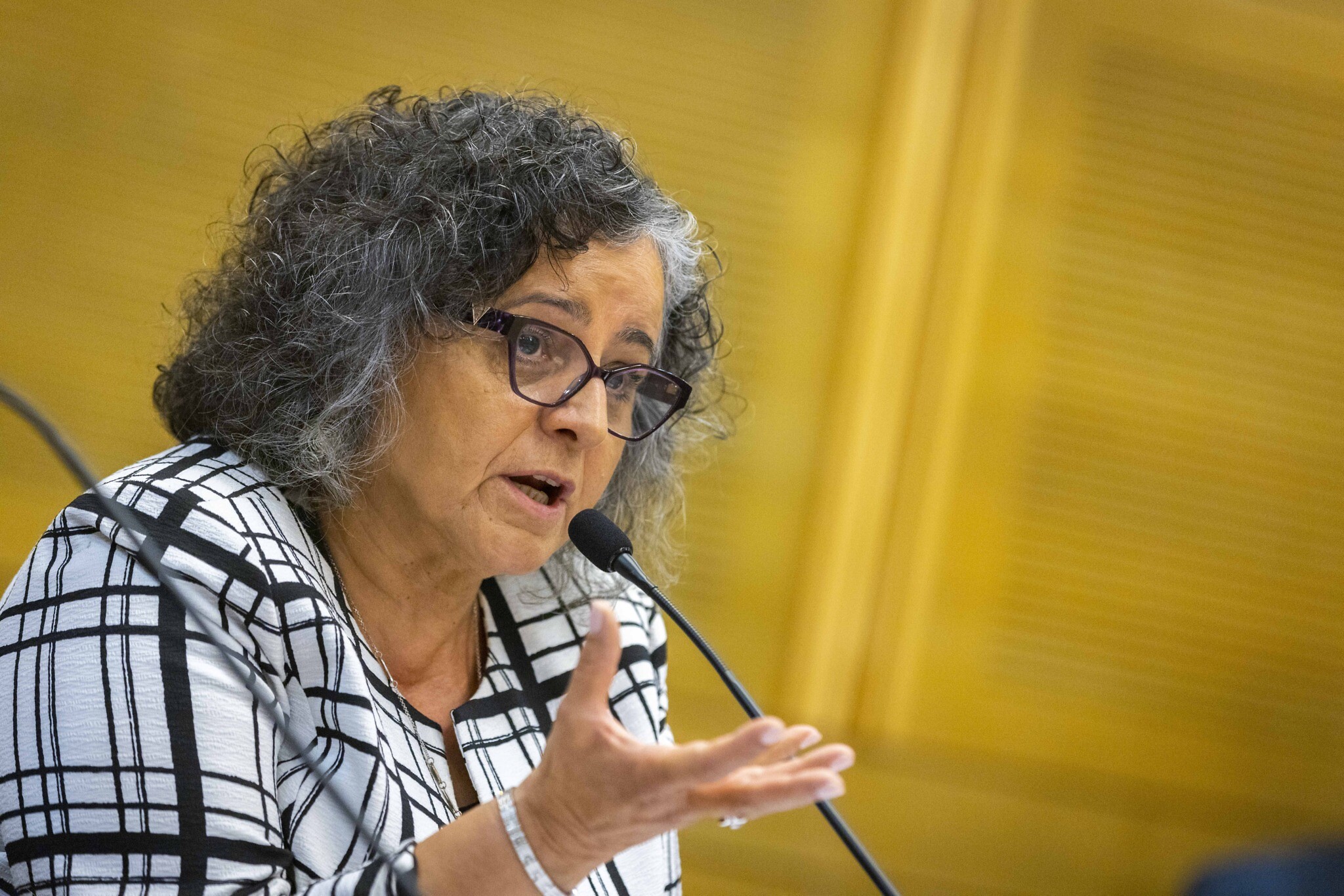
MK Aida Touma-Sliman stepped onto the balcony of the historic YMCA hotel in Jerusalem, lighting a cigarette. “I don’t smoke during the day, only at night, once it gets dark,” she said, exhaling into the cool evening air late last month.
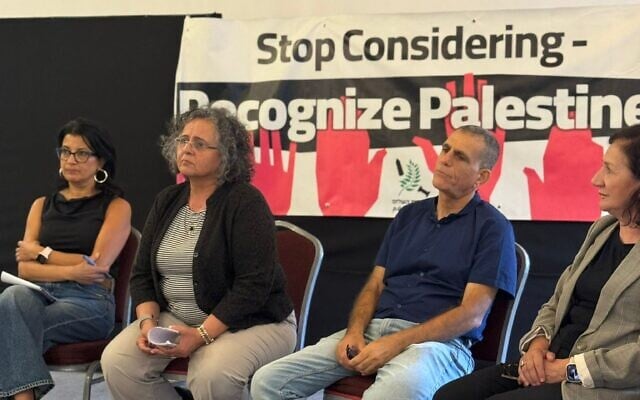
The number two lawmaker in the majority-Arab, far-left, anti-Zionist party Hadash, Touma-Sliman had just wrapped up a press conference with a panel of Israeli and Palestinian speakers to discuss the recognition of a Palestinian state by several Western countries.
Speakers, including Mossi Raz, a former MK from the defunct left-wing Meretz party, and actor and screenwriter Menashe Noy, called for an end to Israel’s military campaign in Gaza sparked by the Hamas-led October 7, 2023, onslaught, criticized ongoing settlement policies in the West Bank, and pressed for a political solution guaranteeing Palestinians’ right to self-determination.
Once considered a mainstream position, the two-state solution is now viewed with skepticism by many in Israel who doubt the prospects of a peaceful settlement with the Palestinians that keeps Israel secure in the wake of October 7.
As Western countries moved to recognize Palestinian statehood last month, seeking to pressure Jerusalem over the war in Gaza, many in Israel criticized the initiatives for appearing to come as a reward for the worst terror attack ever against Israelis, failing to take into account the country’s security concerns and liable to fuel worsening anti-Israel and anti-Jewish sentiment globally.
While Touma-Sliman and others talked up statehood at the YMCA, a few blocks away President Isaac Herzog, a former leader of the dovish Labor party and longtime advocate of the two-state solution, criticized recognition moves by Canada, the UK and Australia as “only embolden[ing] the forces of darkness.”
Touma-Sliman, an outspoken supporter of Palestinian statehood, was also critical of the recognition moves, but only because they were “too little, too late,” she told The Times of Israel after the September 21 event.
While she hailed the US-brokered ceasefire agreement that came into effect last week as a “necessary and profoundly important step,” the lawmaker told the Times of Israel that the ceasefire and release of hostages alone were insufficient, unless followed by a “commitment to rebuild Gaza and by full recognition of the Palestinian people’s right to independence.”
“Only an end to the occupation and the establishment of a Palestinian state alongside Israel will open the door to a true and just peace,” she said in a statement Wednesday.
For Touma-Sliman, being out of lockstep with the Jewish Israeli mainstream is nothing new.
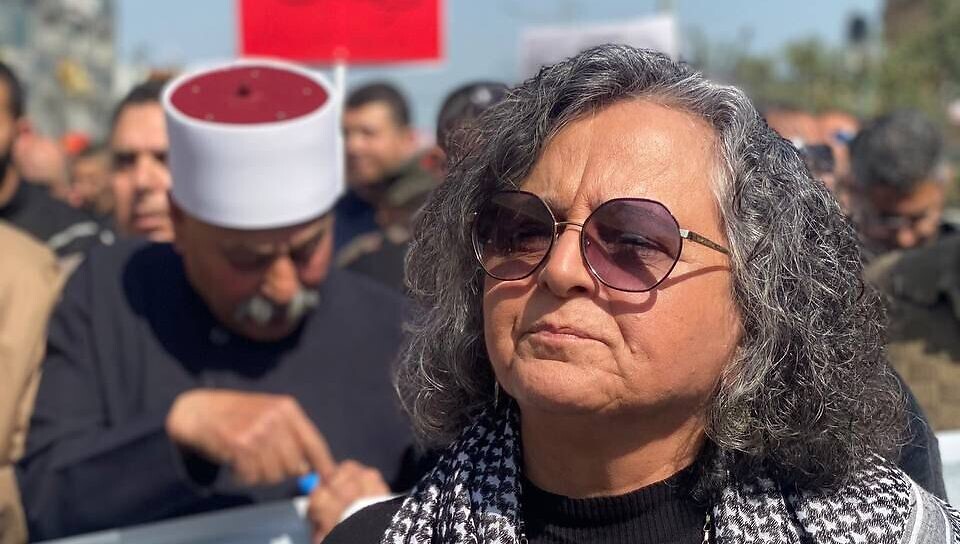
A noted feminist, former journalist and outspoken anti-Zionist, Touma-Sliman is considered to be among the more extreme and incendiary voices in the Knesset.
She has made several inflammatory statements in the past, including altering her Knesset swearing-in statement to include a vow to “fight against the occupation.” In 2023, she was formally sanctioned for accusing the military of committing a “war crime” as it fought to uproot Hamas from the Gaza Strip.
Touma-Sliman has also referred to the war in Gaza as Israel’s “war of extermination,” and a genocide — an allegation which Israel firmly denies, insisting it makes every effort to avoid harming civilians and blames Hamas for their deaths because the terror group’s fighters operate out of densely populated areas.
But with domestic opposition to the war growing, she argued that many Israelis were coming around to her views.
Together with international recognition of a Palestinian state and the US-brokered ceasefire deal, which was just coming together at the time, “a change in direction” was on the horizon, she said, fueling her optimism.
Many Israelis, the MK argued, are starting to “wake up” to the untenability of the wider Israeli-Palestinian conflict as they see the heavy prices its exacted from them during its longest and most terrible war, whether “through boycotts, through the world turning against [them], or because of the heavy toll on families of soldiers,” pointing to the mass two-year protest movement calling on the government to end the war and return the hostages which regularly drew hundreds of thousands of Israelis to the streets.
The lawmaker acknowledged that much of the anti-war momentum among Jewish Israelis stemmed not from altruistic concern for Palestinians, but from the desire to secure the release of the hostages abducted by Hamas-led terrorists on October 7, 2023. She didn’t quibble with their cause, but also discounted their protests as true resistance to the war.
“This is a very worthy reason, and as far as I’m concerned, if you oppose the war, great,” Touma-Sliman emphasized. “But saying ‘bring them back and then do whatever you want’ is not really opposition to the war.”
However, she said, there was also growing opposition to the wider Israeli-Palestinian conflict due to frustration and fatigue over repeated cycles of violence, and policies based on wishful thinking “that Palestinians will forget their nationalistic aspirations.”
“The idea that Palestinians will ever accept the occupation is a dream,” she said, referring to Israel’s continued military control of the West Bank.
Beyond cheering on international recognition of Palestinian statehood, the lawmaker has also applauded arms embargoes, economic and cultural boycotts, and arrest warrants for Israeli leaders, all of which many Israelis see as punitive and one-sided moves liable to hamstring Israel’s ability to defend itself or thrive in the international community.
Touma-Sliman argued, though, that Israelis’ own policies were what put them at risk, not the world’s reaction to them.
“The occupation endangers the security of Israelis much more than anything else,” she said, calling it “an existential threat” to Palestinians and Israelis alike.
“What does continued settler violence and the crimes that are taking place in Gaza get [Israel]? Will it bring peace?” she asked, referring to extremist Israeli attacks on Palestinians in the West Bank.
Touma-Sliman recounted a confrontation with a soldier at the Knesset the previous week who shouted at her that his friends were being killed in Gaza because of her.
“I told him I didn’t send him to Gaza. I don’t want him or anyone else to fight there. Shout at the one who sent his son to Miami and sends you to Gaza,” she said, aiming her barb at Prime Minister Benjamin Netanyahu and his Florida-based son Yair.
Alternative horizons
While Touma-Sliman is outside the Jewish Israeli mainstream, her views largely fall squarely within the milieu of many of Israel’s Arab citizens, who make up some 20 percent of the population.
The Nazareth native has been in the Knesset since 2015 for Hadash, a joint Jewish-Arab party that has long championed equal rights for Jewish and Palestinian citizens and Palestinian statehood. The party was founded in 1977 through a merger of Israel’s Communist Party and several smaller left-wing groups.
Hadash is currently aligned with Ta’al, a secularist Arab party, but with elections expected in October 2026 at the latest, it and other opposition parties are involved in various negotiations over how to build an alternative bloc to the Netanyahu-led coalition.
One of the critical pieces to unseating the current government could be the resurrection of the Joint List — a unified slate of Arab parties that, despite their sharply differing ideological views, has a track record of energizing Arab voters and bringing the community unprecedented political influence.
At its peak in 2015 and 2020, the Joint List became the third-largest bloc in the Knesset and briefly held kingmaker influence.
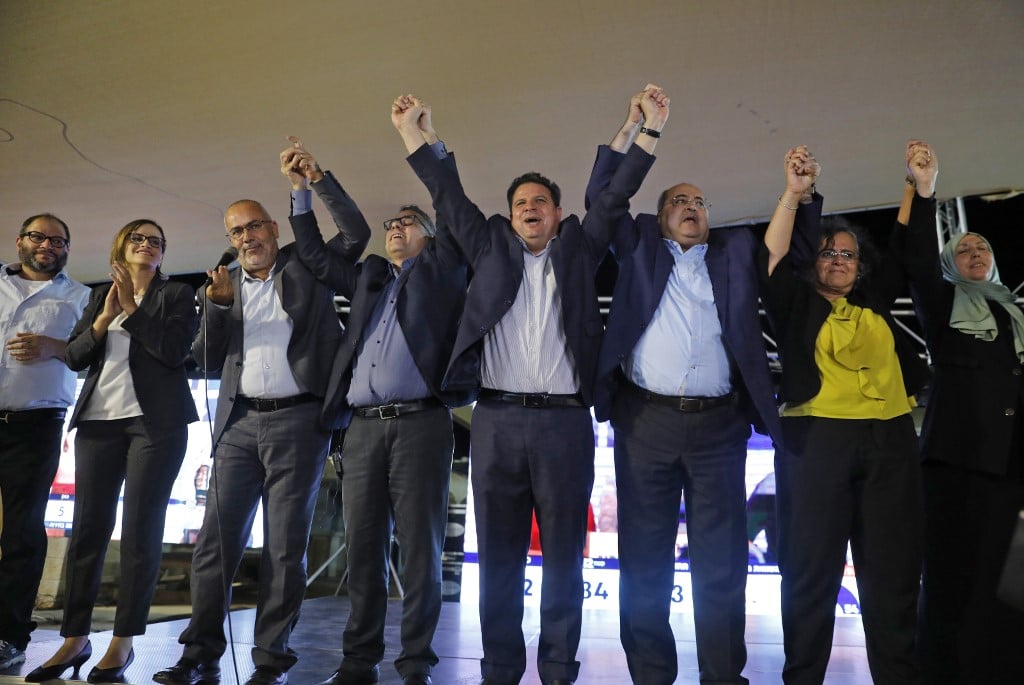
The bloc, which included Hadash and Ta’al along with the nationalist Balad party and Islamist Ra’am, ran together before splitting in 2021, when Ra’am leader Mansour Abbas left to join former Prime Minister Naftali Bennet’s short-lived government, ending decades of Arab parties exclusively remaining in the opposition.
In the last several months, there have been efforts to revive the full bloc, spurred by the government’s war in Gaza, and the Arab electorate’s desire to hold more governing power.
Despite speculation that talks have stalled in recent weeks due to internal rifts, Touma-Sliman is adamant that the negotiations are ongoing.
“There are natural disagreements that require discussion, but the process has not stopped, and another meeting is expected soon to examine ways to move forward and finalize the details,” she said.
However, a source with direct knowledge of the talks told The Times of Israel that “it is very difficult to re-establish the Joint List,” in part because of squabbles between Hadash, Balad and Ta’al, as well as over Ra’am’s desire to run on a technical list so that it may join the ruling coalition after elections, which is opposed by Balad and Hadash.
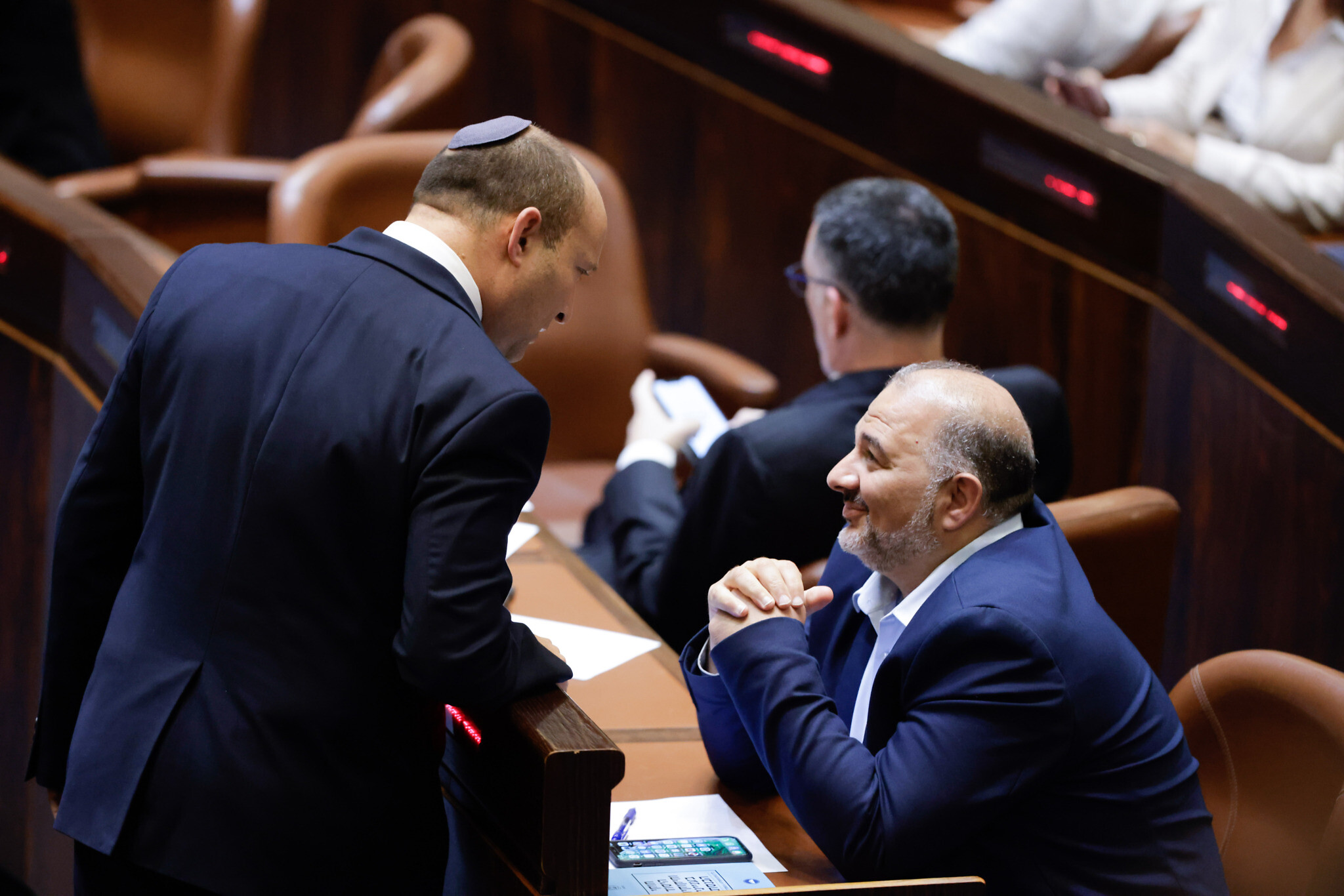
Unlike the more pragmatic Ra’am, Hadash and other Arab parties have historically been firmly opposed to joining or supporting any Israeli government, arguing that doing so would lend legitimacy to a Zionist state and risk complicity in military actions against the Palestinian people.
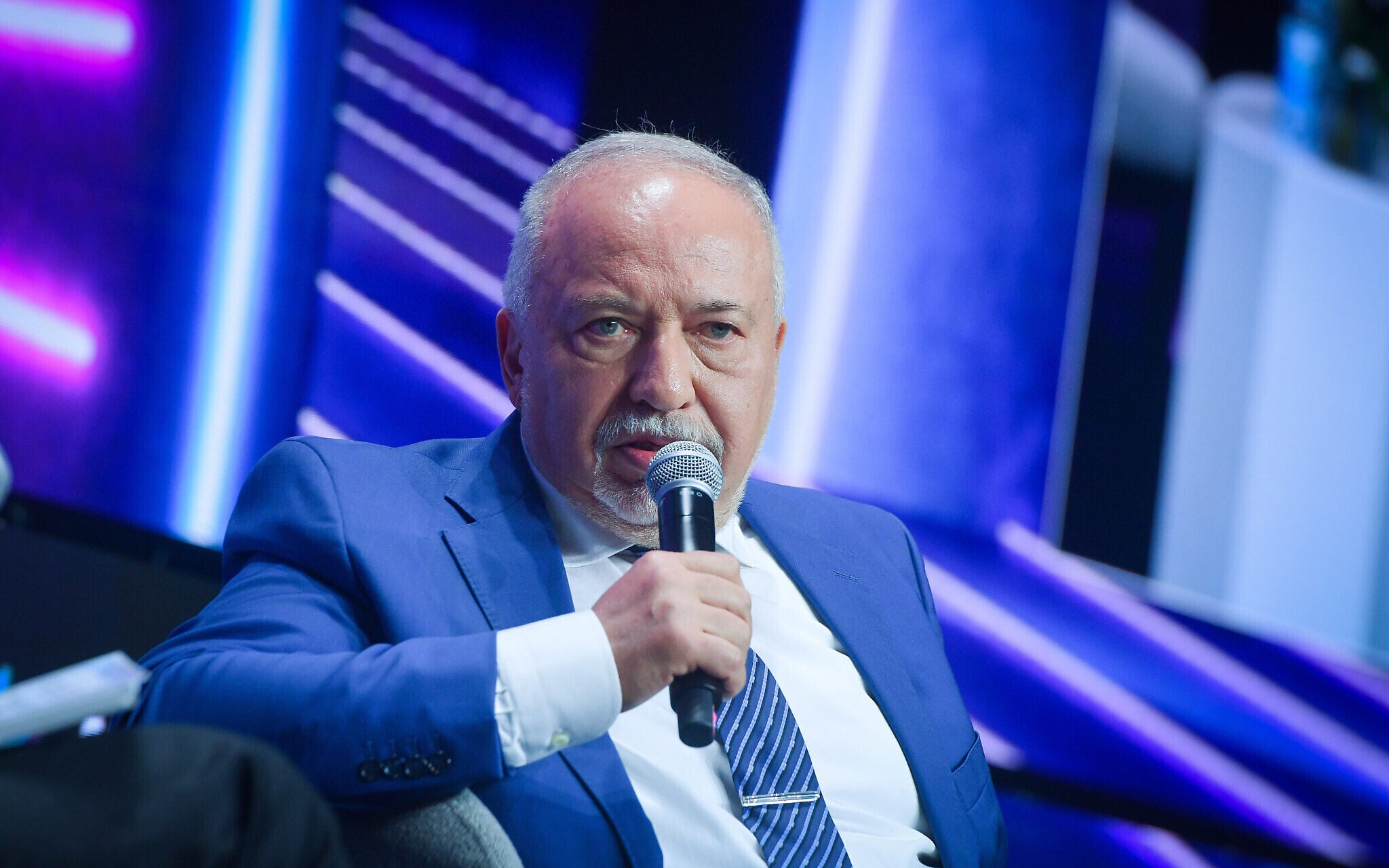
Now Touma-Sliman is singing a slightly different tune. She doesn’t reject supporting a coalition out of hand, but does have caveats, especially as such a coalition would likely include Yisrael Beyteinu leader Avigdor Liberman, a hardline security hawk who has sought to keep Arab parties out of the Knesset.
“The alternative camp, including Liberman, needs to understand that they alone cannot do this and must compromise,” she said, insisting that she “won’t support an alternative government that continues the same policies as this one — that continues the war in Gaza and refuses to pursue a political solution to the conflict.”
“Our war is not just with Bibi or just the war itself,” she added, using Netanyahu’s nickname.
It remains unclear whether Zionist opposition parties would welcome the support of an Arab-led bloc, whose avowed anti-Zionism has rendered it politically unacceptable to mainstream parties — both left and right — all of which are Zionist, preventing it from joining any governing coalition.
In the previous iteration of the so-called “change government,” the Netanyahu-led opposition consistently used the inclusion of the Islamist Ra’am as a cudgel to cleave away right-wing support, eventually bringing the coalition down.
Now it appears that even the once more palatable Ra’am may no longer be welcome in an opposition bloc, in part because opposition figures have been put off by an escalation in the party’s rhetoric, including Ra’am MKs’ characterization of Israel’s actions in Gaza as genocide.
Liberman told The Times of Israel’s Hebrew sister site in September that he would not join a coalition that includes Ra’am leader Mansour Abbas.
“He has lost control of his party. I will absolutely not sit with him,” Liberman said, likening recent speeches made by Ra’am MKs to “Hamas speeches.”
But, even if the Arab parties don’t agree to join the government, they could prop it up from outside of the coalition.
Touma-Sliman said that the “most important contribution” the Arab parties can make is to raise voter turnout among their base, giving it the power to at least block Netanyahu’s ability to recreate his right-wing coalition.
“If we can get our people out to vote, that will be enough. We’ll prevent a majority on the other side by doing that,” she said, flicking ash from her cigarette into the Jerusalem night.



The Times of Israel Community.