

As crisis ebbs, most women can again start IVF, though perhaps not complete it
Health Ministry removes age limits for beginning treatment, but maintains restriction on women with existing conditions; doctors instructed to only implant embryos in special cases
 Add ToI as a Preferred Source on Google
Judah Ari Gross is The Times of Israel's religions and Diaspora affairs correspondent.
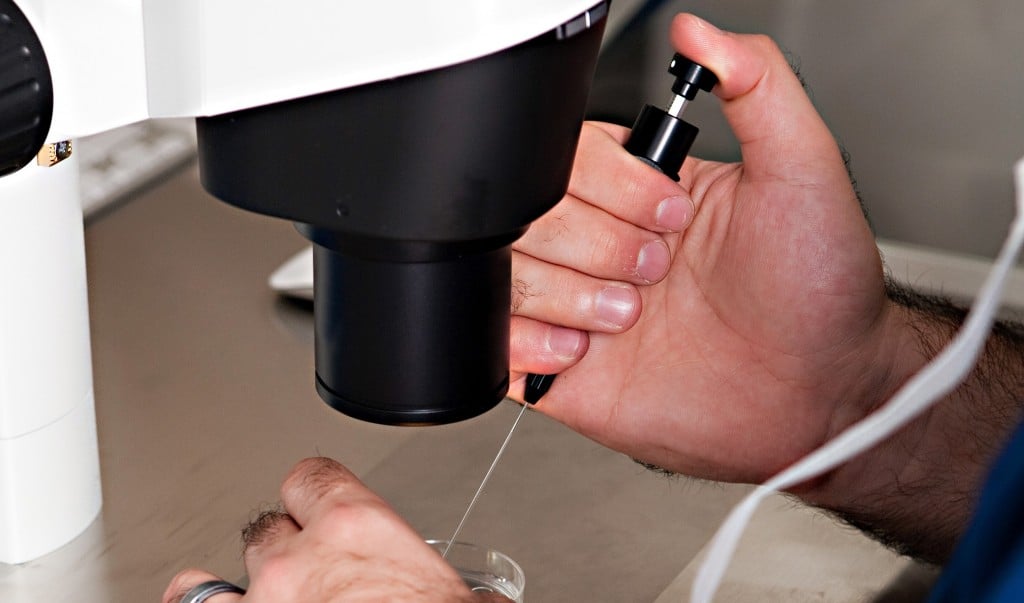
The Health Ministry on Monday announced it was removing age restrictions for those looking to begin in vitro fertilization treatments as the coronavirus crisis appeared to be waning, making the procedure again available for women under the age of 39 who had been barred from it.
At the start of the pandemic, the ministry forbade access to the procedure altogether, due to concerns that the disease could spread in fertility clinics and because of unanswered questions about the effects of the virus on embryos. Earlier this month, the ministry announced that it was allowing women over the age of 39 to begin the treatment as these older women had less time to start the process while still capable of safely bearing children.
Indeed the effects of the COVID-19 virus on a developing fetus are still not fully known, leading the ministry to tell doctors to not yet necessarily begin implanting embryos in their patients’ uteruses at this point, though it did not outright ban this stage of the treatment.
“It’s simultaneously exciting and a partial victory because there are still no embryo transfers,” said Shayna Kovler, who had been barred from beginning an IVF treatment cycle because of the Health Ministry decision.
Though doctors are allowed to perform embryo transfers, the ministry does not yet recommend doing so because of the uncertainty about possible negative effects on the baby if the mother contracts the virus.
“Our line of thinking was that we still don’t know how the coronavirus affects embryos in the first trimester,” Dr. Adrian Shulman, chairman of the Israel Fertility Association, told The Times of Israel on Monday.
The ministry said the decision on implanting was ultimately up to the doctors, provided their patients and their partners, if relevant, sign an agreement accepting any potential risks.
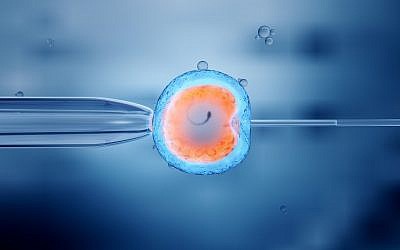
In vitro — literally, “in glass” — fertilization typically involves a round of hormone treatments to stimulate a woman’s ovaries’ follicles in order to produce several mature eggs; a procedure to retrieve those eggs; incubating the eggs with sperm in order to fertilize them in a glass dish; selecting the embryo, or embryos, with the best chance of a successful pregnancy; and implanting it or them in a woman’s uterus, where the embryo will hopefully implant, and develop into a fetus.
Shulman said that while there do not appear to be obvious adverse effects on a fetus during the initial stages of development, the ministry nevertheless advised caution in implanting embryos and potentially beginning a pregnancy because the matter has not yet been fully investigated — and indeed can’t be for at least another three or four months, when babies conceived during the pandemic will be born.
Only at that point is the ministry likely to fully allow the resumption of IVF treatments without reservations, he said.
Kovler said this argument struck her as something of a double standard as there are no recommendations for women to avoid getting pregnant in general.
On Monday, the Health Ministry said it was removing the over-39 age limit, following calls to do so by fertility advocates, who argued that the restrictions appeared to be arbitrary given the fact that the rest of the country was reopening, with the pandemic appearing to be coming under control.
Shulman said the initial decision to limit the procedure to women over the age of 39 was meant to ensure that there wasn’t a sudden rush that could tax the system. Once it became clear that this was not an issue, the restriction was removed.
Under the new guidelines, effective immediately, any woman may begin IVF treatments freely, unless they suffer from diabetes, high blood pressure, chronic lung conditions, blood-clotting issues, or immune system or heart disorders. If they do have one of these conditions, their doctor must review their case and should seek to get a specialist to sign off on the treatment, the Health Ministry said.
Active coronavirus patients are still barred from treatment under the new rules.
Though IVF treatments are available regardless of age, a preference will still be given to women over the age of 30, the Health Ministry said.
For other non-IVF fertility treatments, women over 35 may resume procedures, provided they also have no medical history of the problematic conditions, all of which have been linked to more severe coronavirus cases.
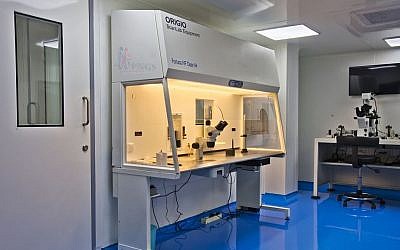
The clinics were ordered to keep strict hygienic conditions and social distancing, stagger appointments and take temperatures at the door. The patients must undergo a coronavirus test 72 hours before an IVF treatment begins and test negative, it said. Moreover, family members or friends cannot accompany the patient beyond the waiting room.
IVF is a difficult process — technically and emotionally — that requires close, regular monitoring and, even when done properly, statistically fails more often than it succeeds. Yet in Israel, which has the highest rate of IVF in the world, roughly five percent of all births come from the procedure, according to Health Ministry data from 2017.









The Times of Israel Community.