

At Tel Aviv polling stations, activists for opposing parties find common ground
With an atmosphere less rancorous than that of national elections, members of rival groups say that in the end, it’s about finding ways to live together
 Add ToI as a Preferred Source on Google
Melanie Lidman is an AP reporter and former Times of Israel reporter
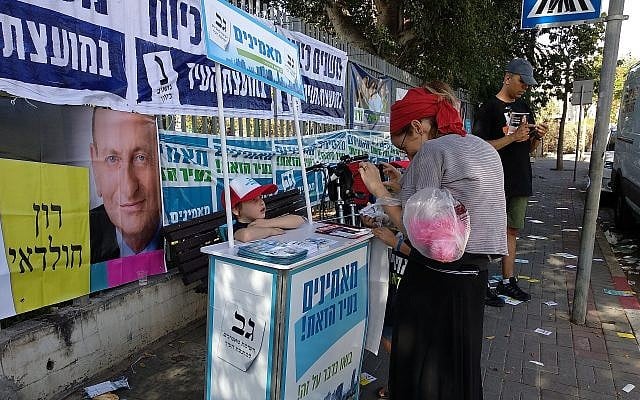
Like most polling stations opened throughout the country for Tuesday’s municipal elections, the station in the south Tel Aviv neighborhood of Shapira was a riot of color, as young activists festooned with stickers pushed sleekly printed brochures into the hands of potential voters.
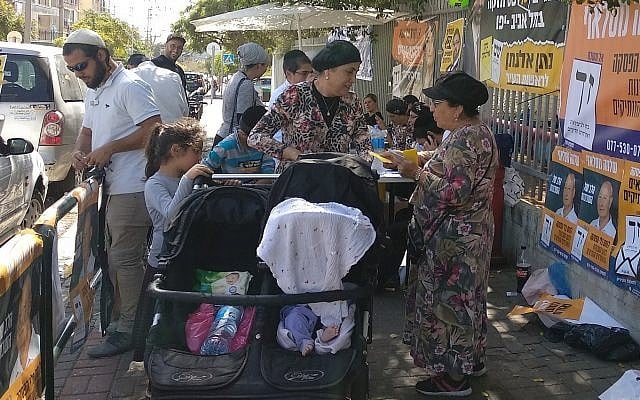
Catchy religious tunes blared from nearby car speakers while a number of local kids played chicken with the security guards at the Shapira community center, trying to see how far they could get into the polling station to give out Shas leaflets before being stopped (it is illegal to campaign inside a polling center).
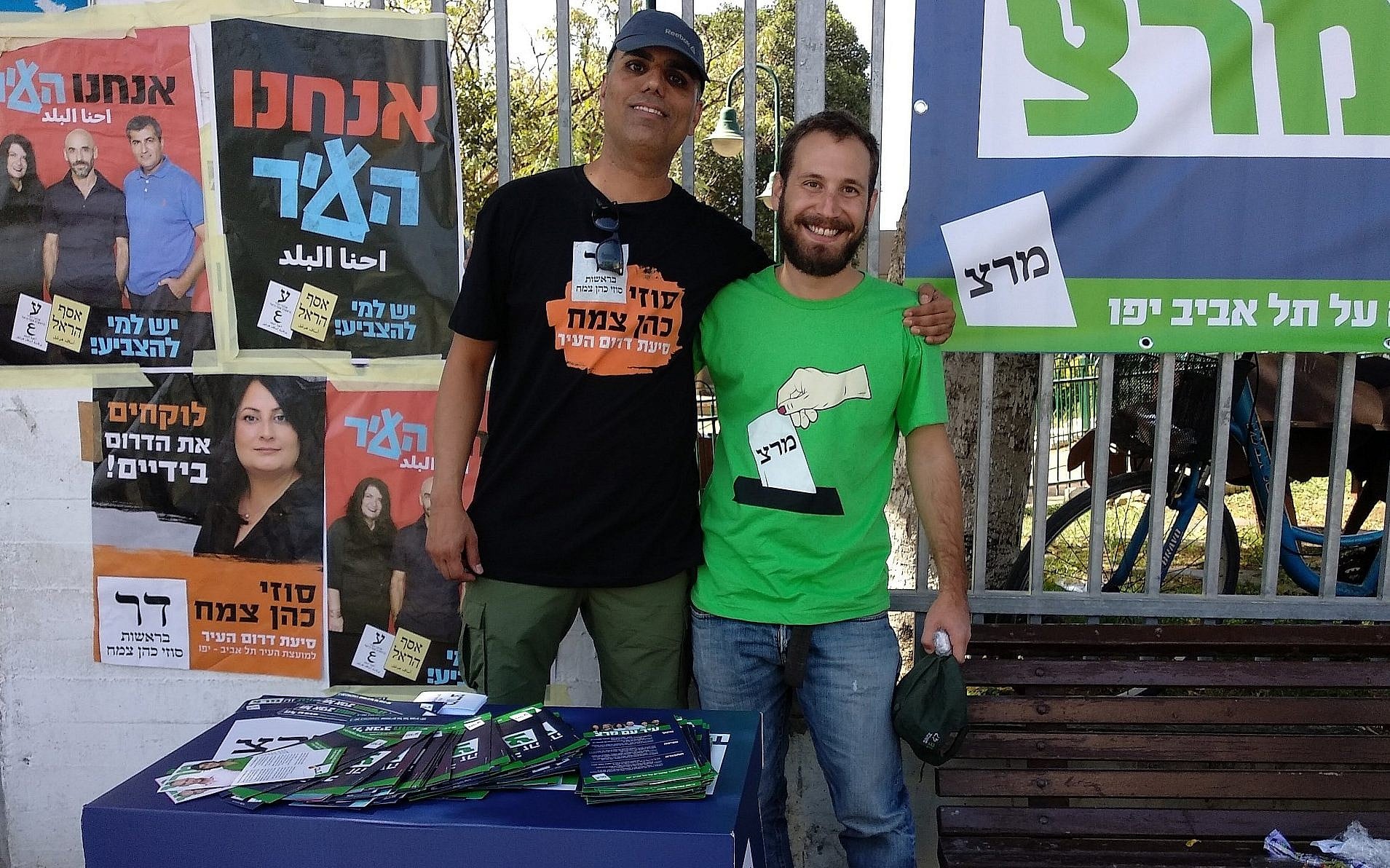
Near the entrance, two activists from the leftist Meretz party and Suzy Cohen-Zemach’s right-wing South of the City party shared a table. The two parties live on opposite ends of the political spectrum, but the two activists, paid by the respective parties to campaign outside polling stations, found a surprising amount of common ground as they passed the hours waiting for voters.
“It’s an exciting day for Israeli society. There’s a lot of action,” said Nir Simon, the 28-year-old Meretz activist, who lives in Jaffa, as Sasi Ben Menachem, a 43-year-old activist for Cohen-Zemach’s party, arranged a poster behind them. “I don’t agree with their opinions,” he said, gesturing to Ben Menachem, “but you do need to go out there and talk.”
“It’s important to go out and meet other people, (even if) maybe you don’t agree with them, because we do both agree that Israeli society is falling apart,” said Ben Menachem.
Meretz has six seats in the current Tel Aviv city council. Cohen-Zemach is currently the only council member with the South of the City party. Her party’s main platform is creating a stronger south Tel Aviv, principally by removing African asylum-seekers from the southern neighborhoods. Activists associated with her movement, including the Central Bus Station Citizens’ Watch, have used controversial tactics during protests against asylum-seekers, and have been accused of violence against migrants and verbal harassment of African children as young as four years old.
South Tel Aviv is an impoverished area that has traditionally been neglected by the city, home to crumbling infrastructure and severe overcrowding with the influx of approximately 30,000 African asylum-seekers in the past decade.
Simon said he thinks local elections provide a rare opportunity for people on opposite sides of the political spectrum to unite over a shared concern for the city where they live. “Usually I have a really hard time with the Jewish Home party’s ideology,” said Simon. “But sitting here, I’ve met the family of the candidate [Haim Goren] and you see that they just want the same things for their neighborhood,” he said. “With local elections, there’s more a feeling of shared responsibility.”
Ben Menachem said he and Simon found they agreed on a number of issues, including that Tel Aviv’s public transportation was failing. “We need to go out into the world and find creative ideas from other advanced countries about public transportation, rather than just sit with our arms crossed on a bus station bench waiting for the [light rail] train tunnel to be finished,” he said.
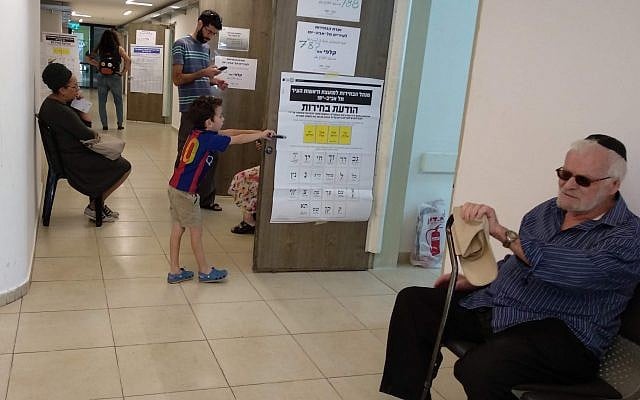
Ben Menachem said national elections, which deal with the bigger questions of national policy, are much more divisive. “This is much less dramatic,” he said, pointing to the generally upbeat mood among activists and voters filing into the community center. However, local elections can have an even greater impact on the day-to-day lives of residents, Simon added.
“The question is, how can we take this atmosphere and bring it to the national elections?” asked Simon. “Because in the end, we’re all going to continue living here, together.
“It’s not just about a certain party ‘winning,’” he said. “Because if we only look at elections like that, it contributes to all of us losing as a society.”









The Times of Israel Community.