

Bennett unveils plan for increasing disability access across Israel
‘Accessibility is not a side issue. It is the heart of our society,’ says ex-prime minister; pledges to integrate the disabled into the workforce and IDF
 Add ToI as a Preferred Source on Google
Sam Sokol is a former political correspondent at The Times of Israel. He was previously a reporter for the Jerusalem Post, Jewish Telegraphic Agency and Haaretz. He is the author of "Putin’s Hybrid War and the Jews"
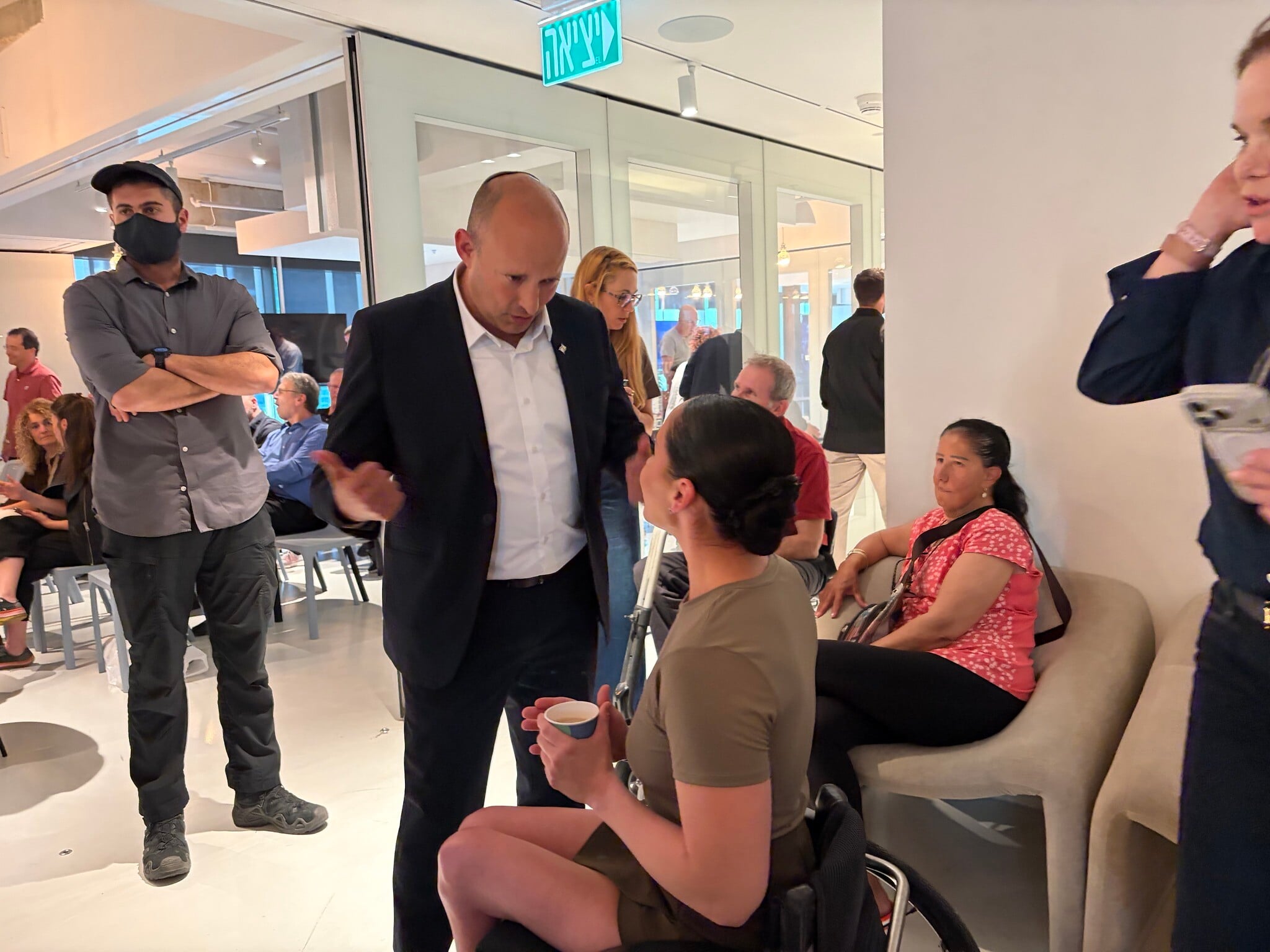
Former prime minister Naftali Bennett on Thursday unveiled a sweeping multi-point plan for increasing accessibility and integration of people with disabilities into the Israeli economy, stating that such a policy will turn Israel into “a light unto the nations.”
Addressing supporters and representatives of the disabled community at an event in the central city of Bnei Brak, Bennett pledged to ensure that intercity buses become fully accessible and promised to encourage the disabled to enter the workforce without endangering their government benefits, which he says have until now provided an “incentive” not to seek employment.
“Accessibility is not a side issue. It is the heart of our society. There are 1.2 million of our brothers and sisters, people with disabilities, here in Israel. For too many years, the state looked at them through the lens of welfare, stipends, support, and neediness. My central goal is to change that perception. The “disability” is not theirs, it is ours. It’s when the state limits them and fails to integrate them,” he said.
“None of them wants handouts. They want opportunity. The idea is to move everyone from dependence to independence, from charity to growth. When we do this, Israel will be a ‘light unto the nations,’ both socially and economically. It simply increases our GDP when they work,” Bennett continued, laying out a series of steps intended to increase the employment rate among the disabled to 60 percent.
These include ensuring those who choose to work do not lose government support, that employers receive “incentives and automatic tax credits,” and ensuring intercity buses are fully accessible.
Bennett, who is widely seen as the leading challenger to Prime Minister Benjamin Netanyahu, also insisted that the process of military enlistment be made easier for those with disabilities, arguing that the current system is “exhausting” and calling to integrate the disabled into top non-combat units like Unit 8200, which focuses on signals intelligence.
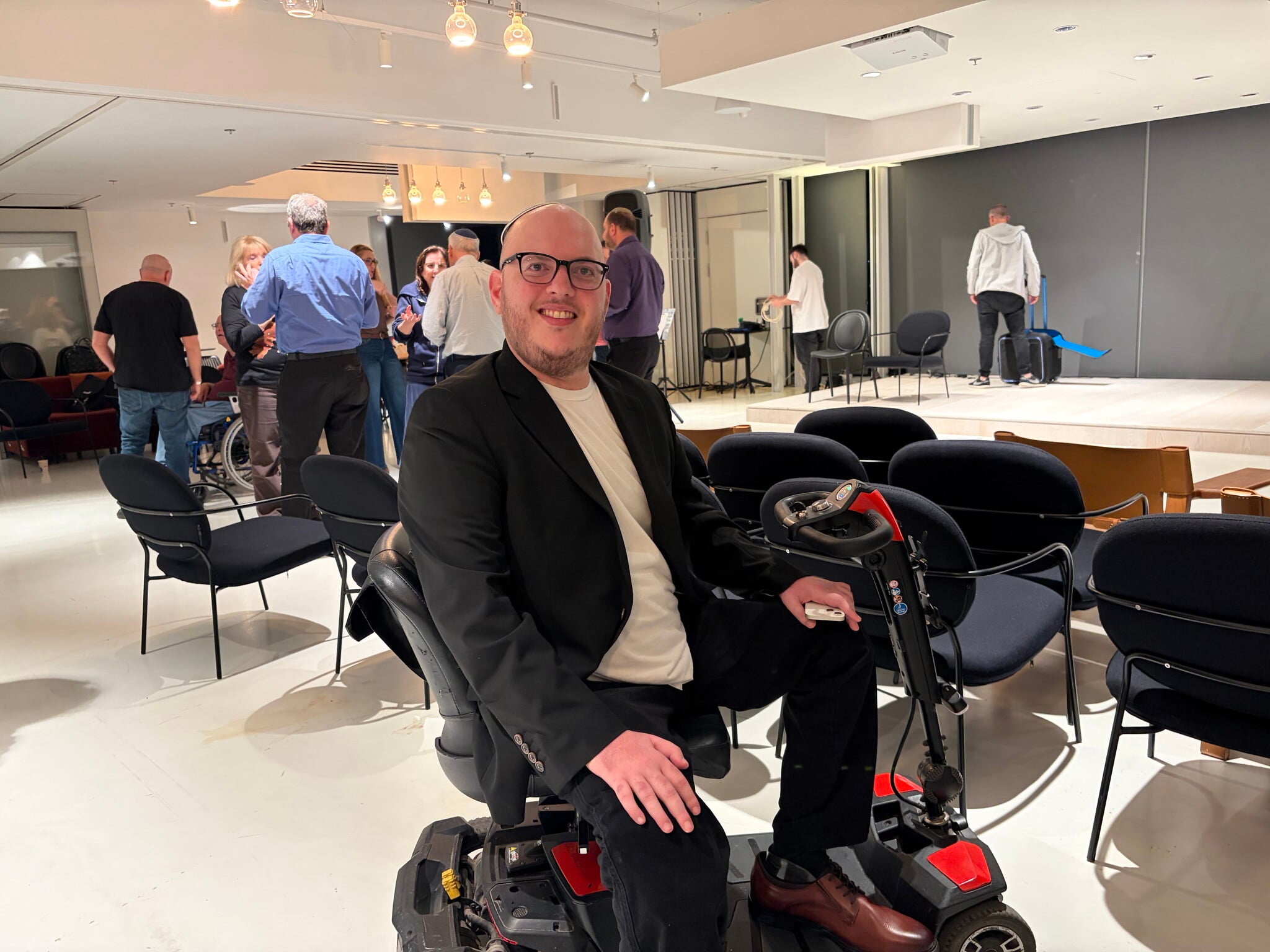
Bennett’s initiative is the brainchild of Zach Cutler, a disabled US-born tech entrepreneur. Speaking with The Times of Israel, Cutler called the program the “Israeli ADA,” referring to the landmark Americans with Disabilities Act, which was passed by the US in 1990.
“Ground transportation needs a big improvement, buses and taxis. Also, tourism sites throughout Israel, heritage sites, nature sites, things like that. [And] we’re going to do a lot of things to mobilize the disabled community much more into the workforce. We can grow GDP by up to 1% if we add 12,000 people a year for the next 10 years,” he said.
“Right now, you have to volunteer if you have a disability… and you have to go through a committee. It’s almost like you’re begging them to be in the army. And so the plan calls for making a serious track for people with disabilities to have senior positions, great positions, in 8200 [signals intelligence unit] and other top units, in a more normal, dignified way.”
According to a summary of the plan shared with The Times of Israel, Bennett intends to make Israel into “a world leader in assistive technology” by applying local advances in fields such as chips, optics, robotics and AI ” to the accessibility space” and “adapting military-grade innovation for civilian assistive technology.”
“The vision is Israel becoming a global exporter not just of cybersecurity, but of mobility devices, smart wheelchairs, hearing technology, cutting-edge prosthetics and orthotics. This is both a social mission and an economic growth sector,” the plan states, adding that “accessibility also serves the elderly, parents with strollers [and] wounded IDF soldiers in rehabilitation.”
Israelis with disabilities have faced additional challenges during the recent war. Speaking with The Times of Israel last month, Yuval Wagner, the co-founder of Access Israel, said that “there are 600,000 severely disabled people in Israel, and of those, about 40% — roughly 240,000 — are unable to reach shelters.”









The Times of Israel Community.