

Can Gantz form a government as Israel fights the coronavirus? Should he?
Will the Blue and White chief be able to follow through on replacing Netanyahu in the middle of a health crisis of epic proportions?

 Add ToI as a Preferred Source on Google
Raoul Wootliff is a former Times of Israel political correspondent and Daily Briefing podcast producer.
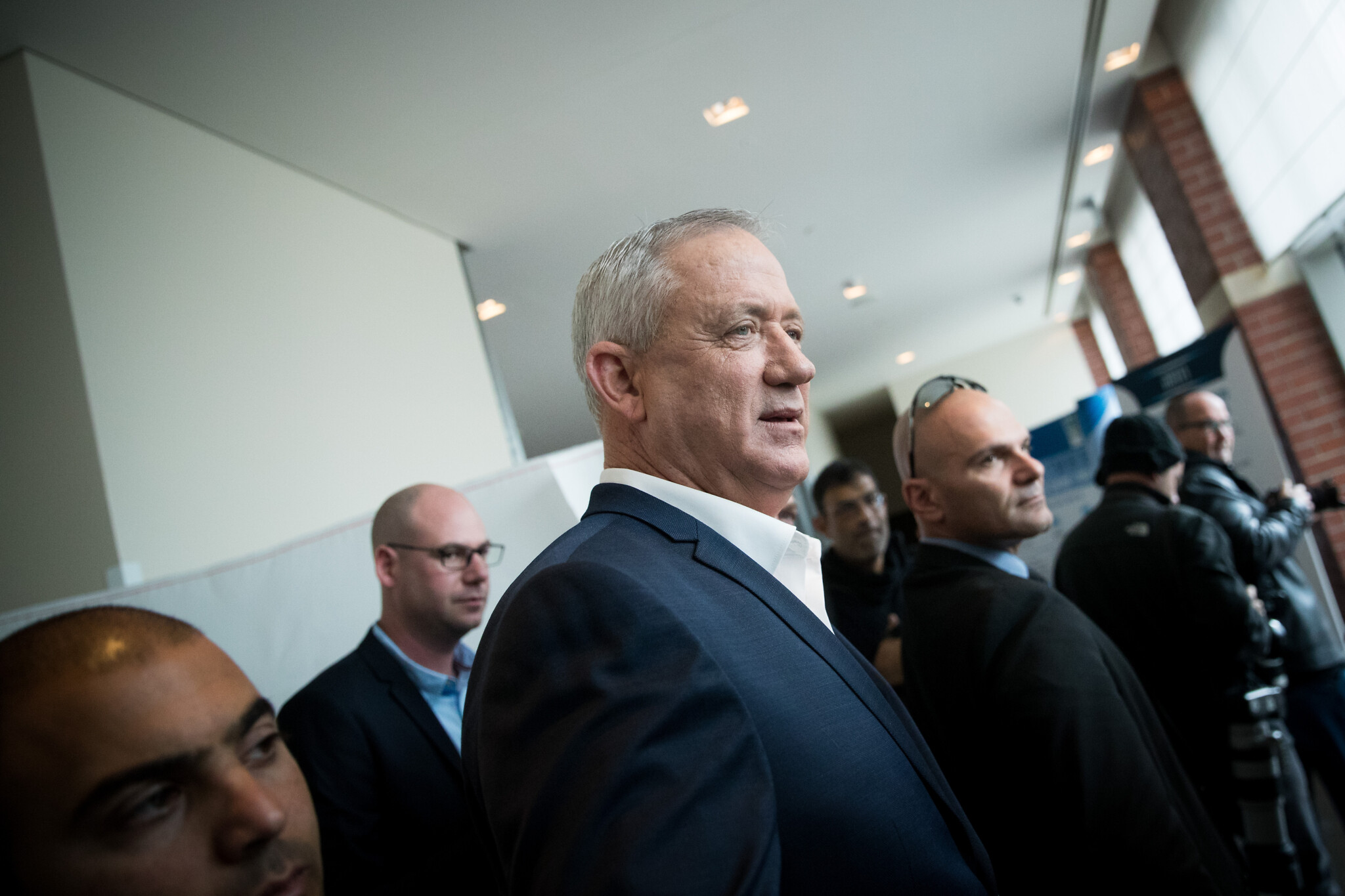
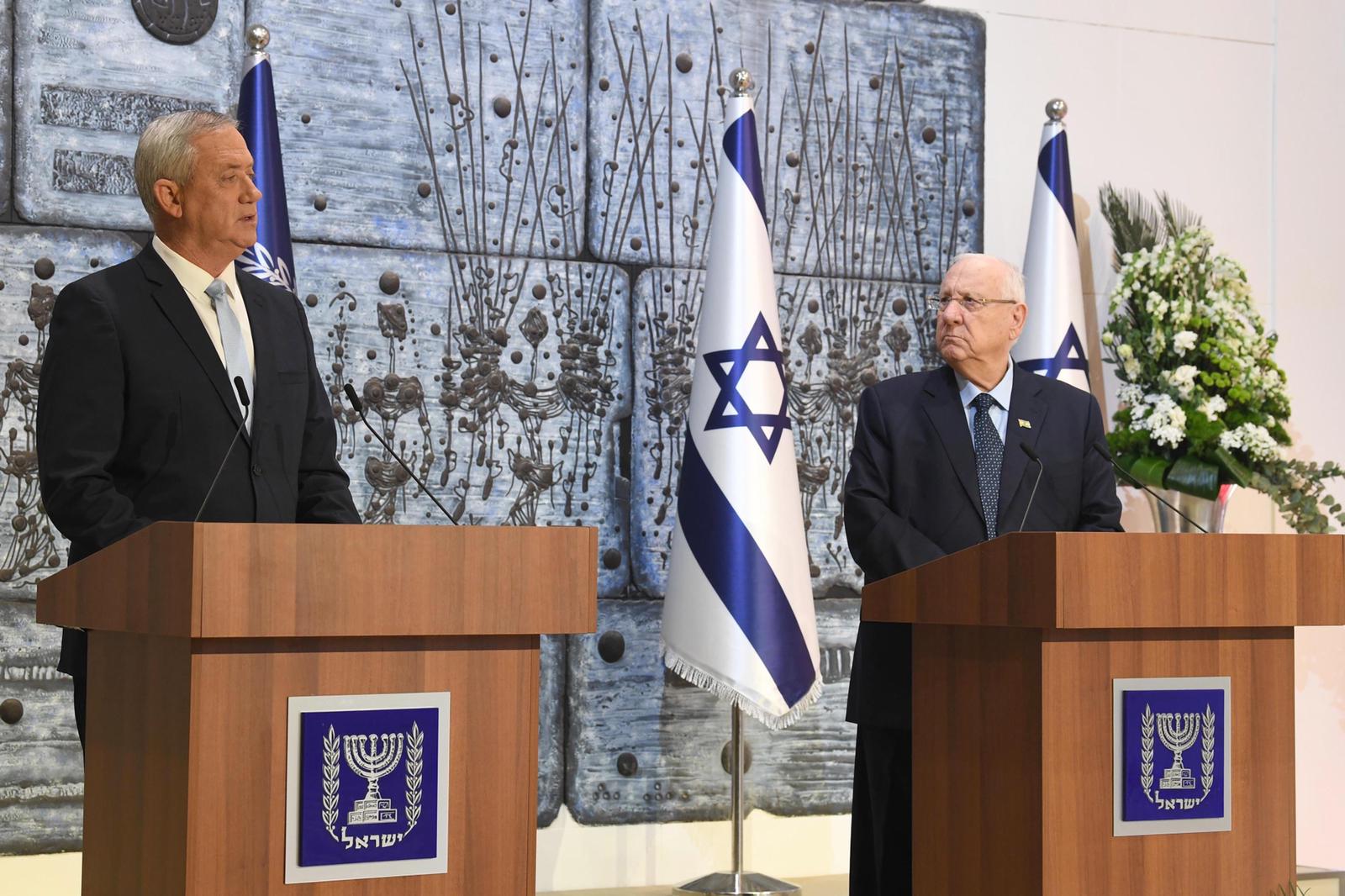
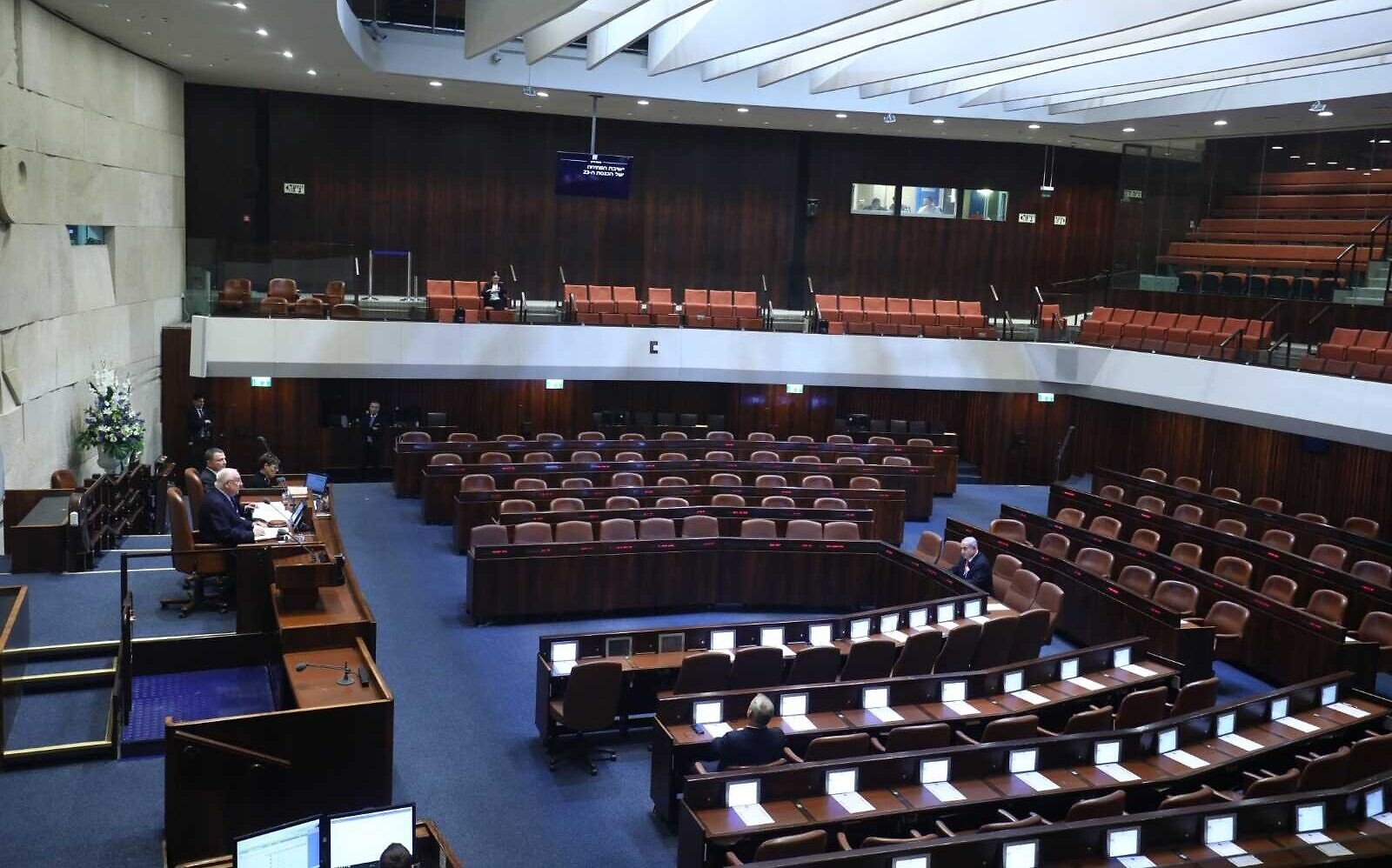
Hours before the most surreal Knesset swearing-in ceremony in history Monday, with MKs inducted in 40 batches of three in the midst of the coronavirus pandemic, President Reuven Rivlin, without any of the usual ceremonial trappings, officially tasked Blue and White chair Benny Gantz with forming a government.
Accepting the mandate, Gantz vowed to cobble together a coalition as soon as possible. “I give you my word: I will do everything to establish within days, as few as I can, a national government, one that is as patriotic and broad as possible,” he said.
With the virus changing both civil and political realities by the minute, even a few days is a long time.
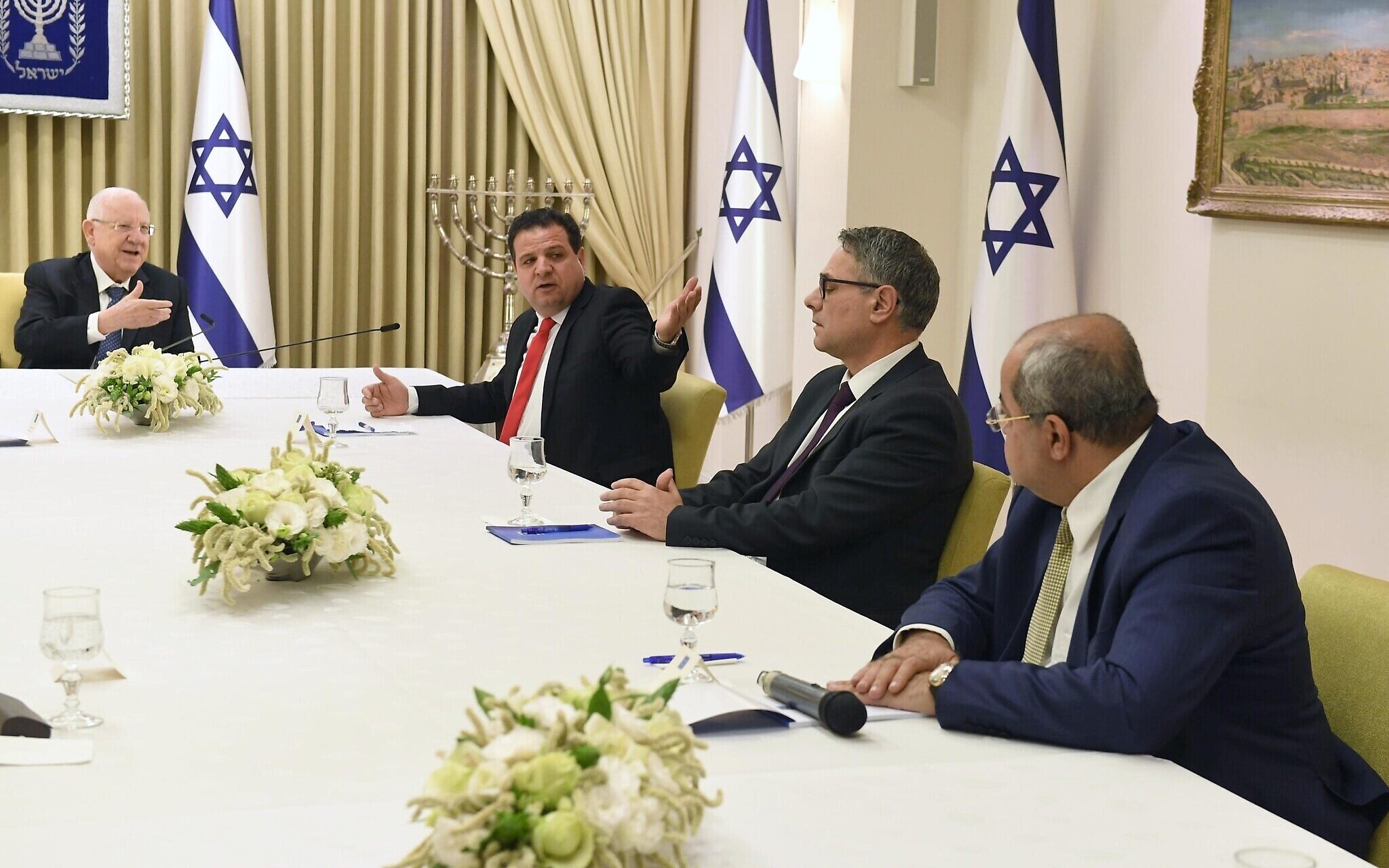
Since the March 2 election, an age ago, there had been fierce speculation about whether Gantz would be able to gain the backing of a majority of the lawmakers elected in order to form a government. On Sunday, the Blue and White leader answered part of that question by winning the recommendation of 61 MKs, including the entire Joint List of majority-Arab parties, when senior party members met with Rivlin.
Netanyahu’s Likud won 36 Knesset seats in the March election to Blue and White’s 33, but the Likud leader’s right-wing bloc again failed to muster a parliamentary majority.
Now that he has been given the opportunity by Rivlin, the question that remains is whether Gantz will be able to use that backing to form a government to replace Prime Minister Benjamin Netanyahu’s. And, crucially, whether — in the middle of a health crisis of epic proportions gripping both Israel and the world — he wants to.
Unity government
One potential option for Gantz would be to accept an offer by Netanyahu to join a national unity government, a move that would require him to forgo serving as prime minister for now and return the mandate to Rivlin.
Late Sunday night, after Gantz had received the largest number of recommendations, Rivlin hosted both the Blue and White leader and Netanyahu for what he called an “urgent” three-way summit in an effort to encourage the two men to form an emergency unity government amid the coronavirus outbreak.
Earlier in the day, Netanyahu went public with a pair of offers for a unity government with Gantz, urging the de facto opposition chairman to choose either to serve under him in a six-month emergency government or replace him after two years as part of a four-year rotational coalition. Gantz has said he supports an emergency unity government to tackle the coronavirus, but has claimed Netanyahu is not serious about the offers on the table.
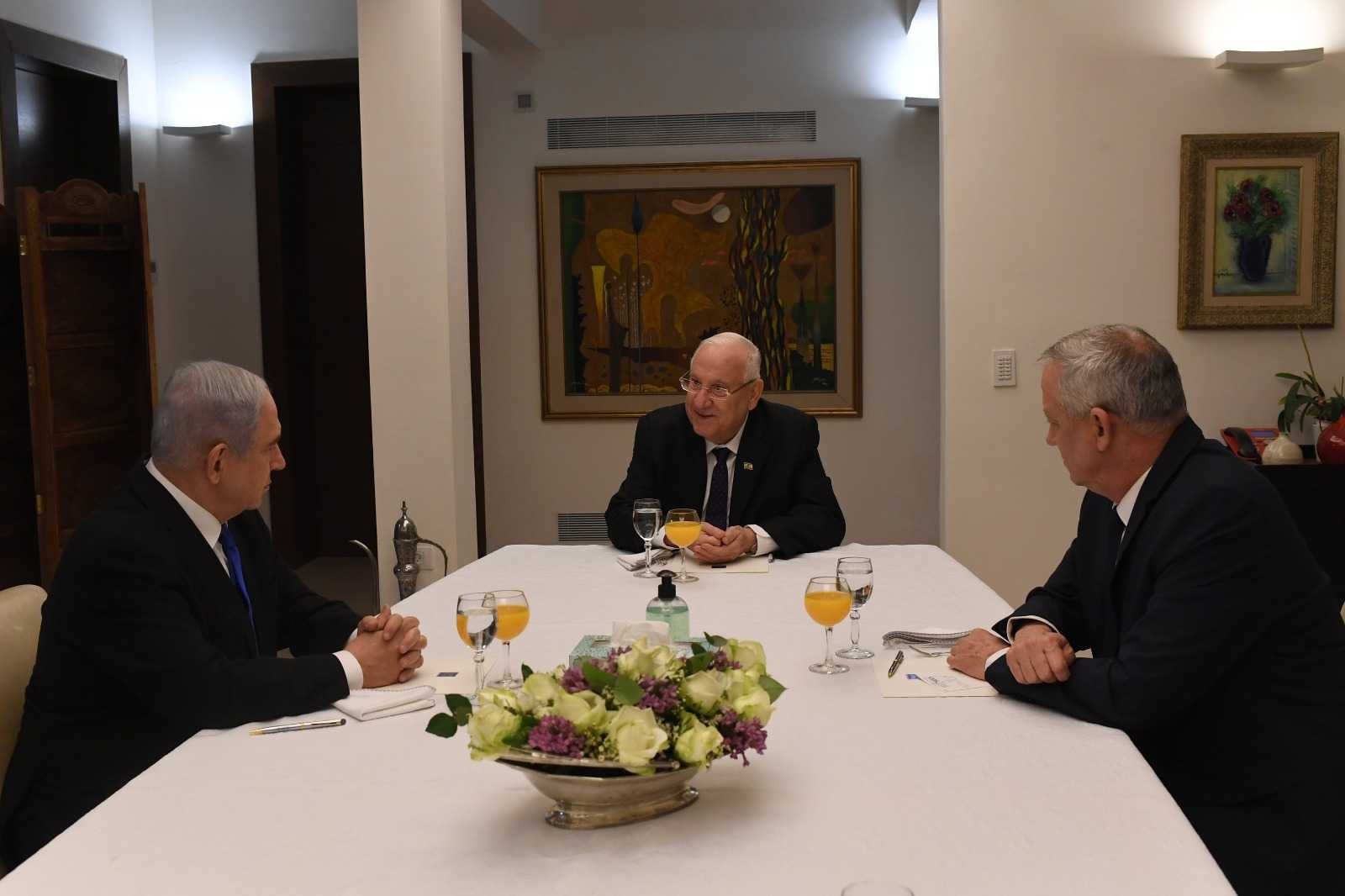
Following the meeting with Rivlin, the two released a joint statement saying that they “agreed that negotiating teams would meet soon.”
They have not.
And in the meantime, Gantz’s Blue and White has been actively working to oust Netanyahu.
As the 23rd Knesset was being sworn in, Blue and White filed three pieces of legislation with that goal: the first would limit a prime minister to two terms in office — Netanyahu has served a total of four terms, plus two terms as transitional prime minister, meaning the law would disqualify him from continuing to serve; the second would bar people facing criminal charges from serving as ministers or prime ministers; the third would prohibit a lawmaker under indictment from being tasked with forming a government.
At the same time, Gantz has been making moves suggesting that he is indeed pursuing the option of forming a government that he would head.
Broad government
On Monday, Gantz phoned the leaders of most parties in the Knesset upon receiving the nod to form a government from Rivlin. However, despite his call for a “broad government,” he was given a cold shoulder from the three religious and right-wing parties, whose chairmen refused to meet him.
Aryeh Deri and Yaakov Litzman, who chair the ultra-Orthodox Shas and United Torah Judaism parties respectively, turned down Gantz’s request to sit down and work toward forming a government. According to a Blue and White statement, Deri told Gantz that he would let himself be represented by the “bloc,” a reference to the right-wing-religious bloc that consisted of 55 MKs after the September elections, when it stonewalled the centrist alliance by being only willing to negotiate as one and only willing to serve in a government under Netanyahu.
That bloc of Likud, UTJ, Shas and Yamina is now three MKs larger, but still short of a 61-member majority — the number of recommendations that Gantz received from the Blue and White, Labor-Gesher-Meretz, Yisrael Beytenu and Joint List parties on Sunday, giving him the first opportunity to form a government.
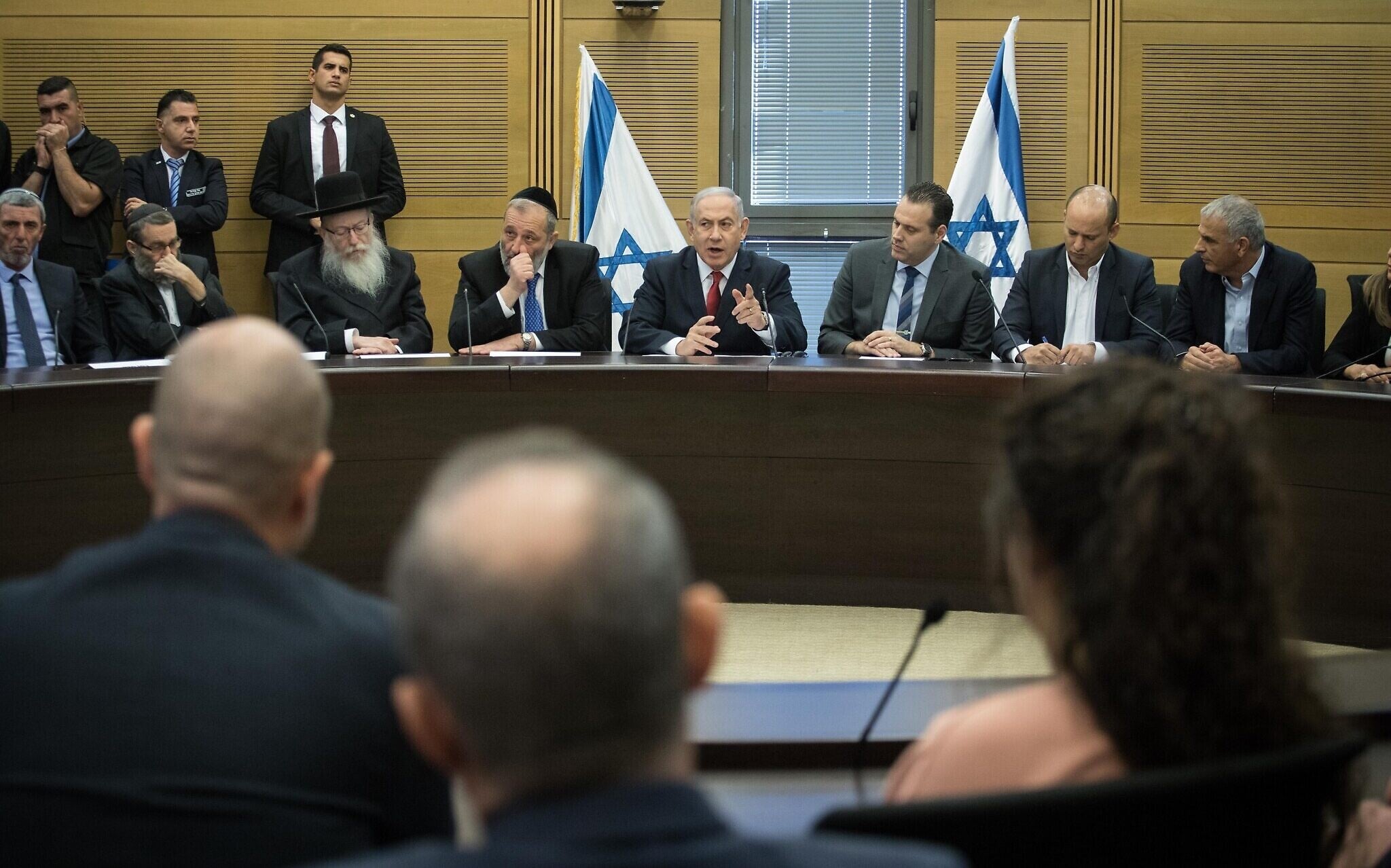
Also rejecting a meeting with Gantz was Yamina chairman Naftali Bennett, who conditioned such a sit-down on the Blue and White leader denouncing the support he had received from the Joint List, who Bennett claimed are “supporters of terror.”
If those parties remain true to their word to stick by Netanyahu — particularly likely during the ongoing virus crisis — Gantz’s only realistic path to a coalition appears to be a center-left minority government backed from the outside by the Joint List.
Minority government
In Israel, minority governments are rare. The few cases of minority governments took place after one or more factions withdrew from a coalition mid-term, as happened with the 1992 Yitzhak Rabin government after the withdrawal of Shas, and the 1999 Ehud Barak government after the withdrawal of Meretz, the National Religious Party and Shas.
No minority government has ever been formed immediately following elections.
Nevertheless, the relevant Basic Law does not explicitly state that a new government must enjoy the support of an absolute majority of Knesset members. The establishment of a minority government right after parliamentary elections, while unprecedented in Israel, is thus theoretically an option.
In principle, the candidate whom the president grants the right to form a government does not need a majority of 61 to do so. All that is really needed is a situation in which more MKs vote in favor of the government than against it.
Gantz could therefore form a government made up of his Blue and White (33 seats), the hawkish Yisrael Beytenu (7 seats) and dovish Labor and Meretz (6 seats without Gesher leader Orly Levy-Abekasis, who has said she will vote against a minority government), with support from outside of the coalition from most or all of the Arab lawmakers of the Joint List (15 seats). If all Blue and White MKs backed it — and two have indicated they would not — such a government would have 59 votes in favor, to 58 opposing.
Minority governments are quite common in democracies such as Canada, Denmark, Sweden and Spain, and minority governments are currently serving in Ireland, the United Kingdom, Denmark, Norway, Spain and Sweden.
It is clear, however, that such a government would be very shaky. The coalition would not have a Knesset majority and thus would have to constantly bargain for the support of other factions in order to pass laws and other decisions.
Support of the Joint List
Responding to Netanyahu’s initial offer of an emergency unity government, Gantz said last week that such a government would have to include elements from all political sides.
“Blue and White, under my leadership, has thus far backed and will continue to back the common struggle against the coronavirus epidemic and its consequences,” Gantz wrote on Facebook. “In light of the situation, we will be willing to discuss the formation of a broad national unity government that would include representation of all parts of the house. We will make every effort to advance this step for the benefit of Israel’s citizens and the country.”
The mention of “representation of all parts of the house” was widely interpreted as a hint that Gantz would insist on the inclusion in an emergency government of the Joint List.
Israel’s Arab lawmakers have long refused to join a government on ideological grounds, rooted in their support for the Palestinians. Jewish lawmakers have, reciprocally, seen the Arab parties as beyond the pale and generally refrained from including them in coalition calculi. Under its current leader, Ayman Odeh, however, segments of the Joint List have softened their opposition to such a partnership.
The relationship between the Jewish and Arab lawmakers, nonetheless, remains highly strained, marred by mutual distrust and disagreements on the Israeli-Palestinian conflict, West Bank settlement-building and Zionism. The tensions have been exacerbated by comments by some hard-line Joint List members that appear to support terrorism and violence against Israelis, as well as increasingly strident rhetoric about the Joint List, and the Arab Israeli community in general, from Jewish politicians, including Netanyahu.
Outside of the possibility of a unity government, forming a minority government with the backing of the Joint List is a controversial prospect, one that before the election Gantz vowed he would not pursue.
And vocal opposition by rightist members of Blue and White, MKs Zvi Hauser and Yoaz Hendel, along with Labor-Gesher-Meretz’s Levy-Abekasis, appeared to reduce the likelihood of that scenario.
It had still not been ruled out before the coronavirus crisis took center stage. A long week ago, Hauser and Hendel were reportedly given an ultimatum: Back the formation of a minority government relying on the outside support of Joint List, or resign from the Knesset.
But then came the focus on a pandemic, changing the entire context of coalition negotiations, and leaving Gantz with a mandate that he must attempt to ensure does not become a poisoned chalice.




The Times of Israel Community.