 Add ToI as a Preferred Source on Google
For centuries, argues author Dara Horn, people have tried to gain or maintain power by employing the lie that Jews are responsible for destroying whatever a society, government, or institution values most.
Tyrants, totalitarian regimes on both the right and left, and conformist societies in particular, have employed this lie, Horn says, because they are threatened by Jews — and by Judaism’s long history as an anti-tyrannical, countercultural tradition.
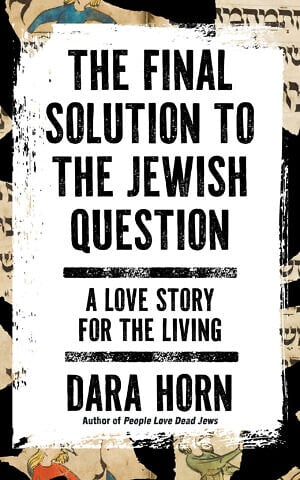
It is the central argument of Horn’s new book, “The Final Solution to the Jewish Question,” which was released September 1. The title is every bit as provocative as that of her 2021 bestseller, “People Love Dead Jews” — and its cover is sure to draw attention in bookstores and on social media.
With its direct reference to the Nazis’ nearly successful extermination of Europe’s Jews during World War II, this collection of related essays is, unsurprisingly, about antisemitism. But its subtitle, “A Love Letter to the Living,” hints from the outset that things are not all doom and gloom.
Writing after the bloody October 7, 2023, Hamas-led massacres in Israel, Horn could hardly avoid addressing what she sees as a dangerous escalation of Jew-hatred in the United States and around the world. But she is also hopeful about the possibility of turning the situation around, especially through the right kind of education.
“I absolutely think that this is winnable,” Horn told The Times of Israel in a recent interview.
“The through line of antisemitism for thousands of years has been the denial of truth and the promotion of lies. These lies range in scope from conspiracy theories to Holocaust denial to the blood libel to the currently popular claims that Zionism is racism, that Jews are settler colonialists, and that Jewish civilization isn’t native to the land of Israel. These lies are all part of the foundational Big Lie: that antisemitism itself is a righteous act of resistance against evil, because Jews are collectively evil and have no right to exist. Today, the Big Lie is winning,” Horn wrote.
‘The foundational Big Lie: that antisemitism itself is a righteous act of resistance against evil, because Jews are collectively evil and have no right to exist’
One only needs to look at various eras throughout history to grasp how consistent the Big Lie has been.
“It’s in every era, every social circle. The only thing that varies is what you value the most. Say you’re a religious Christian, then you are lied to that Jews are destroying Christianity, or that they killed Christ. Say you’re a human rights activist, then Israel’s the world’s worst violator of human rights, and it doesn’t matter that you’re being told this by the Islamic Republic of Iran,” Horn said.

This new book resulted from countless people reaching out to Horn after reading “People Love Dead Jews,” attending her lectures, or hearing her on a podcast. They emailed and messaged her, and they approached her at speaking engagements.
Jews of all ages and backgrounds shared with her their personal experiences of being targeted by antisemitism and asked for her help. These experiences ranged from being on the receiving end of antisemitic comments all the way up to violence, including the destruction of property, death threats and bodily harm.
One young woman who had heard that Horn had been invited to an event at the White House jumped up on a stage in Toronto and implored Horn to intervene with the American administration to achieve the release of her savta (Hebrew for grandmother), who was being held hostage in Gaza by Hamas.
“I am a writer, not a therapist. I was entirely unprepared to become the emotional receptacle for hundreds of strangers’ shame, confusion and fear,” she wrote.
‘I was entirely unprepared to become the emotional receptacle for hundreds of strangers’ shame, confusion and fear’
Horn hadn’t even initially considered antisemitism the subject of “People Love Dead Jews.”
“I conceived of it as an intellectual exploration of a phenomenon in history and literature I had observed as a scholar, journalist and author,” she said.
What she had wanted to look at more closely was that non-Jews continue to be fascinated with Jewish individuals and communities that no longer exist, but have little respect for Jews as they live their lives today and carry on Jewish traditions. In other words, people only like Jews if they are dead or politically powerless. It was only later that it occurred to her that the book was indeed about antisemitism and that its content evoked very personal responses from readers.
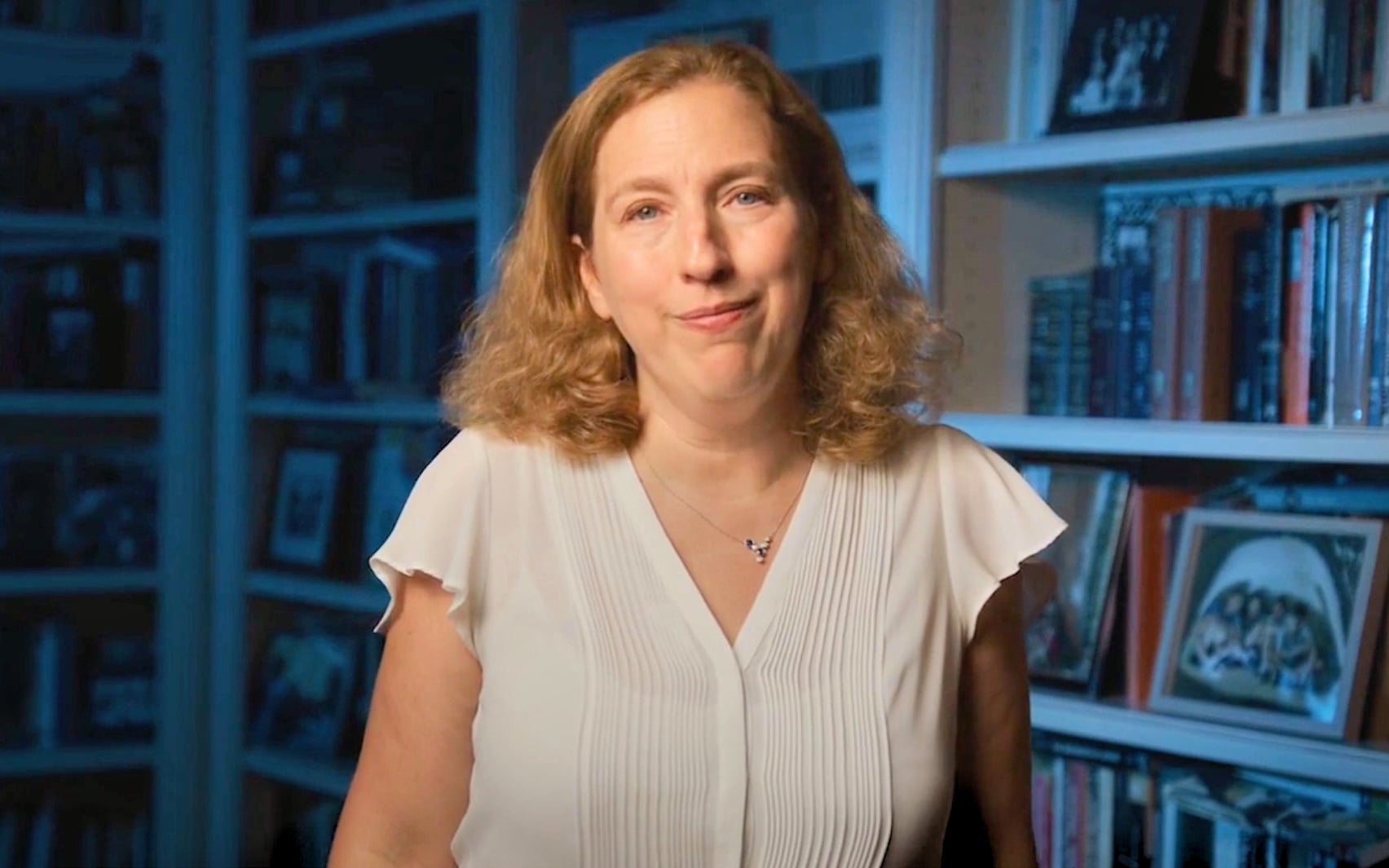
Although “devastated” and emotionally drained by what people were telling her, she felt she had to act. For her, that meant writing this new book: defining antisemitism for people and suggesting an approach she believes will combat it.
While maintaining the throughline of the Big Lie across the book, Horn covered a wide range of topics.
Among them are the longstanding leadership, educational and funding policy failures of top US universities that have resulted in institutional antisemitism and a lack of protection for Jewish students.
Horn got an up-close view and plenty of insight on this when she accepted an invitation to serve on now-former Harvard president Claudine Gay’s Antisemitism Advisory Group, convened after October 7 and the anti-Israel student protests that rocked campuses in the wake of the onslaught.
Horn wrote about her testimony at the December 2023 Congressional hearings about antisemitism at American universities, “during which the presidents of Harvard University, the University of Pennsylvania and Massachusetts Institute of Technology all claimed that calls for the genocide of Jews would violate their university’s policies only ‘depending on the context.'”

“You realize the depth of this 30-year investment and the role of this hate movement in teaching [antisemitism]… There’s obviously been a lot of press about the protests at universities in the US, but to me, the story that was totally missed was that they are teaching antisemitic lies as facts, and saturating it to the point where it’s in everything. You’re taking an English class, and it’s about decolonizing Palestine. It’s in the graduate school of education and the school of public health. This is a plot,” Horn said.
‘The story that was totally missed was that they are teaching antisemitic lies as facts, and saturating it to the point where it’s in everything’
She warned that to assume that antisemitic acts on campus and elsewhere are organic is extremely misguided. Antisemitism is a well-funded and highly organized hate movement, as it has almost always been.
The illusion of the Golden Age
Horn devotes chapters to the weaknesses of current Holocaust education, the rise of anti-Zionism well before there was a modern State of Israel, and what she calls the “illusion” of the “Golden Age of American Jewry” of the mid-to-late 20th century. She also expounds on how new media, both past and present, play a significant and dangerous role in spreading misinformation, including antisemitism. A chapter on the use of artificial intelligence to spread antisemitism and radicalize people against Jews grew out of Horn’s contact with a data scientist who studies and combats the phenomenon.
Horn also shares her reflections on some of the best and worst practices she observed in teaching about Jews, Judaism, Zionism and antisemitism in American public and non-Jewish private schools.

She argues it is time for Jews to stop having to prove their worthiness. Instead, it’s time for the world to develop curiosity about who Jews actually are and learn how and why Jewish civilization has endured and been foundational to world history.
“The assumption was that the ‘positives’ of Jewish life and the ‘negatives’ of antisemitism were unrelated. The fact that Jews had endured so much hate so often over so many places and centuries was simply because, as a minority, they were an easy scapegoat. There was no point in looking deeper to see if there was any particular reason why Jews were so consistently scapegoated through the millennia, even in places like Japan with essentially no Jews,” Horn wrote.
New Jersey-based Horn is so convinced that this is the right way to go that she has established The Tell Institute, an educational project using this approach. According to Horn, the program, which was piloted in a dozen public high schools, has garnered interest from educators and Holocaust commissions in several US states, and even the Australian parliament. Although the project was conceived for non-Jewish students, demand from synagogue schools and JCC programs has led to an additional version tailored for b’nei mitzvah students.
“What I’m doing is providing people with the story they need to know to understand what’s happening and not fall for the Big Lie. It’s not the story of what the Qatari or Iranian governments are doing. It’s a much longer, deeper story about 3,000 years of not bowing to tyrants. What that takes. What that looks like,” Horn said.
“People don’t like finding out that they have been manipulated and fooled. When they find out, they get very upset about it and come back roaring. Certainly, where I live in the United States, there’s so much more ignorance than malice, and that is an opportunity,” she said.
The Final Solution to the Jewish Question: A Love Story for the Living by Dara Horn
This article contains affiliate links. If you use these links to make a purchase, The Times of Israel may earn a commission at no additional cost to you.

The Times of Israel Community.