

Desalination plant in central region goes into full operation
Soreq B in Rishon Lezion will produce 200 million cubic meters of desalinated water annually; with other plants, will meet 70-80% of the country’s potable water needs
 Add ToI as a Preferred Source on Google
Sue Surkes is The Times of Israel's environment reporter
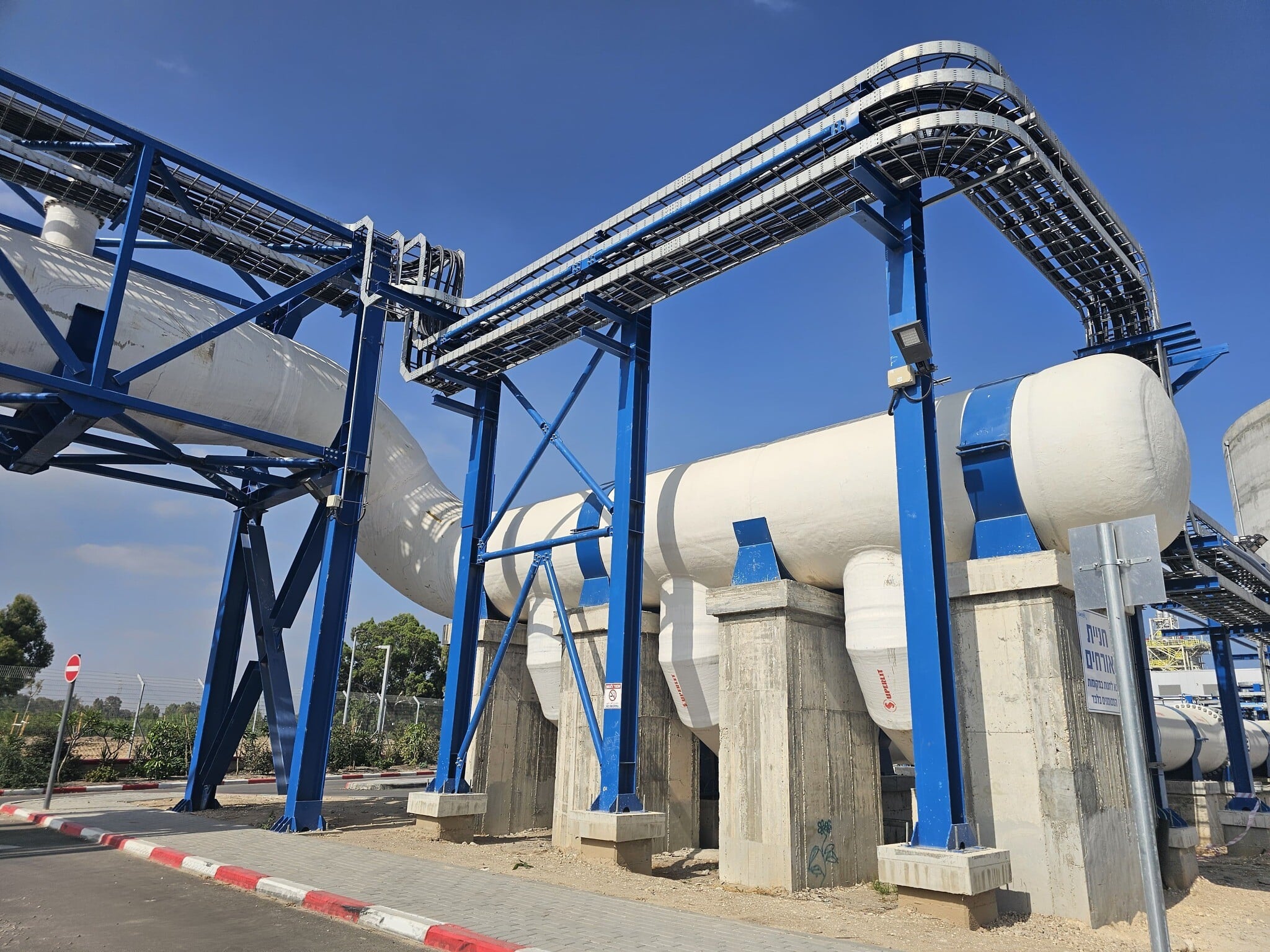
The Water Authority announced Sunday that the Soreq B desalination plant in the center of the country has entered full operation and will henceforth produce 200 million cubic meters of water annually.
The facility, located in Rishon Lezion, began operating about a year ago at 60 percent capacity.
Israel will require approximately 2.3 billion cubic meters of water (potable and otherwise) during the hydrological year, which began in October, when rainfall typically starts.
In addition to 20 million cubic meters to be pumped from the Sea of Galilee, six desalination stations, including Soreq B at full capacity, will supply around 800 million cubic meters of water — thus meeting 70% to 80% of the country’s potable water needs).
A seventh station, located in the Western Galilee, is planned to come online in 2027 and provide an additional 100 million cubic meters.
A further 700 million cubic meters will come from recycled sewage water and brackish water, used mainly for agriculture, according to the Water Authority, bringing the total of “manufactured” water up to 1.5 billion cubic meters.
To make up the shortfall, additional water will be pumped from subterranean aquifers or taken from reservoirs, built to trap floodwaters, in the north and south.
Amos Porat, director of Climate Services at the Israel Meteorological Service (IMS), told The Times of Israel that nationwide, around 350 millimeters (13.77 inches) of rain have fallen this winter, which is 118 percent of the average for the period, and 66% of the average for the entire year. Around the Sea of Galilee, 200 to 220 millimeters (7.87 to 9.84 inches) have fallen, or 80% to 90% of the average for the same period and 40% to 50% of the average for the entire year.








The Times of Israel Community.