

Cautious optimism as Peres shows signs of improvement after stroke
Former president responds to speech, remains in stable condition after being rushed to ICU; physician says only time will tell what kind of recovery can be expected
 Add ToI as a Preferred Source on Google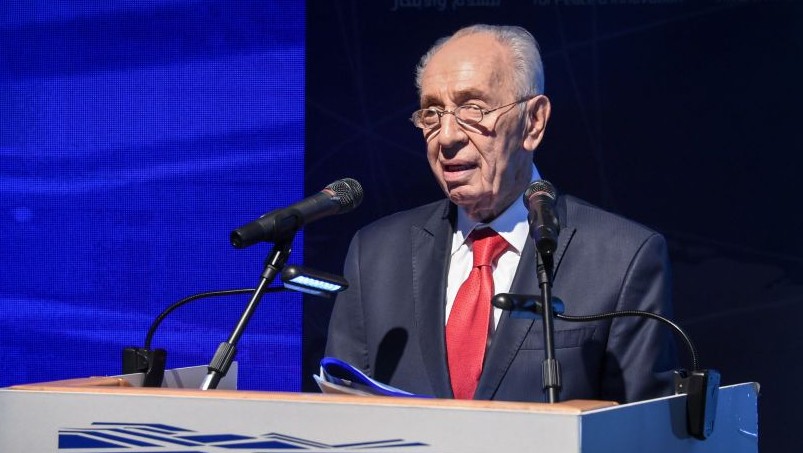
Former president Shimon Peres likely suffered “serious damage” to his brain after being hit by a major stroke, but is stable and no longer appears to face an immediate threat to his life, his doctors said Wednesday morning.
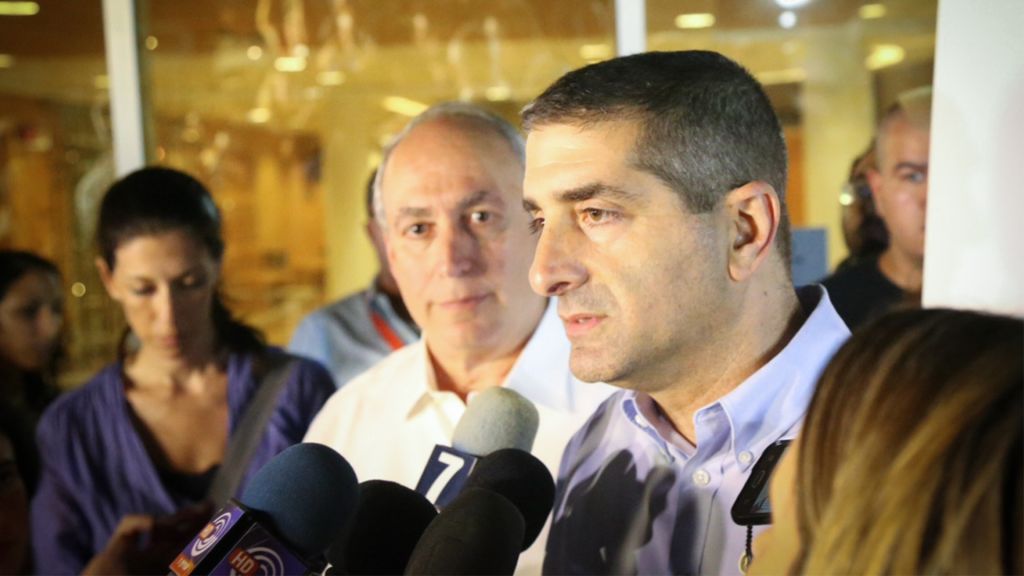
Prof. Rafi Walden, Peres’s son-in-law and personal physician, told reporters the statesman’s condition may have even improved slightly since the night, rebuffing reports that the beloved former statesman, 93, was fighting for his life.
But he warned that Peres had likely suffered permanent damage from the Tuesday afternoon stroke.
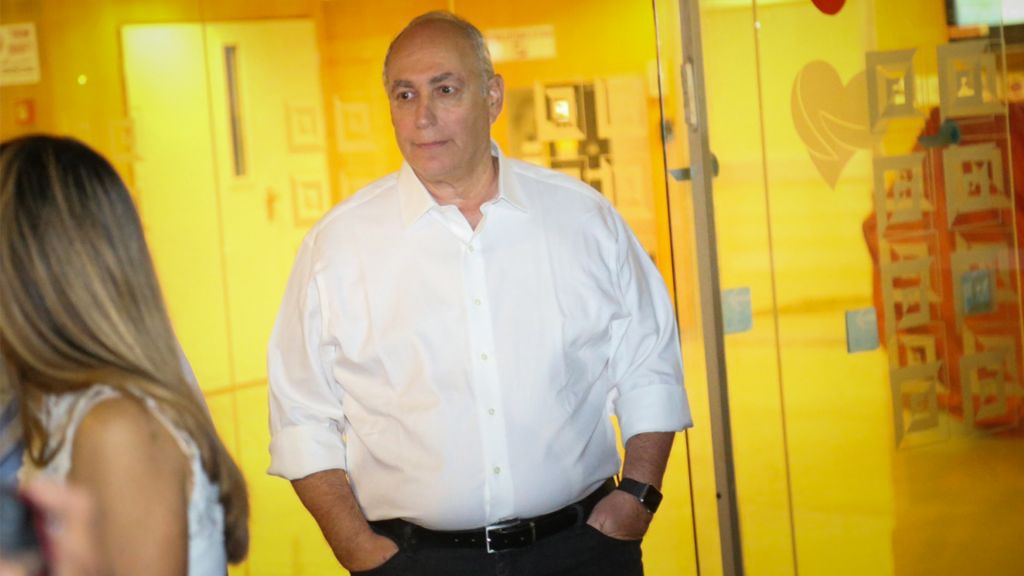
Meanwhile the former president’s son Chemi Peres told Army Radio his father’s condition appeared to be “improving over time.”
“From time to time he is revived to check progress, and at those times I was with him,” Chemi said. ” I must say that at those moments he was conscious, I spoke to him and I feel that his condition is improving over time.”
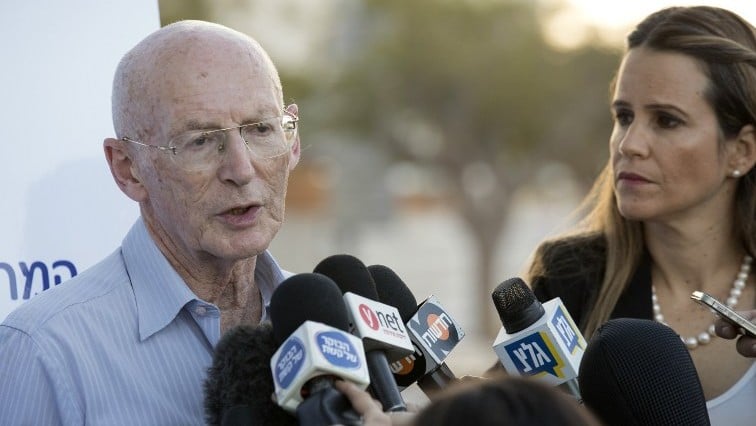
Health Minister Yaakov Litzman, visiting Peres’s ward, echoed the sentiment, saying “We can be tentatively be a little bit more optimistic than last night.”
The minister, head of the ultra-Orthodox United Torah Judaism Party, said “We continue to pray for Shimon Peres’s health…with God’s help I hope we are able to save Mr. Peres.”
Walden said the question now was what kind of damage was sustained and what kind of recovery Peres could make.
“In brain damage in general, and particularly in widespread [damage] such as what he experienced, it is very difficult to make an assessment at such an early stage,” Walden said.
“The brain is an incredibly complex system. There are instances where damage to a very small area can cause serious disability, while sometimes widespread harm leaves a person, upon recovery, in a reasonably functioning state.”
He added that “the damage is serious, that can’t be denied, but there’s no way of knowing what the effect will be going forward.”
Walden said Peres suffered a stroke in the right side of the brain and was being ventilated and sedated. However, he gave an optimistic forecast, saying all Peres’s physical parameters were stable and his blood tests were good. Peres was responsive when his sedation was lessened in the morning.
“He responded to me personally. I told him I was by his side, I asked him to squeeze my hand and he squeezed my hand firmly. It was clear that he got the message, obviously not in full awareness, but that gives us some optimism.”
“He seemed to follow what we were telling him,” Walden said. “Next time that we try to lessen his sedation I hope that we will be able to get in touch with him.”
He said he believed the former president’s odds of pulling through were “good.”
Zeev Feldman, president of the Israeli Neurosurgical Association and involved in Peres’ treatment, told AFP “the fact that he regained consciousness gives us some cautious optimism.”
“The processes can go wrong in the next 48-72 hours. Some situation may happen and that is why he is in intensive care,” he said.
Another attempt to lessen his sedation was planned for the afternoon, with an update expected around 4 p.m.
Walden noted doctors had ruled out operating on the 93-year-old’s brain at this time, as the risks in such an action currently far outweighed potential benefits.
Peres was transferred to Sheba Medical Center’s neurosurgery department’s ICU after his condition had stabilized, Sheba chief Prof. Yitzhak Kreiss, told a press conference earlier. Kreiss said Peres was in a medically induced coma to allow him to rest.
After feeling unwell during lunch on Tuesday, Peres was rushed to the hospital, which lies in the Tel Aviv suburb of Ramat Gan, for medical tests. Initial blood tests revealed a chemical imbalance. As he received further tests, at around 7 p.m. aides and a nurse attending to him noticed a deterioration in his usually gregarious interaction with those around him.
He said his head hurt, causing the medical team to suspect a stroke. He was given a CT scan at 8 p.m. that confirmed internal bleeding in the brain.
The “massive intracranial hemorrhage” occurred in the middle of a typically busy day for the nonagenarian, who turned 93 on August 2 but has remained active in public life after a seven-decade career as a politician.
In the morning, Peres filmed a video as part of a campaign to support local Israeli businesses in which he urged Israelis to buy domestic products. He then delivered a speech to a gathering of high-tech executives in Tel Aviv. It was after this speech, during lunch, when he began to feel unwell, according to aides.
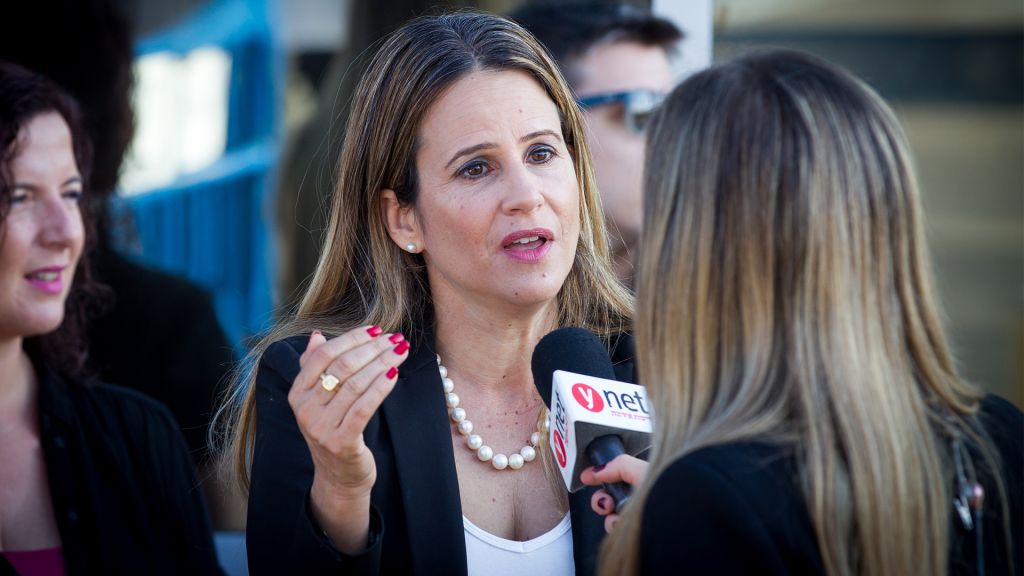
The former president never lost consciousness, his spokeswoman Ayelet Frisch told reporters. He was only sedated and intubated after the stroke was discovered, as doctors raced to stem the bleeding.
Meanwhile ex-Labor MK Rafi Elul, a friend of Peres, told Ynet News the former president had seemed “perhaps a bit tired” but still “full of energy” when he met with him on Monday.
“He told us of his busy day, of his plans for tomorrow and for the next week,” he recalled.
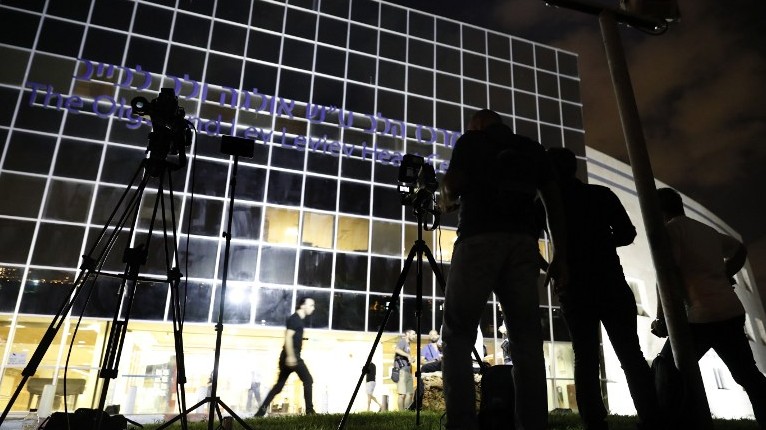
Media vans and journalists from Israeli outlets, as well as foreign ones, were still parked outside the hospital at daybreak Wednesday.
Israel’s chief rabbis Yitzhak Yosef and David Lau called on the public to pray for his recovery, noting his Jewish name used in traditional prayers is Shimon ben Sarah.
All three of Peres’s children, Zvia, Yoni and Chemi, are at his hospital bedside, along with grandchildren and great-grandchildren.
Son Chemi told the press on Tuesday the family was “receiving a huge number of messages from Israel and abroad from all our friends who are surrounding us with love and care.”
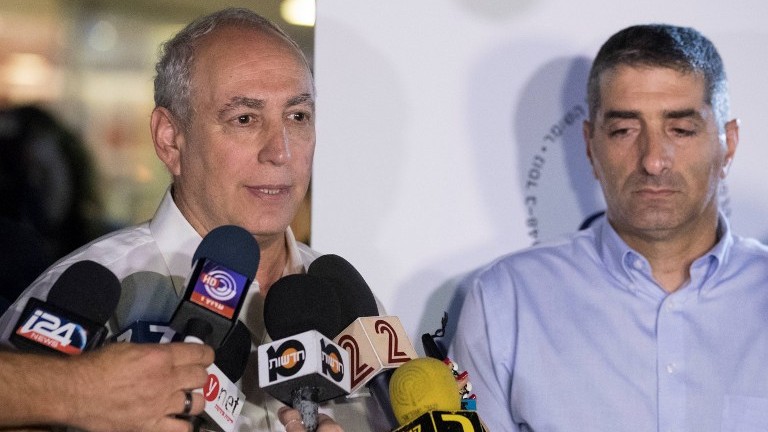
He stressed that “there was nothing more important to my father than Israel and its people. My father is one of a kind. I am praying for him and ask all those who pray to continue to pray with us. We thank everyone for your love and care.”
Peres is the elder statesman of Israeli politics, one of the country’s most admired symbols and the last surviving link to its founding fathers.
Over a seven-decade career, he’s held virtually every senior political office, including two stints as prime minister and extended terms as foreign, defense and finance minister. He won the 1994 Nobel Peace Prize for his work in reaching an interim peace agreement with the Palestinians.
Long a divisive figure in Israeli politics, Peres finally became one of Israel’s most popular public figures in his later years.
“In his people’s eyes he ceased to be a politician. He became an historic figure, larger than politics, larger than everyday affairs, a figure in a league of his own,” wrote Yedioth Ahronoth columnist Nahum Barnea.
As word of his stroke spread, Peres was showered with well wishes from political friends and foes alike.
“I am following with concern the updates from the hospital, and pray together with the entire country for my friend Shimon’s recovery,” said a statement from Reuven Rivlin, who in 2014 succeeded Peres as the president of Israel.
“Shimon, we love you and the whole country wishes you a speedy recovery,” Prime Minister Benjamin Netanyahu wrote on Twitter. Opposition leader Isaac Herzog also took to Twitter, urging Peres to “come back and make your wise, clear and realistic voice heard.”
Earlier this month, Peres underwent surgery to receive an artificial pacemaker, after he was diagnosed with an abnormal heart rhythm in July following a series of minor health scares.
The implant was recommended by Peres’s doctors, including personal physician Walden, after he was diagnosed in July with atrial fibrillation.
He suffered a mild heart attack in January and underwent a cardiac angioplasty to open a blocked artery. He had been hospitalized twice after suffering chest pains.
Born in Poland in 1923, Peres emigrated to what was then British mandatory Palestine when he was 11.
He joined the Zionist struggle in the 1940s and while hitchhiking met David Ben-Gurion, who would become Israel’s first prime minister.
He became director general of the nascent defence ministry at just 29 years old.
Beyond his accomplishments in the public eye, Peres was also seen as a driving force in the development of Israel’s undeclared nuclear program.
AP and AFP contributed to this report.









The Times of Israel Community.