

EU, British PM back Israel’s right to defend itself from Iranian strikes
UN secretary general urges ‘immediate halt to all hostile acts and any provocative actions’ as Security Council members refuse to call emergency meeting
 Add ToI as a Preferred Source on Google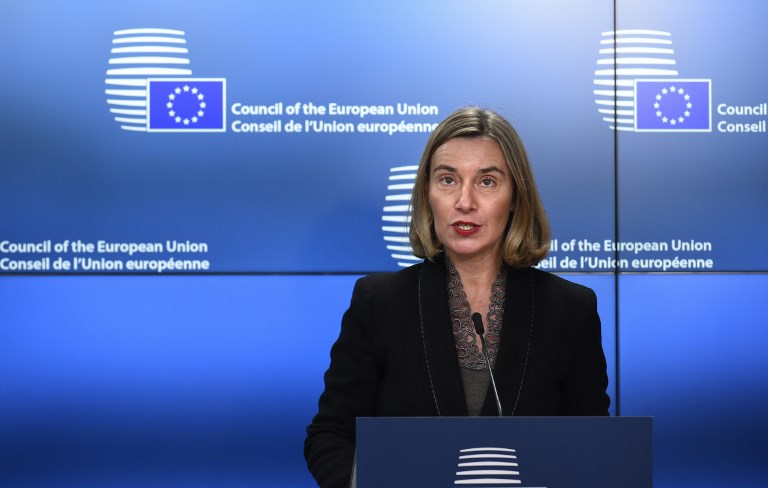
The European Union on Thursday backed Israel’s right to defend itself and called on “all regional actors to show restraint” after widespread strikes against Iranian targets in Syria, in response to Iranian rockets fired towards the Golan Heights.
“Reports about last night’s Iranian attacks against Israeli army posts from inside Syria to which Israel responded by striking against Iranian targets in Syria are extremely worrying,” the European External Action Service (EEAS) said in a statement.
“As the EU has said repeatedly, Israel has the right to defend itself,” the statement added.
“At the same time, we call on all regional actors to show restraint and avoid any escalation, which could further undermine regional stability.”
British Prime Minister Theresa May also said she “strongly supports Israel’s right to defend itself against Iranian aggression” in a call Thursday evening with Prime Minister Benjamin Netanyahu, her office said.
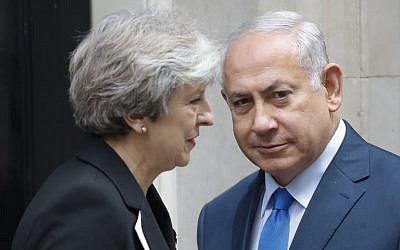
A spokesperson said May condemned the Iranian rocket attacks against Israeli forces and reiterated Downing Street’s earlier call on Iran to refrain from any further attacks and for calm on all sides.
Both leaders were said to agree it was “vital for the international community to continue working together to counter Iran’s destabilizing regional activity, and for Russia to use its influence in Syria to prevent further Iranian attacks.”
Netanyahu’s office said he expressed his appreciation for May’s position.
Iranian forces fired some 20 rockets at northern Israeli military bases from southern Syria just after midnight Wednesday. The IDF said it suffered no casualties, either on the ground or in the air, and that no rockets fired from Syria hit Israeli territory.
The IDF hit over 50 targets in Syria in overnight strikes in response, including Iranian intelligence sites, logistic centers, weapons depots, and military bases operated by the Revolutionary Guard’s Quds Force.
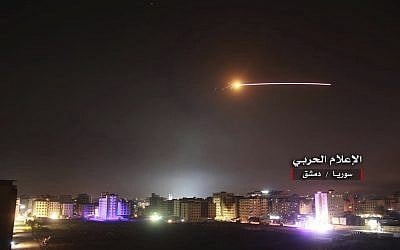
The exchange was the largest-ever direct clash between the Iranian forces and the IDF, and appeared to be the largest exchange involving Israel in Syria since the 1973 Yom Kippur War.
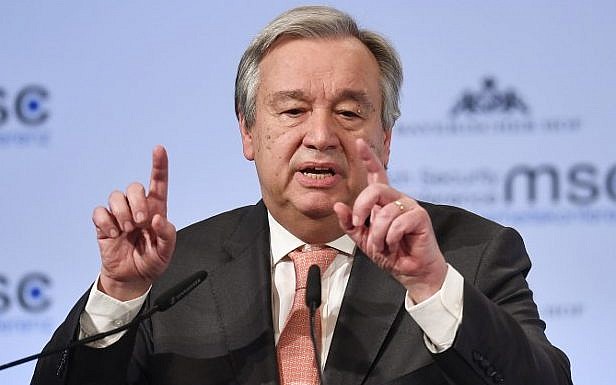
UN Secretary-General Antonio Guterres appealed for an “immediate halt to all hostile acts” in the Middle East.
In his statement, Guterres also called on the Security Council to “remain actively seized of the matter and shoulder its responsibilities” under the UN Charter.
“The Secretary-General urges an immediate halt to all hostile acts and any provocative actions to avoid a new conflagration in the region already embroiled in terrible conflicts with immense suffering of civilians,” a spokesman for Guterres said.
None of the Security Council’s 15 members were ready to call an emergency meeting on the situation — which has prompted calls for restraint from the international community.
When asked if they would call an emergency meeting, ambassadors from Poland, Russia, France and Britain all responded: “Not at this point.”
Danny Danon, Israel’s ambassador to the UN, sent letters to the Security Council and the secretary-general calling for condemnation of “Iran’s acts of aggression.” He also asked the Security Council to “demand that Iran remove its military presence from Syria.”




The Times of Israel Community.