

Ex-hostage Gadi Mozes finds victory in return to Kibbutz Nir Oz’s newly planted fields
But the oldest surviving hostage feels betrayed by government ministers, who have not contacted him in the 10 months since he was freed and continue to oppose Oct. 7 state probe
 Add ToI as a Preferred Source on Google
Returning to his beloved Nir Oz, former hostage Gadi Mozes is filled with hope at the young volunteers who have come to help rebuild the kibbutz, planting lush fields that extend to the Gaza border.
But the solace of the 81-year-old farmer — the oldest surviving hostage — is marred by his disgust with the government, which he accuses of ignoring the returning hostages and continuing to shirk responsibility for the failures that led to the widespread death and destruction in the October 7, 2023, Hamas invasion of southern Israel.
Not a single minister has picked up the phone to wish Mozes welcome back since he returned from Palestinian Islamic Jihad captivity in January as part of the last Gaza ceasefire, he said in an interview broadcast on Channel 12 on Thursday.
“It shows the kind of personality they have,” said Mozes. “Am I not a citizen? What am I, second-class?”
By contrast, Mozes said, President Isaac Herzog spoke to him over the phone the day after he returned, and German Ambassador to Israel Steffen Seibert sat with him for an hour and a half while Mozes was recuperating in a hospital. “He spoke to me in Hebrew, in English, whatever you want.”
Former IDF chief Herzi Halevi, who led the military during the Hamas-led onslaught and the start of the ensuing Gaza war, has personally visited him three times to apologize and take responsibility for the security debacle, Mozes said.
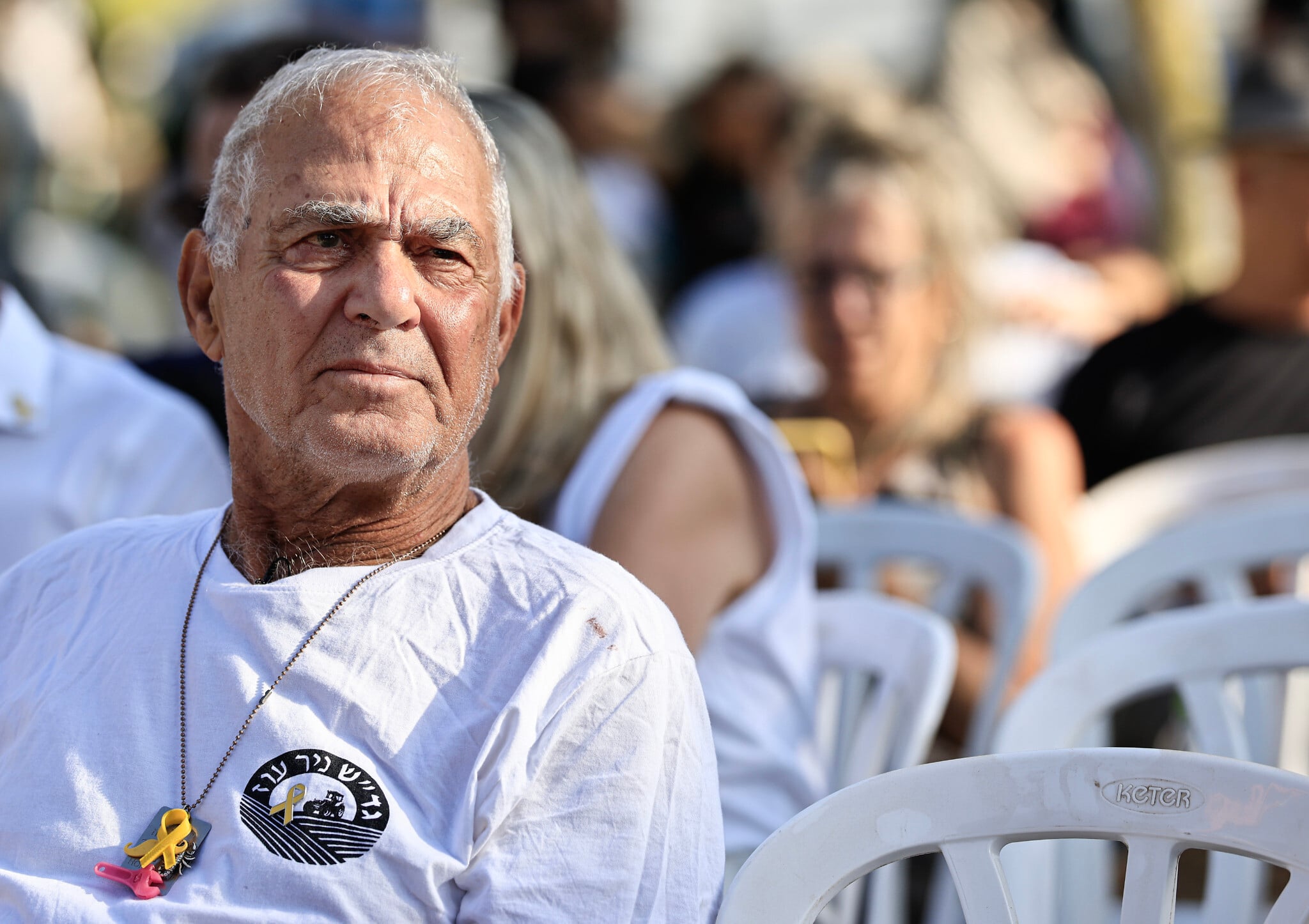
“But he’s the commander of the army. He also has a commander, and that commander is nowhere to be seen,” Mozes said, standing among the graves of those he said were “sacrificed in vain” in the onslaught — including his partner Efrat Katz and his fellow members of Nir Oz’s founding generation.
“With power comes responsibility,” said Mozes. “I can’t understand how these politicians sit so stubbornly and search for people to make themselves seem innocent.”
He added that failures surrounding the Hamas-led October 7 attack must be investigated by a state commission of inquiry — which the government rejects because such a committee is convened by the judiciary.
“A non-partisan, independent investigative committee has to probe everything that happened that morning and say who is guilty for the biggest debacle in the history of Israel,” Mozes said.
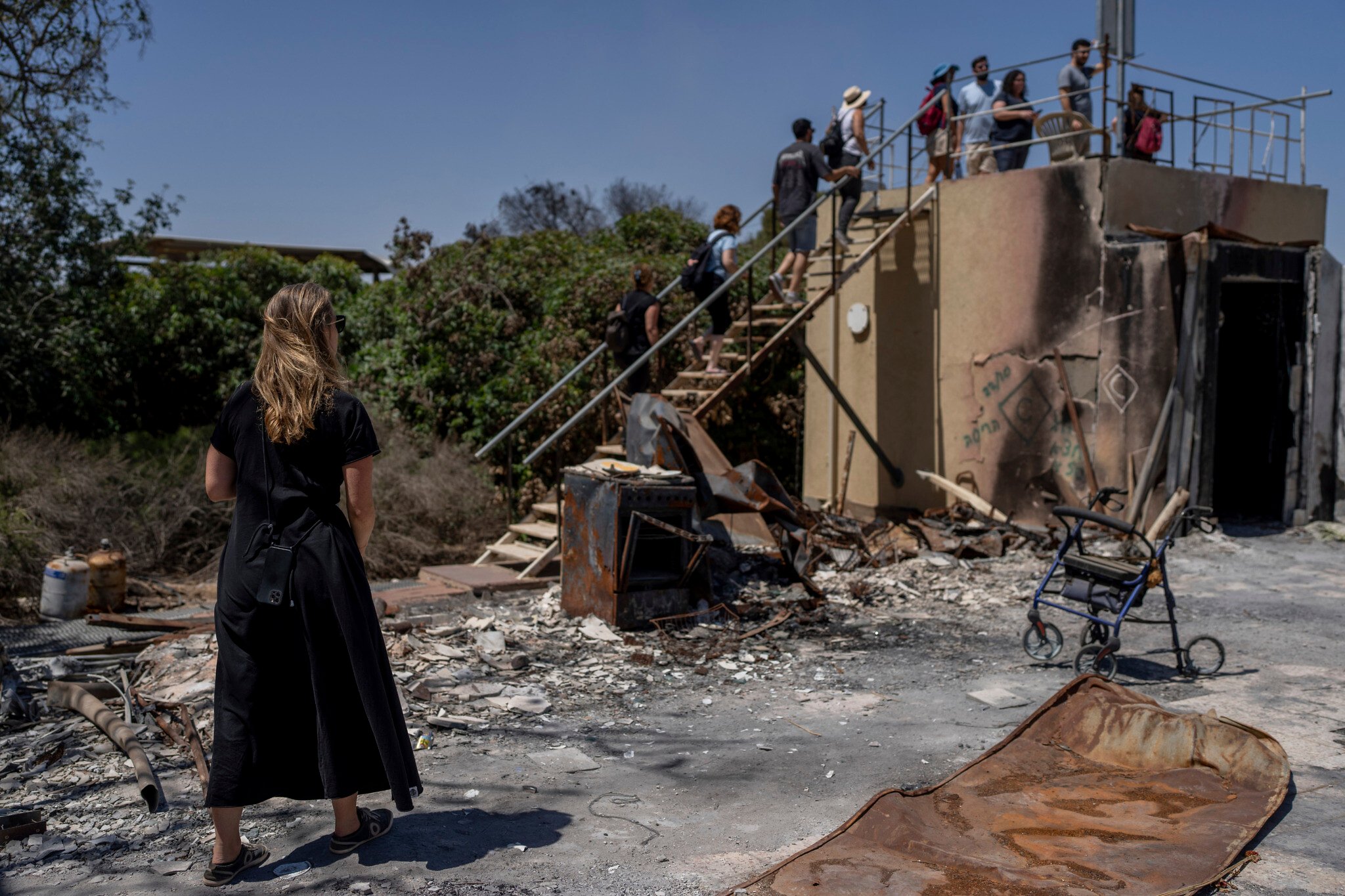
Mozes is determined to rebuild the kibbutz, even as its younger members, and many of its older members, have left. Asked if it was not worthwhile to preserve some of the wreckage for posterity, he said: “It’s also worthwhile to build a bustling community and not live inside a cemetery.”
The young people rejuvenating the kibbutz largely hail from youth movements and pre-military academies. About 90 people, including Mozes, now live in Nir Oz full-time, some two-thirds of whom are from the HaShomer HaTzair youth movement and Ma’aleh HaDerech pre-military academy, according to Channel 12.
“I want to give an especially big hand to the young people working in agriculture,” Mozes said in the TV report.
Being there for 480 days, among all those scoundrels, and to suddenly be on this side and plant something new up to the fence — it’s a sign we’re on the right track
The 2024 crops, which Mozes was not in Nir Oz to plant, were some of the finest in the kibbutz’s 70-year history, he said, standing in one of the kibbutz’s verdant new rosemary fields near the Gaza border fence.

“When I returned, they said to me, ‘We planted something new, if you’re willing to join in,’ and I said, ‘Gladly,'” said Mozes. “So a week after I came [back], I’m standing here and I say to myself, ‘Being there for 480 days, among all those scoundrels, and to suddenly be on this side and plant something new up to the fence — it’s a sign we’re on the right track’.”
Roughly one in four of Nir Oz’s 400-odd members were kidnapped or murdered in the Hamas attack that sparked the Gaza war. A subsequent IDF probe found that the first troops arrived at the kibbutz about 40 minutes after the last terrorist left.
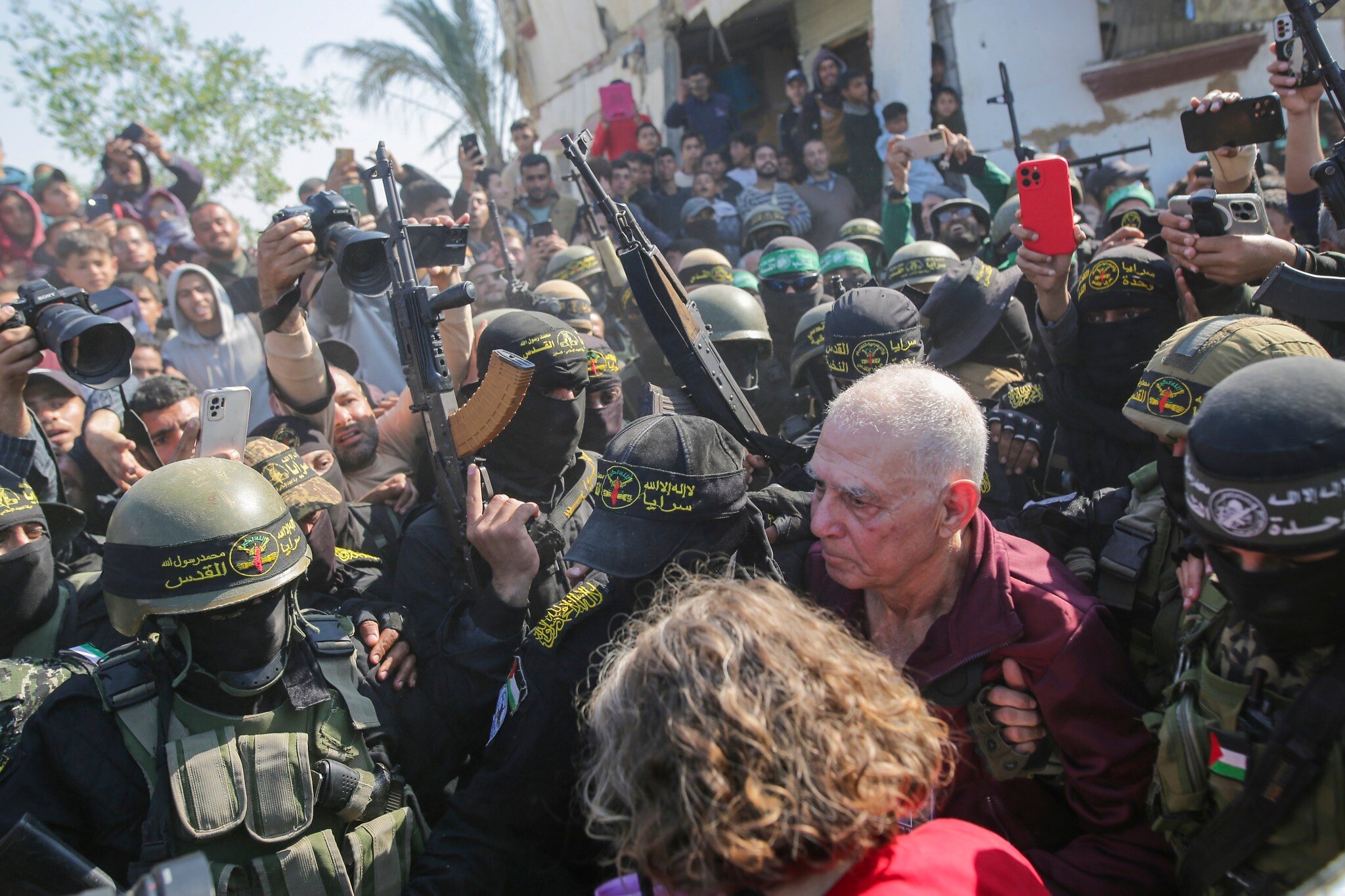
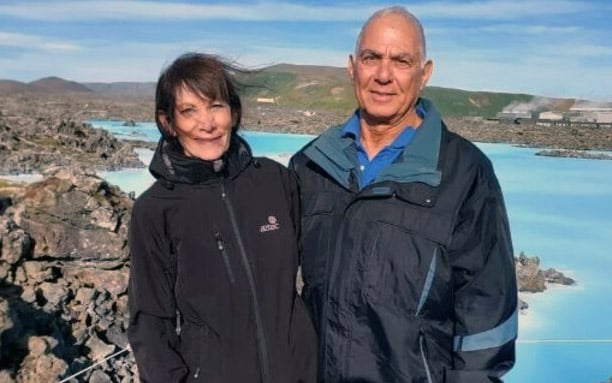
Mozes was abducted from his home in the kibbutz. Katz, his partner, was abducted separately, along with her daughter Doron and two young granddaughters. An Air Force investigation months later found Katz was likely killed by Israeli helicopter gunfire targeting the terrorists who kidnapped her.
Mozes pointed out to Channel 12 the field where his partner was killed. “To take out two more terrorists, they killed my wife,” he lamented. “It was here. They didn’t even make it past the border.”
Mozes comes to the cemetery about three times a week to visit Katz and the many friends he lost in the Hamas onslaught, he said.
Otherwise, he spends much of his time in the fields, as he has done for decades. In the interview, he takes special pride in the carrots and the rosemary.
“This is a massive victory. Whoever doesn’t know what a triumph of the spirit is, won’t understand this,” he said.









The Times of Israel Community.