

For some Jews, it’s getting easier to conceive of life without kids
Whether it’s choice, timing, or fertility issues, childless couples can feel uncomfortable in a Jewish community. A variety of support systems seek to change that
 Add ToI as a Preferred Source on Google
Reporter at The Times of Israel
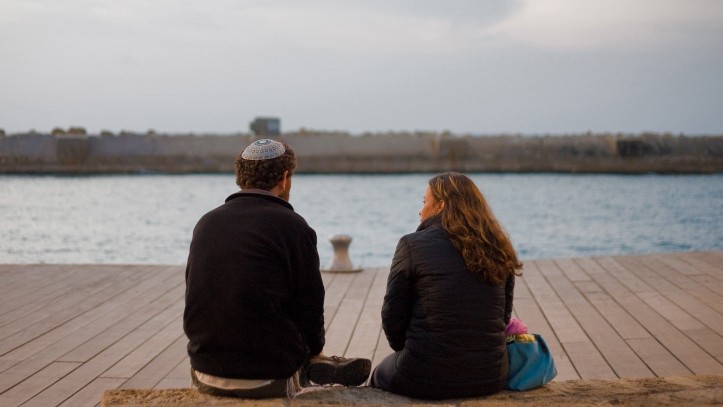
NEW YORK — Soon after Piper Hoffman married she and her husband started talking about how they would raise their children. He had attended yeshiva and grew up in a Conservadox home, so wanted any children they might have to do the same. She wanted something more egalitarian. The more they discussed it, the more they couldn’t find a solution.
And then came the proverbial light bulb moment.
“It just occurred to us we didn’t have to have children at all. For me it was like a weight had been lifted and the heavens opened,” Hoffman said. “I had never had the urge, and realized I didn’t have to have children.
“I don’t particularly enjoy spending time with children. I don’t get the same warm and fuzzies that others do,” said Hoffman. “But there are times where I have not felt so welcome in the Jewish community because children are seen as symbols of light and joy.”
The idea of the “Yiddishe momme” is ingrained in Judaism, but what about women who, for various reasons, don’t have children?
“Forty-eight percent of women of childbearing age are without children, up from 35 percent in 1976,” said Jamie Allen Black, who was appointed executive director of the Jewish Women’s Foundation of New York this past May.
‘I don’t get the same warm and fuzzies that others do. But there are times where I have not felt so welcome in the Jewish community’
“This is a shift for all people, especially the Jewish people. Because of that it’s important to realize that a strong Jewish future must include all Jewish adults, regardless of parental status,” said Black.
Her remarks came at a recent panel entitled, “Not Having Children by Choice, Chance or Circumstance.”
The discussion looked at what it means to have children — or not — or what happens when infertility or obstacles to adoption throw roadblocks. The panelists also spoke about what it means to have children later in life, and women who live in communities that put motherhood on a pedestal.
“From the articles that cry ‘Oh look at her baby bump!’ to the Grammy Awards where Beyoncé came out on stage as a pregnant goddess, it’s on every magazine cover. You can’t escape it,” said Melanie Notkin, entrepreneur and author.
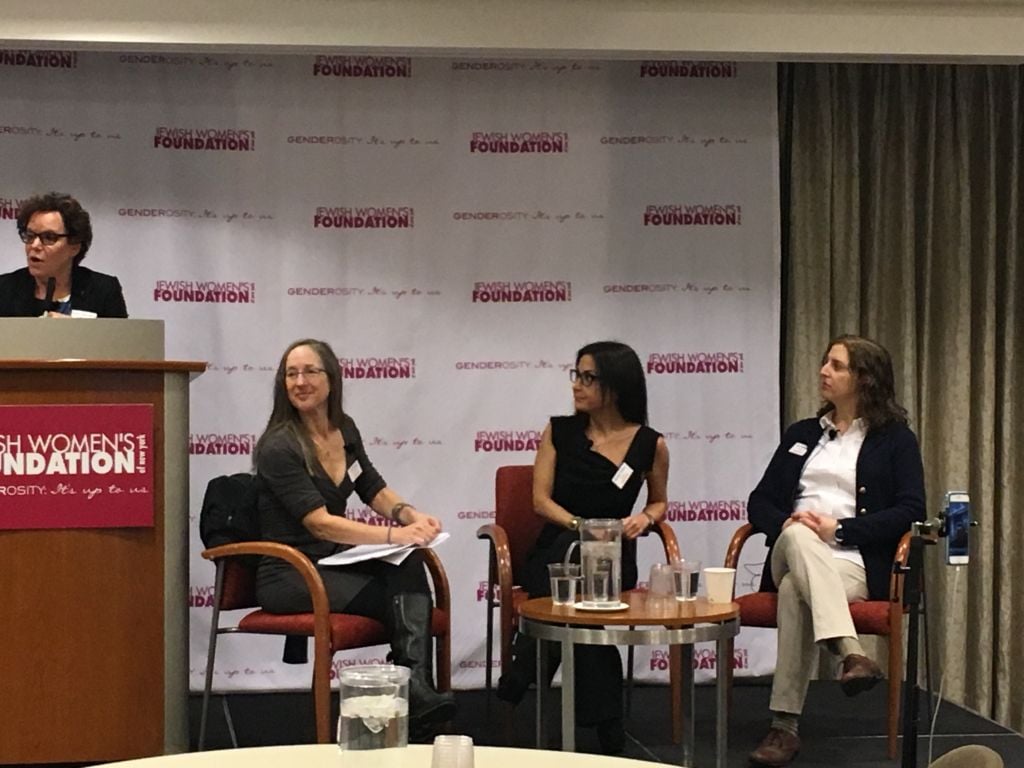
For Notkin, 47, not having children wasn’t so much about choice as it was about chance. She didn’t want to marry someone she didn’t love just to have children, and she didn’t want to go through the adoption process and raise a child as a single mother.
Instead, she embraces her role as doting aunt to five nieces and nephews.
In 2008 she founded Savvy Auntie, a lifestyle brand for the rising demographic of child-loving non-moms she dubs PANK — professional aunts, no kids.
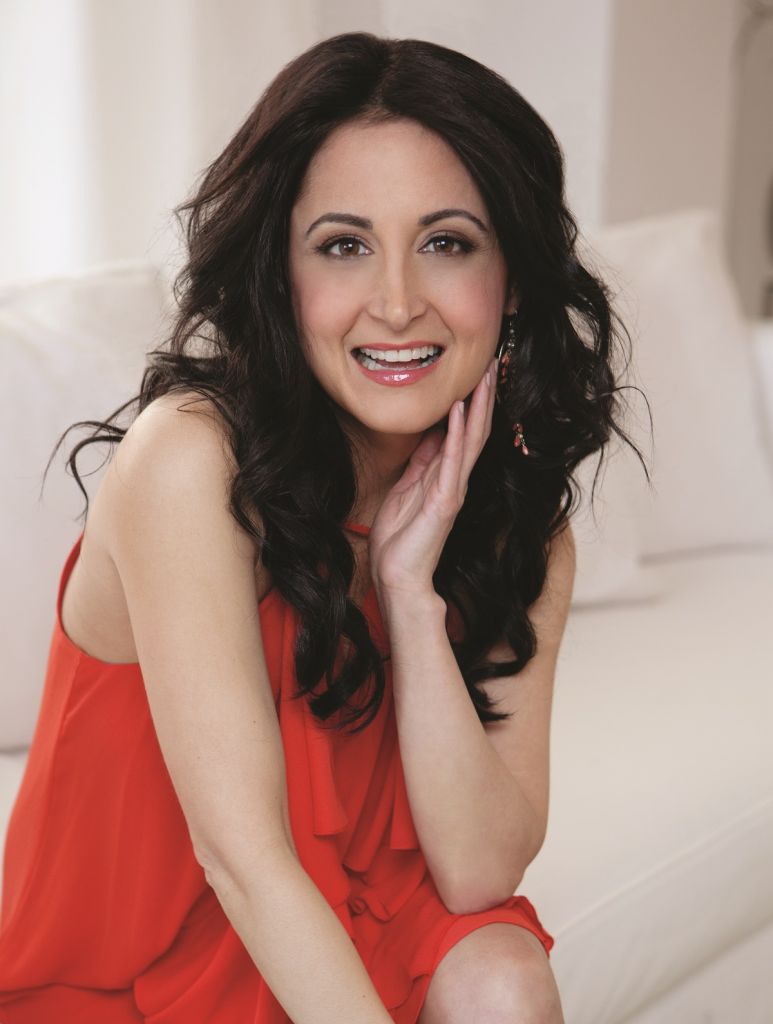
In 2014, Notkin introduced “Otherhood: Modern Women Finding a New Kind of Happiness,” her memoir on the lives of modern single, childless women.
“My life is beyond my expectations. That said, there’s been a lot of grief along the way. I thought I would have children in my 20s, in my 30s, in my 40s. I grieve that loss I never had, ” she said. “I don’t feel less than, but I do feel like the ‘other’ sometimes.”
It’s important to understand and appreciate the different experiences and struggles people face, said Black.
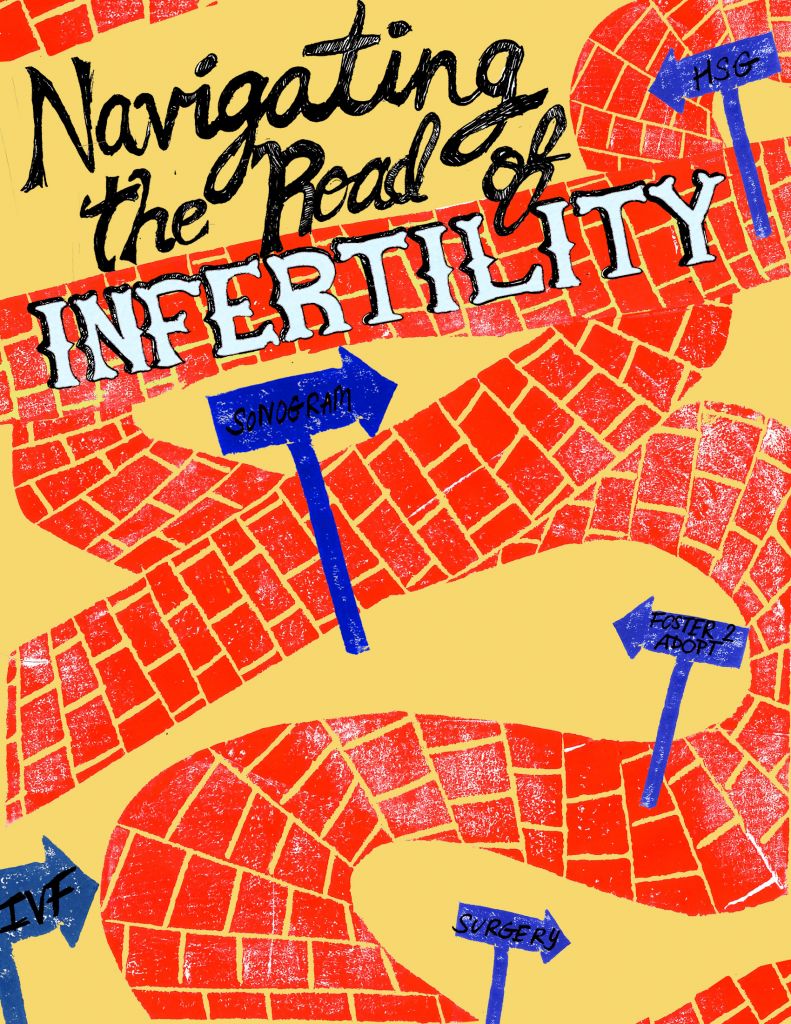
A year after they married, Chrissie and Aaron Kahan decided to start a family. Four years of trying, several surgeries and two failed IVF attempts later, the young couple decided to share their story. And so they wrote “Navigating the Road of Infertility” to raise awareness and erase the stigma that comes with what they described as a roller coaster of optimism, disappointment, anger, anguish and numbness in trying to conceive.
‘We really decided if we were going to put it out there, we were going to put it all out there’
“We really decided if we were going to put it out there, we were going to put it all out there,” said Kahan.
An assistant principal, Kahan is special education certified. Her husband Aaron, a former Marine, works as a special assistant to middle school children. The pair described an incredibly strong support system of family and friends, yet there are times when words fail.
“I think people don’t know what to say. It’s hard and it’s sad when you lose a baby,” she said. “We lost four kids and it’s been very traumatic. But once I relinquished that control I was able to get my joy back.”

Right now the Maryland couple is waiting to hear whether Chrissie has a blood clotting disorder that might impact her chances of sustaining a pregnancy. While they wait, they are taking time, not ready to make any decisions about the future.
“I’ve been through plenty in my life. My father died of cancer when I was eight, and I was left to help raise my two sisters,” said Aaron Kahan. “If you give up, then what are you going to do? You have to learn not to sweat the small stuff. I know that all sounds like self help jargon, but that’s my mentality.”
Jewish organization Yesh Tikva (There Is Hope) helps raise the awareness of infertility in the Jewish community and provides a body of resources and tools for the one in eight Jews facing infertility.
Through both online and in person support groups, as well as “Fertility Friends,” their one-on-one individualized support network, Yesh Tikva provides a platform for people to share their personal stories. There is also a focus on communal outreach and education.

The organization’s biggest endeavor so far was last year’s “Infertility Awareness Shabbat,” where just prior to Passover, 120 synagogues addressed their communities about sensitivity towards infertility, said Gila Block, founder of Yesh Tikva.
“Struggling to have a child, be it one’s first or any subsequent child, can create a constant feeling of loss and helplessness. As a Jew there is an added stress of infertility due to the biblical commandment to be fruitful and multiply,” she said.
‘Struggling to have a child, be it one’s first or any subsequent child, can create a constant feeling of loss and helplessness’
“Many of the Jewish holidays and rituals revolve around the family unit. For those struggling to have a child these holidays and rituals are a source of tremendous pain, as they serve as a constant reminder of what they don’t have, yet so desperately want,” said Block.
Decades ago when women didn’t speak about fertility struggles, resources such as Yesh Tikva, or the JFW panel, would have been welcome, said JFW member Frances Brandt during the afternoon discussion.
“Somehow if you didn’t want to have children or couldn’t have children no one would even talk to you. I’m so glad it’s getting easier to do what you’re doing,” said Brandt.
It may be getting easier, but there is still a ways to go, said panelist Hoffman. Some comments she hears from “concerned” individuals can border on abuse.
“I’ll hear ‘Oh she’s the one with no children,’ or ‘You’re letting Hitler win,’ or ‘You don’t know what it is to be a woman until you have children,’ because as a female I should only be defined by my biology,” she said.
Hoffman said she finds that her friends sometimes go on the defensive when the topic of children come up. They sometimes think that she’s judging their choice to be mothers as somehow retro, or that something must be off about her.
“The fact that I don’t want to hang around my friend’s 5-year-old but that I want to rescue all the kittens in a shelter becomes a question of ‘why don’t you care about human children,’” she said.
But according to “Savvy Auntie” Notkin it’s not just the remarks, but the structure of synagogues and other Jewish community institutions, where room is made for young children and teens, couples and families, though similar considerations don’t seem to be made for singles, who are shunted aside.
Not having children isn’t an issue in her professional life, but she does find that it sets her apart more during Jewish holidays. It was also highlighted during synagogue functions she used to attend.
Single adults would often be relegated to “dark tables in the corner, like the children’s table,” Notkin said, “even if our friends, who were couples, were sitting at other tables.”










The Times of Israel Community.