GAZA CITY — Islamist movement Hamas on Tuesday marked the 10th anniversary of the legislative election it won in 2006 with a call for new parliamentary and presidential polls in the Palestinian territories.
At a news conference, senior Hamas figures in Gaza called for “the announcement of a precise date for presidential and legislative elections.”
First deputy speaker of parliament Ahmed Bahar said Hamas and rival Palestinian factions should work to achieve reconciliation “and to close the gaps opened by years of political division.”
Palestinian elections have not been held in a decade due to the bitter split between Hamas, which rules the Gaza Strip, and the West Bank-based Fatah faction led by Palestinian president Mahmoud Abbas.
Representatives from the rival factions are expected to meet, however, in the coming days in Doha in a fresh attempt to implement a 2014 reconciliation deal which provided for elections by the end of that year.
Get The Times of Israel's Daily Editionby email and never miss our top stories
The elections never materialized, with the two sides blaming each other.
Bahar welcomed the talks due to take place in the Qatari capital.
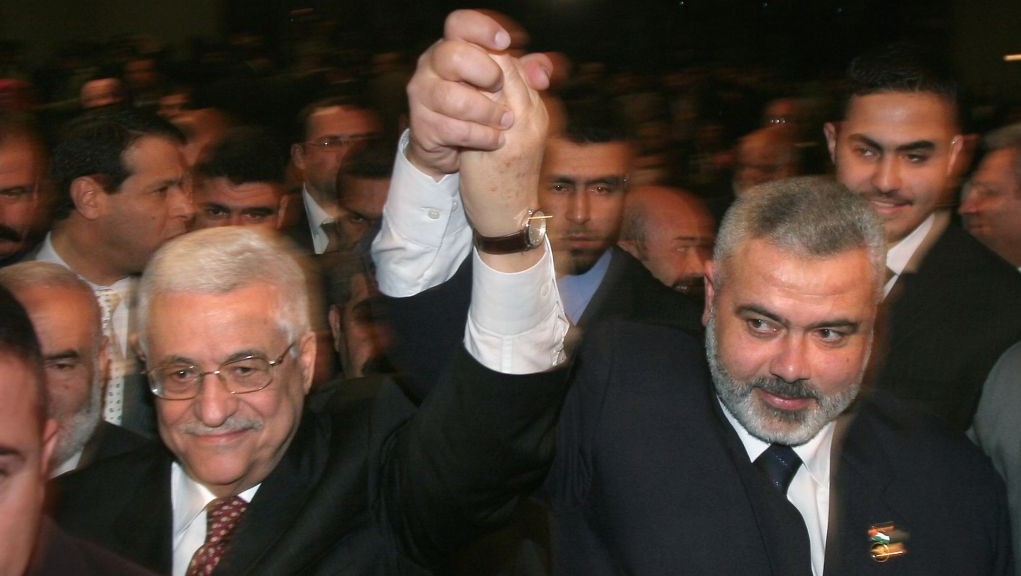
File: Palestinian Authority President Mahmoud Abbas, left, and Prime Minister Ismail Haniyeh from Hamas, right, raise their linked arms as they move through the crowd at a special session of parliament in Gaza City, March 17, 2007. (AP/Hatem Moussa)
The Palestinian parliament has not met since 2007, the year Hamas seized the Gaza Strip by force and drove out Fatah from the enclave buoyed by its 2006 election victory.
Advertisement
Hamas caused a shock by winning the majority of seats in the polls, which were seen by some as the most transparent to be held in the Palestinian territories.
But the international community refused to accept the results, demanding that Hamas renounces violence, recognizes Israel and respects agreements signed between Palestinian and Israeli leaders.
We can't do this work alone.
The war with Iran has been draining for all of us in Israel. But when I heard about a high casualty incident – ballistic missile impacts in Arad and Dimona that left nearly 200 people wounded – I drank a cup of coffee, packed a bag, and headed south.
There, I spoke with Shilgit, the head of an after-school program for underprivileged youth. Standing outside her destroyed center, Shilgit said it was a miracle that no children were hurt and spoke about the community coming together in the hours since.
As a Times of Israel reporter, I’m committed to telling stories of resilience like Shilgit’s. But my colleagues and I can't do this alone. If you value work like this,please consider joining our reader support group, The Times of Israel Community. Your financial support is essential to keep real human reporting like this going.
We’re really pleased that you’ve read X Times of Israel articles in the past month.
That’s why we started the Times of Israel - to provide discerning readers like you with must-read coverage of Israel and the Jewish world.
So now we have a request. Unlike other news outlets, we haven’t put up a paywall. But as the journalism we do is costly, we invite readers for whom The Times of Israel has become important to help support our work by joining The Times of Israel Community.
For as little as $6 a month you can help support our quality journalism while enjoying The Times of Israel AD-FREE, as well as accessing exclusive content available only to Times of Israel Community members.
Thank you, David Horovitz, Founding Editor of The Times of Israel