

Hamas, circa 2013, is in a lot of trouble
While Israel agonizes over prisoner releases, for Abbas’s Palestinian Authority they represent another small victory against its Islamist terrorist rival

 Add ToI as a Preferred Source on Google
Avi Issacharoff, The Times of Israel's Middle East analyst, fills the same role for Walla, the leading portal in Israel. He is also a guest commentator on many different radio shows and current affairs programs on television. Until 2012, he was a reporter and commentator on Arab affairs for the Haaretz newspaper. He also lectures on modern Palestinian history at Tel Aviv University, and is currently writing a script for an action-drama series for the Israeli satellite Television "YES." Born in Jerusalem, he graduated cum laude from Ben Gurion University with a B.A. in Middle Eastern studies and then earned his M.A. from Tel Aviv University on the same subject, also cum laude. A fluent Arabic speaker, Avi was the Middle East Affairs correspondent for Israeli Public Radio covering the Israeli-Palestinian conflict, the war in Iraq and the Arab countries between the years 2003-2006. Avi directed and edited short documentary films on Israeli television programs dealing with the Middle East. In 2002 he won the "best reporter" award for the "Israel Radio” for his coverage of the second intifada. In 2004, together with Amos Harel, he wrote "The Seventh War - How we won and why we lost the war with the Palestinians." A year later the book won an award from the Institute for Strategic Studies for containing the best research on security affairs in Israel. In 2008, Issacharoff and Harel published their second book, entitled "34 Days - The Story of the Second Lebanon War," which won the same prize.
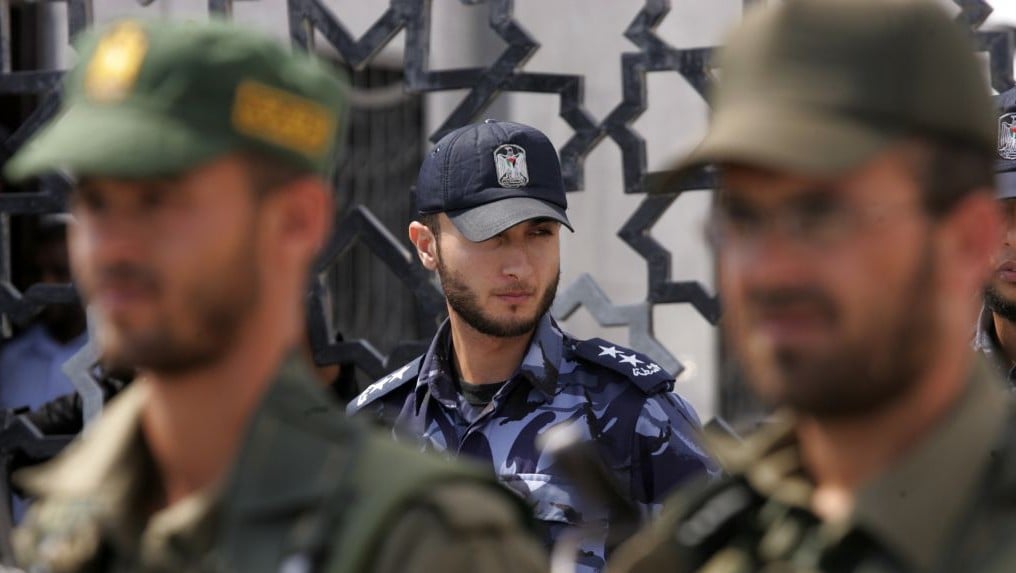
The release of 26 Palestinian prisoners, which will begin Tuesday night, marks another small victory for Palestinian Authority President Mahmoud Abbas in his never-ending struggle with Hamas.
While Israel agonizes over the releases — described by Benjamin Netanyahu on Monday as “one of the toughest decisions that I’ve taken as prime minister” — Abbas is proving to the Palestinian people that he can deliver, while the Gaza-based Islamic terror organization’s position is worsening, both in the West Bank and in Gaza.
Though Fatah and the Palestinian Authority don’t enjoy any exceptional support on the Palestinian street these days, Hamas’s political and economic crisis in recent months is causing distress among its leaders.
That distress, of course, wasn’t born out of the impending prisoner release. The coup in Egypt at the beginning of July was what diminished Hamas’s influence the most. Almost overnight, Hamas was transformed from being the ally of the biggest Arab state to its enemy.
In just a few short weeks, the new regime in Egypt was able to cut off the supply lines of fuel and the basic goods that would arrive in Gaza through tunnels from the Sinai Peninsula. In the process, Hamas was prevented from collecting taxes on such goods and, also, from paying its men in a timely fashion.
On Sunday, Hatem Oweida, deputy economy minister for Hamas, said that Egypt’s closure of smuggling tunnels between the Sinai Peninsula and the Gaza Strip is costing Hamas $230 million in lost revenue every month. He estimated that the unemployment rate in Gaza will reach over 43 percent should Egypt continue to pursue this policy.
Nevertheless, it’s too early to eulogize Hamas. Despite the difficulties it faces in ensuring the transfer of goods, it has succeeded in partially resuming its tunnel activities, especially south of Rafah, on the border with Egypt. The scope of the smuggling has lessened significantly, but several dozen tunnels continue to operate, mostly serving to transfer raw materials for Hamas’s military industry. And this industry has undergone a significant upgrade.
Instead of relying on long-range missiles from Iran or Libya, Hamas has opted to locally produce its M-75 rockets, which are capable of reaching Tel Aviv. According to reports, Hamas currently has several dozen of these readied, in case of an escalation with Israel.
However, as we approach the one-year anniversary of Operation Pillar of Defense, and despite the tensions on Monday, it seems Hamas is interested in holding on to these missiles for the time being and in maintaining the ceasefire.
This “quiet” between Israel and Hamas is unusual. This isn’t the same terror organization — it’s now a movement more occupied with its survival as a ruling government.
When Operation Pillar of Defense began in November 2012, Israel assassinated Ahmed Jabari, the commander of Hamas’s military wing. It was then reported that a close associate of Jabari, Marwan Issa, took his place, but lately, the name Mohammed Deif has risen again and again as the man who really commands the military wing. Deif, one of the wing’s founders, has been on Israel’s most wanted list since the early 1990s and escaped an assassination attempt in 2002, in which he lost an eye.
Eleven years later, Deif now leads Hamas’s armament efforts in Gaza, the tunnels project, and, no less important, the organization’s efforts to hold onto power while maintaining a ceasefire with Israel.







The Times of Israel Community.