

Hamas leader joins thousands of Palestinians at fresh Gaza border protest
Israeli sappers defuse booby-trapped balloon in south; terror group threatens to send 5,000 flaming kites, balloons into Israeli territory
 Add ToI as a Preferred Source on Google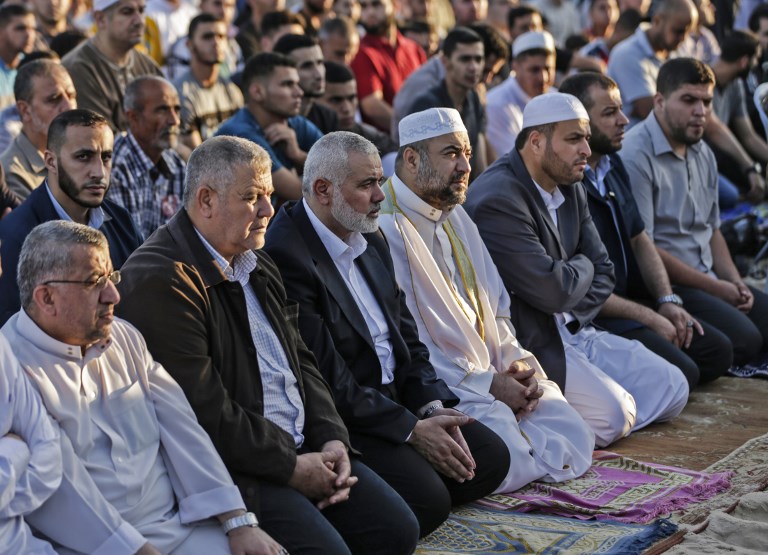
With the leader of the Hamas terrorist group in attendance, several thousand Palestinians on Friday performed the traditional morning prayer of the Muslim holiday of Eid al-Fitr near Gaza’s perimeter fence with Israel, as part of the now weeks-long protests on the border.
Hamas leader Ismail Haniyeh joined about 2,000 worshippers Friday in one of the areas near the fence, pledging that protests would continue. He said the protests have “revived the Palestinian issue” by refocusing world attention and praised a UN General Assembly resolution that passed earlier this week accusing Israel of using “excessive” force against the protesters.
As the demonstrations picked up again on Friday morning, the Palestinian Shams news outlet reported the IDF fired on a Hamas observation post in the southern Gaza Strip, near the city of Rafah.
An army spokesperson said she was “unfamiliar” with the incident. There were no injuries reported.
Also Friday, the Israeli army said an unarmed Palestinian had been arrested after infiltrating into Israel from the northern Gaza Strip, a frequent occurrence in the area.
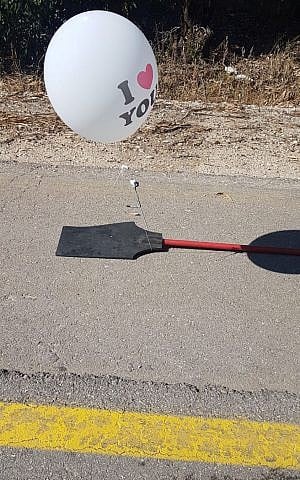
A booby-trapped balloon was flown into Israeli territory, landing on a highway in the Sha’ar Hanegev region. Police sappers were called to the scene and destroyed the balloon and the explosive device attached to it in a controlled explosion, police said.
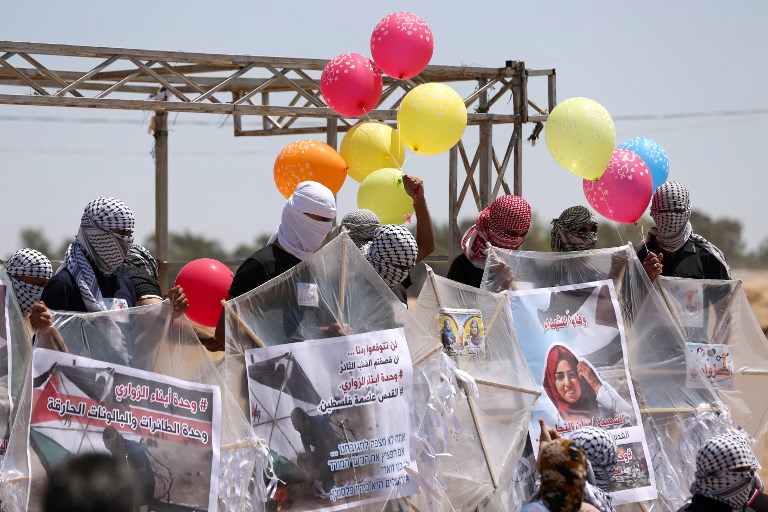
Hamas on Thursday had threatened to send 5,000 fire kites and balloons deep into Israeli territory on Friday.
The Palestinian terror group, the de facto ruler in the Strip, said at a press conference that the incendiary devices will be launched from various locations in Gaza during the protest, which also marks the first day of the Eid al-Fitr Muslim holiday.
Hamas’s “kite unit” said that if Jerusalem “doesn’t make use of the opportunity we are giving it” to end the Gaza siege, Israeli communities near the enclave would “live under a siege of kites,” which it claimed would reach a range of 40 kilometers inside Israel.
https://content.jwplatform.com/previews/tsJpnDWo-U4CTA3JQ
The comment seemed to be a reference to reported indirect talks between Israel and Hamas for a long-term ceasefire in exchange for an end to the blockade on Gaza, which Israel maintains to keep Hamas and other terror groups in the Strip from building up military capabilities.
Since March 30, Palestinians in the Gaza Strip have launched hundreds of kites and helium balloons bearing flammable materials, and occasionally explosives, into Israeli territory, sparking near-daily fires.
The use of 5,000 balloons and kites simultaneously would prove a major challenge for the army, which has struggled to find a solution to neutralize the threat. Aside from drones used to fishhook the devices out of the sky, the army has also begun firing warning shots at Gazans when it sees them about to launch kites and balloons.
On Thursday, the IDF said it fired a warning shot at a group of Palestinians who were preparing to launch an incendiary helium balloon toward Israel.
This was the second time in less than 24 hours that Israel shot at Gazans as they attempted to start fires in Israeli territory with airborne arson devices. There were no reports of injuries in either of the Israeli strikes.
لحظة إطلاق طائرات الاحتلال صاروخًا قرب شبان أثناء إطلاقهم طائرة ورقية حارقة شرقي مخيم البريج وسط قطاع غزة دون إصابات pic.twitter.com/vEPPG6me8X
— المركز الفلسطيني للإعلام (@PalinfoAr) June 14, 2018
Video footage posted to social media showed the Israeli strike from the ground. A loud explosion can be heard as the missile hits a concrete structure in the area, and a cloud of dust and smoke can then be seen.
After the warning shot was fired, a number of what seemed to be gunshots could be heard, apparently from Palestinians shooting at the drone.
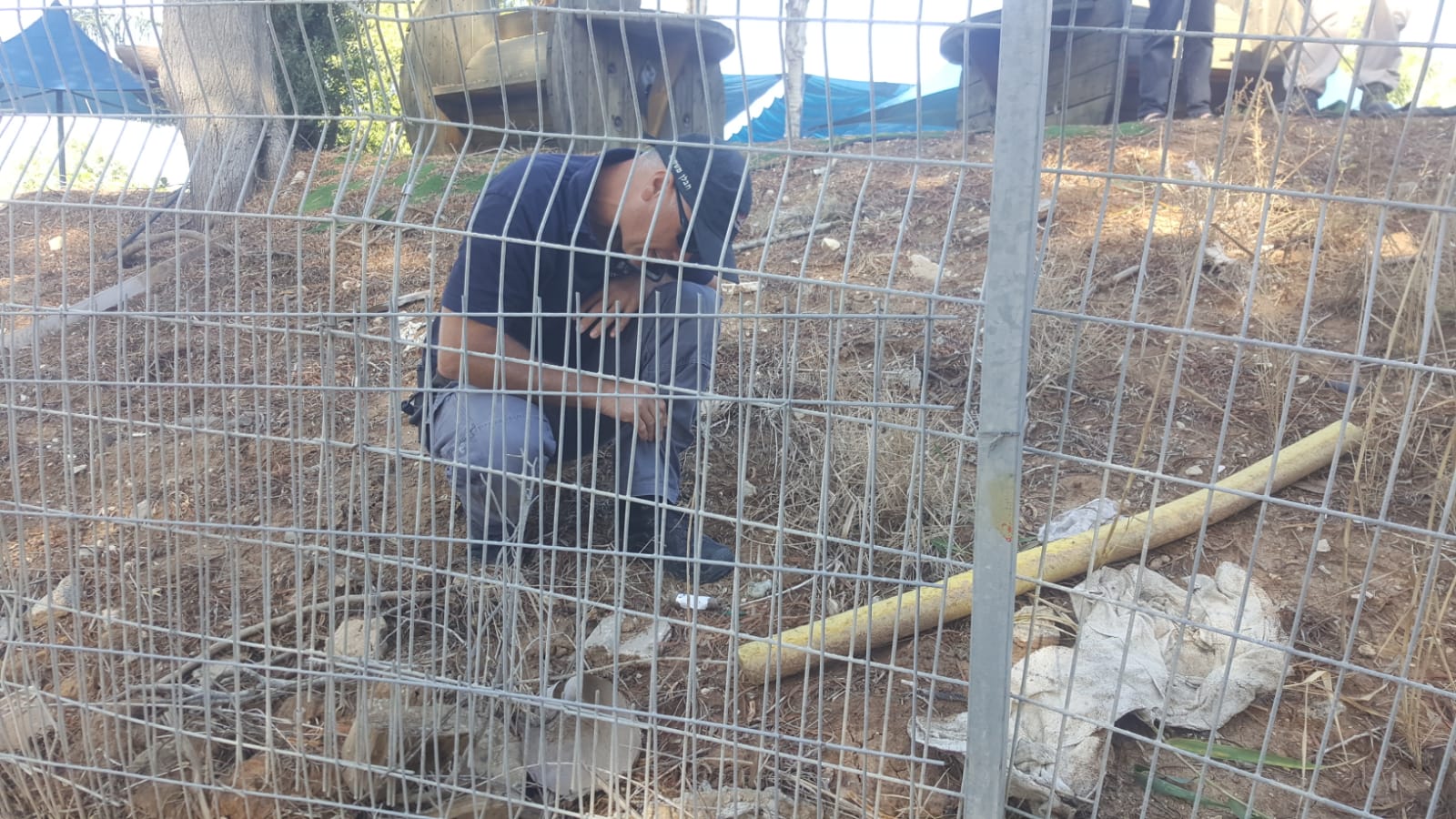
A short time later, a balloon from the Gaza Strip landed on a fence in the town of Sderot’s Sapir College campus, forcing authorities to temporarily close down the area, a spokesperson for the regional council said.
A police sapper determined that the balloon had a simple pouch of burning material attached to it and not an explosive device, a local government official said. The area around the fence was then reopened.
This method of firing warning shots from drones appeared to be a new tactic that the military was looking to adopt in order to counter the threat posed by these kites and balloons, which have burned thousands of acres of farmland, forests and nature reserves in the regions around the Gaza Strip, according to Israeli officials.
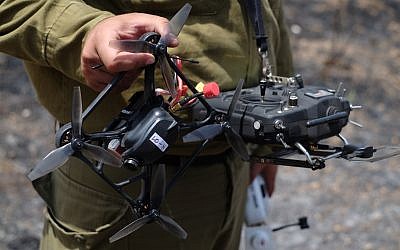
The military has sought to counter these kites and balloons with teams of soldiers operating drones. Israeli officials have deemed the drone program a success, but it has not provided a perfect solution.
The Tax Authority estimated that the damage so far amounts to upwards of NIS 5 million ($1.4 million).
Prime Minister Benjamin Netanyahu has proposed withholding tax revenue from the Palestinian Authority to pay for the damage, though critics are skeptical of the plan as the kites and balloons are being launched from Gaza, where the PA has limited control.
In two months of mass protests at the Gaza border, more than 130 Palestinians have been killed and thousands wounded by Israeli military fire. Dozens of the fatalities were members of terror groups, Hamas and Islamic Jihad have acknowledged.
Israel said its troops were defending the border and accused Hamas of trying to carry out terror attacks under the cover of the protests.
The protests at Israel’s border peaked on May 14, when some 40,000 Gazans protested along the fence and violent clashes took place between troops and Palestinians. The protest came on the same day that the US opened its embassy in Jerusalem.
Protesters have hurled grenades, improvised explosives and rocks at soldiers, burned tires and flown hundreds of incendiary kites and balloons into Israeli territory, sparking multiple fires.
Times of Israel staff contributed to this report.







The Times of Israel Community.