

Hezbollah fears attacks from al-Qaeda-linked groups
Lebanese media report that the terrorist organization is taking strict measures to protect Shi’ite mosques and neighborhoods
- See more Times of Israel on Google - add us as a Preferred Source

Avi Issacharoff, The Times of Israel's Middle East analyst, fills the same role for Walla, the leading portal in Israel. He is also a guest commentator on many different radio shows and current affairs programs on television. Until 2012, he was a reporter and commentator on Arab affairs for the Haaretz newspaper. He also lectures on modern Palestinian history at Tel Aviv University, and is currently writing a script for an action-drama series for the Israeli satellite Television "YES." Born in Jerusalem, he graduated cum laude from Ben Gurion University with a B.A. in Middle Eastern studies and then earned his M.A. from Tel Aviv University on the same subject, also cum laude. A fluent Arabic speaker, Avi was the Middle East Affairs correspondent for Israeli Public Radio covering the Israeli-Palestinian conflict, the war in Iraq and the Arab countries between the years 2003-2006. Avi directed and edited short documentary films on Israeli television programs dealing with the Middle East. In 2002 he won the "best reporter" award for the "Israel Radio” for his coverage of the second intifada. In 2004, together with Amos Harel, he wrote "The Seventh War - How we won and why we lost the war with the Palestinians." A year later the book won an award from the Institute for Strategic Studies for containing the best research on security affairs in Israel. In 2008, Issacharoff and Harel published their second book, entitled "34 Days - The Story of the Second Lebanon War," which won the same prize.
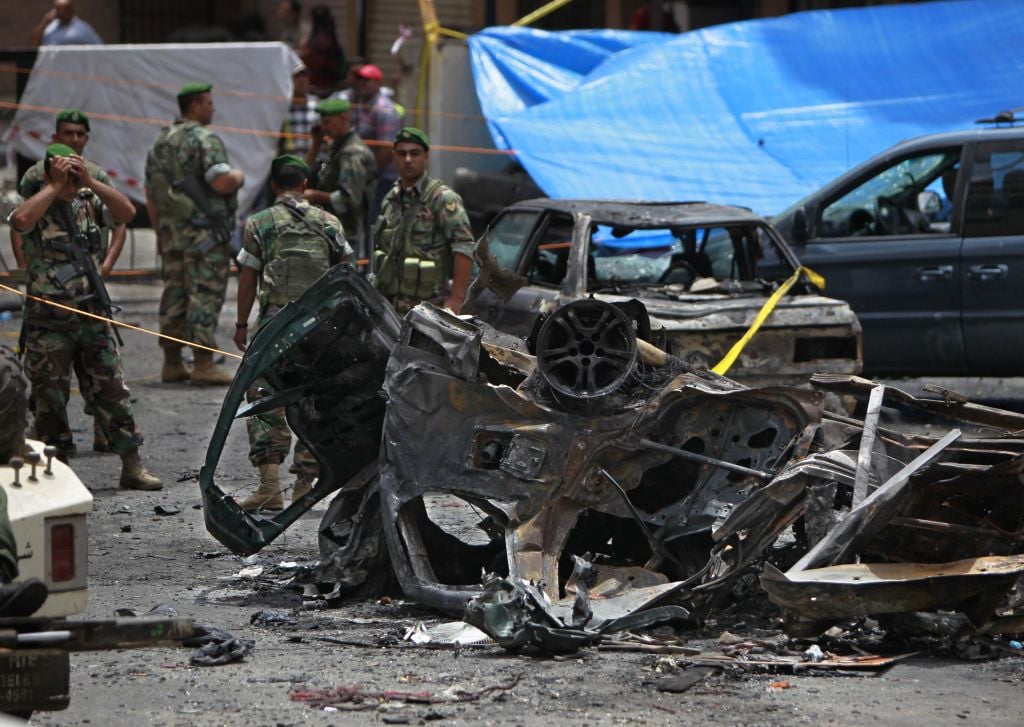
Fearing suicide attacks against Shi’ite targets in Lebanon, Hezbollah is adopting special security measures. According to Lebanese media reports, the Shi’ite organization has set up both fixed and mobile checkpoints in the heart of Baalbek, a Lebanese city known as a Shi’ite stronghold.
The unusual measures stem from concern about the possibility of bombings, similar to Tuesday’s incident in the Beir el-Abed neighborhood in Beirut’s Dahiyeh quarter during which 53 people were injured when an explosives-laden car exploded.
According to the reports, the checkpoints were established near the city’s well-known Shi’ite study hall, or Husseiniya, named after the Imam Hussein. Similar procedures were implemented near mosques.
Hezbollah is wary of a repeat of Tuesday’s attack and the passage of car bombs and suicide bombers from Syria to Shi’ite areas in Lebanon.
While there was no immediate claim of responsibility for Tuesday’s attack, there have been growing fears in Lebanon that Hezbollah could face retaliation for its now overt role fighting alongside President Bashar Assad’s troops inside Syria, including, activists say, in the embattled city of Homs near the Lebanese border.
Hezbollah has openly joined the fight in Syria, and the group’s fighters were instrumental in a recent regime victory when government forces regained control of the strategic town of Qusair near the Lebanese border.
Lebanon’s Sunni Muslims mostly back the overwhelmingly Sunni rebels in Syria, while many Shi’ites support Assad, who is a member of Syria’s minority Alawite sect, an offshoot of Shi’ite Islam.
Hezbollah’s Al-Manar TV channel quoted Lebanese security sources to the effect that a week before the attack in Dahiyeh, the head of the CIA in Lebanon passed information to the directors of the Lebanese security services about the intention of Al-Qaeda-affiliated groups to carry out a series of strikes against Hezbollah. According to the CIA, two trucks, each packed with seven tons of explosives and driven by suicide bombers, were making their way from Syria toward Dahiyeh.
In addition, the CIA gave information from another source that two more tons of explosives were intended for attacks throughout Lebanon, including against the military and foreign diplomats.
The third report passed along by the American spy agency told of a senior activist in one of the extremist Sunni factions in Syria, who prepared a stock of 500 missiles to be fired from Syria into Baalbek.
Last Thursday, according to Al-Manar, a high-level security meeting was held in the Lebanese presidential palace in Baabda, attended by the president and heads of all the security services. During the meeting, some of the reports were presented to them.
The Associated Press contributed to this report.




The Times of Israel Community.