

Holocaust memories stitched together, one panel at a time
At London’s Jewish Museum, child survivors brought to the UK after World War II tell their stories 70 years later through a patchwork of quilts
 Add ToI as a Preferred Source on Google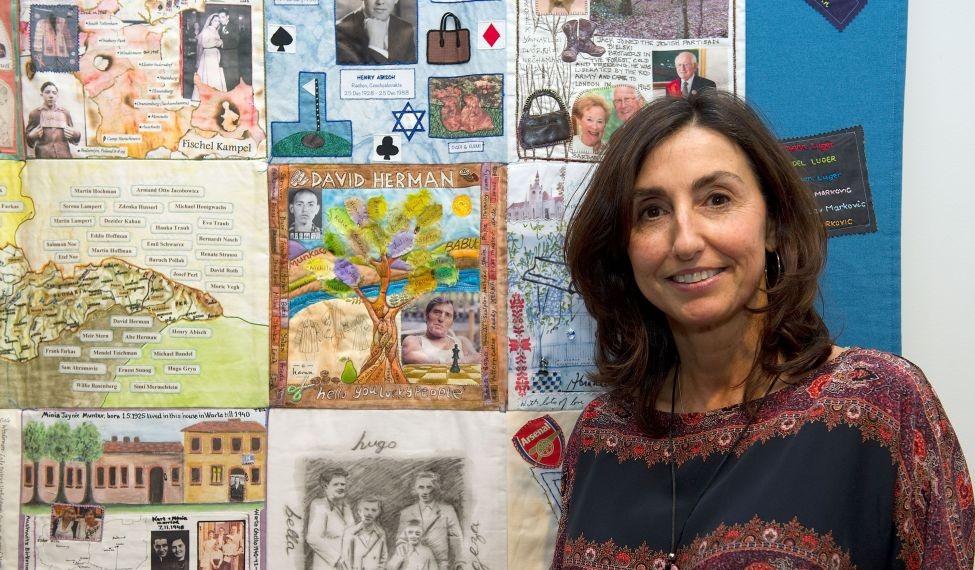
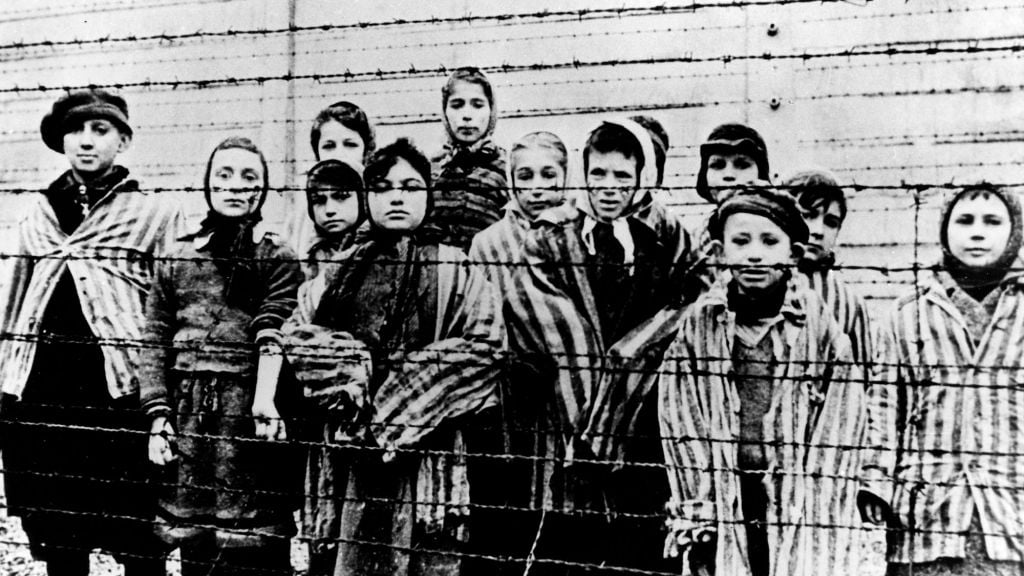
LONDON – To mark the 70th anniversary of their parents’ and grandparents’ liberation from the Nazi concentration camps at the end of World War II, a group of families have stitched together – literally – their memories of the Holocaust through a vibrant patchwork of quilts.
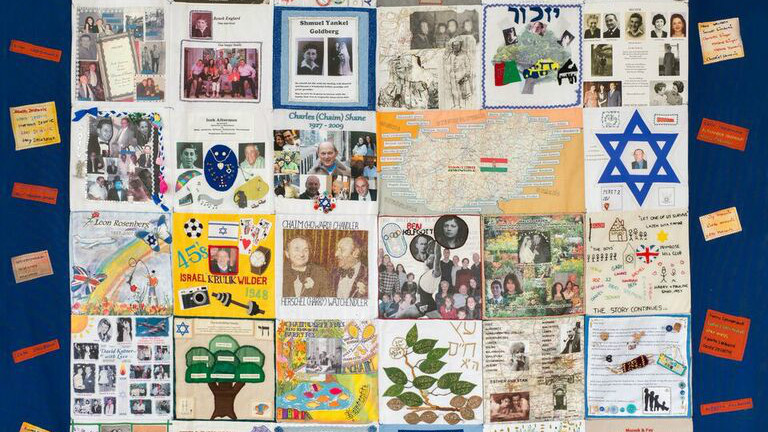
The four “memory” quilts, currently on display at London’s Jewish Museum, each depict stories of survival, panel by panel, of “The Boys” – a group of 732 child survivors (which actually included 80 girls) from Eastern Europe.
According to the ’45 Aid Society, an organization formed by the survivors after the war, the UK government offered at the time to allow 1,000 Jewish orphans from the camps to settle in Great Britain, but sadly only the 732 could be found. Many stayed to rebuild their lives, but others went on to Israel, North America and Australia.
“From terrible destruction comes these amazing lives,” said Abigail Morris, the museum’s director. “The beauty of these magnificent quilts speaks for themselves.”
The quilt project was conceived several years ago by Julia Burton – whose father is one of the “The Boys” – while working as an art volunteer in a home for the elderly. It is there where Burton met textile artist Sheree Charalampous, who had shown her a quilt she had made with those suffering from dementia.
‘The quilts exude joy and energy’
In 2013, when the Second Generation – a group made up of the children and grandchildren of The Boys – were considering how to commemorate the 70th anniversary of their liberation, Burton recalled this particular quilt and the organization agreed to create something similar.
“We were asked to produce something of importance in our lives that represented our story,” explained 73-year-old Joanna Millan (neé Bela Rosenthal), one of the 80 female “Boys.”
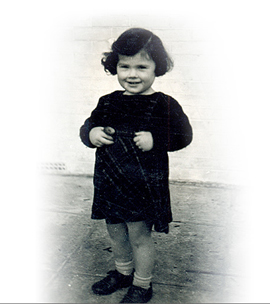
Born in Berlin, Millan was deported to the German concentration camp Theresienstadt (located in what is now the Czech Republic) in June 1943, where she remained until liberation in May 1945. At just age three, she arrived in England where she was eventually adopted.
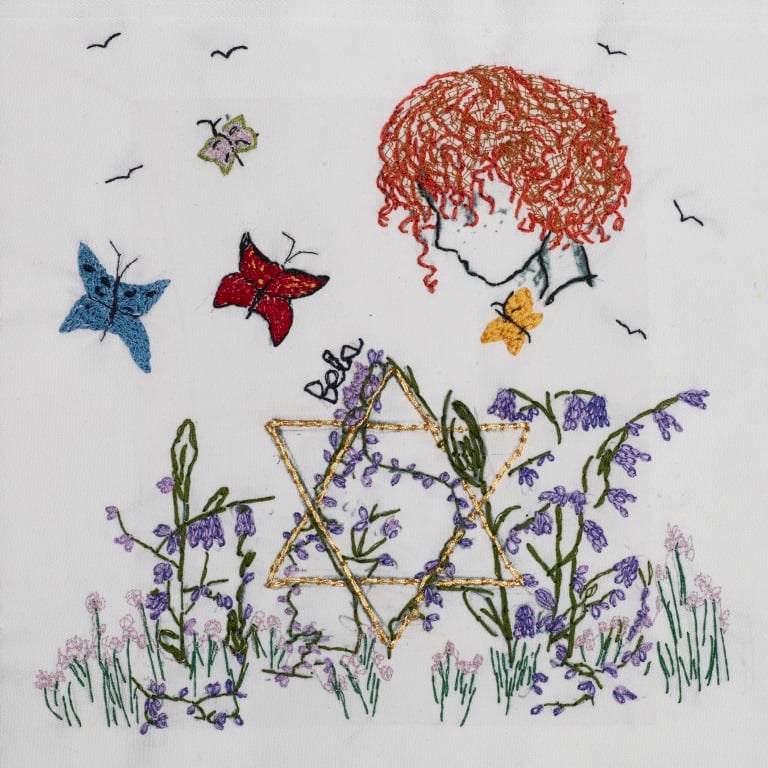
For the quilt project, Millan’s teenage granddaughter helped design her square, which is embroidered with purple flowers that weave in and around a large yellow Star of David. Her birth name, Bela, floats at its apex and a girl’s head, covered by a mass of wavy brown and red hair tilts slightly, her gaze focused on a few colorful butterflies with tiny birds hovering above her.
“[It] represents myself as a young girl alone, arriving in a strange country,” Millan explained. “The first thing I remember seeing when I came to England in spring were carpets of bluebells.”
Each of the fours quilts is just over 2 meters (6 feet) high, with 156 individual squares in total. Exhibited together across one wall, they are a mesmerizing, colorful collection of images that have been painstakingly stitched, painted, photographed, penned or glued. Each square is a reminder not only of lost families and communities, but also of the group’s strength, survival and continuity.
Each square is a reminder of the group’s strength, survival and continuity
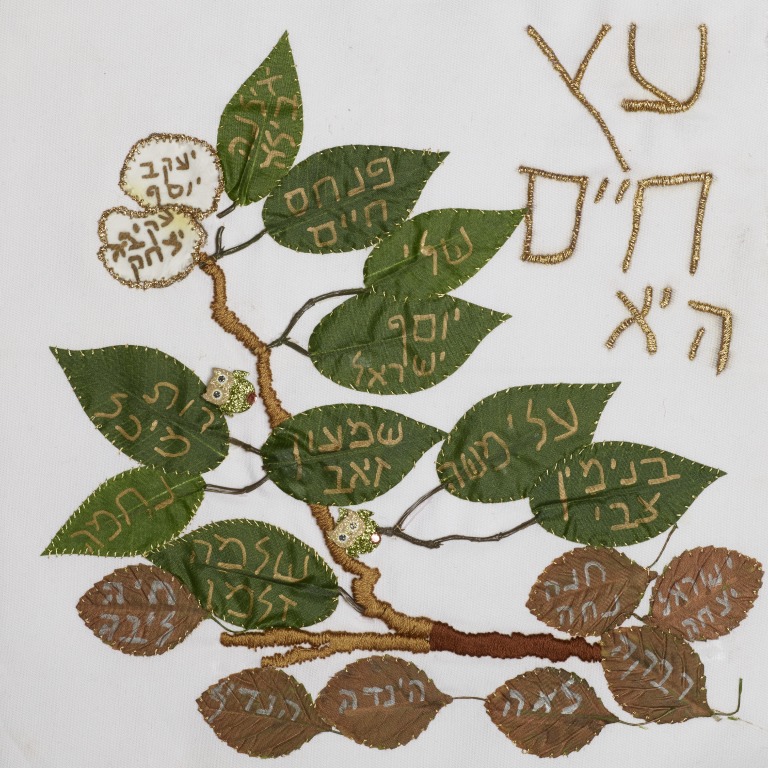
Born in Poland in 1930, Solly Irving was the sole survivor of his family. His square depicts a tree of life, with the green, regenerative leaves representing the subsequent generations of his family. Their names are written in Hebrew in distinguished gold lettering, with the brown leaves depicting the names of those family members who perished in the Holocaust.
Describing the design, Solly’s daughter, Hazel Irving said: “The leaves show how, although they tried, the tree was not killed off and continues to grow, from my father…[up to his] two great-grandsons.”
For Burton, together with her team of creative volunteers, which included designers, embroiderers and Sheree Charalampous, the project would prove to be demanding and intense, as they quickly realized that some people needed more help than anticipated. So, they established weekly quilt workshops to assist those survivors and their families who were struggling to translate their ideas onto fabric.
At the same time, they tried to reach as many of The Boys and their families around the world as possible. This too proved challenging as the databases of both the Second Generation and the ’45 Aid Society were out of date.
Despite the considerable obstacles, all 732 “Boys” have been represented on these quilts. Maps of Germany, Austria, Czechoslovakia, Hungary and Poland were made to include the names of those for whom the only information they had was a place of birth. The pre-war map of Poland is in itself a remarkable piece of art; its shape has been created out of the 350 names of the Polish Boys in calligraphy. Yet there were also names about which they knew nothing, not even a date of birth. Their names have been stitched into the borders of the quilts.
The quilts were unveiled in May at the annual reunion of The Boys’ liberation. Since then they have been exhibited at the UK’s Festival of Quilts as well as at the Beth Shalom Holocaust Centre in Nottinghamshire. A book, “The ’45 Aid Society Memory Quilt for The Boys,” has also been produced, which contains the stories behind the squares.
Burton hopes that the quilts will travel to museums, galleries and synagogues abroad, but she is also keen that a permanent home is eventually found for them.
The quilts exude joy and energy, Burton said, “They are a fitting tribute to the lives that The Boys created. They are a celebration of life.”
Memory Quilts: Triumph Over Adversity will be exhibited at the Jewish Museum in London until February 5, 2016


The Times of Israel Community.