

How (some) Jews across the US rooted for baseball’s first black player
70 years after Jackie Robinson hit the field, new books and exhibits show how the sport’s Jewish fans and players shared his pain
 Add ToI as a Preferred Source on Google
Reporter at The Times of Israel
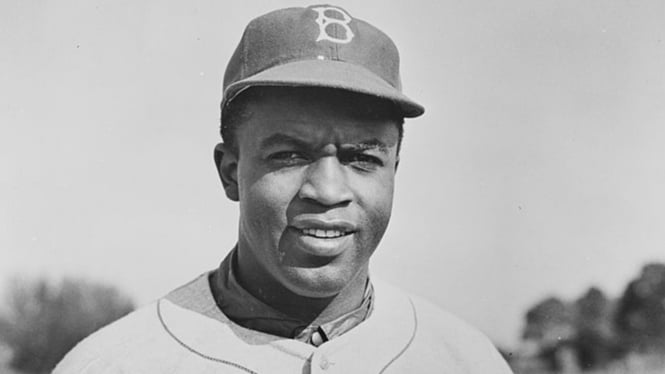
When Jackie Robinson integrated Major League Baseball 70 years ago with the Brooklyn Dodgers, American Jews were there to cheer him on.
Throughout the 1947 season, Robinson could count on support from Jewish fans — and from Jewish superstar Hank Greenberg, who offered praise and encouragement after an impromptu collision during a game.
“[Robinson] had very close relations to Jews, and Jews felt a kinship to him.” said Rabbi Rebecca Alpert, a senior associate dean of academic affairs at Temple University and the author of “Out of Left Field: Jews and Black Baseball.”
Now, scholars are reflecting on Robinson’s Jewish supporters during his historic first season.
Since the 1880s, an unwritten color ban had barred African-Americans from the major leagues. Separate “Negro leagues” subsequently arose for black players, but Dodgers president Branch Rickey sought to integrate the majors and he chose Robinson for what was described as baseball’s “great experiment.”
“I would argue [Robinson] was the finest African-American athlete in America,” said Long Island University professor Joseph Dorinson, co-editor of “Jackie Robinson: Race, Sports, and the American Dream.”
Robinson was a multi-sport star at UCLA and an officer in the US Army during World War II. He was court-martialed after refusing to sit in the back of a segregated bus, but was acquitted.
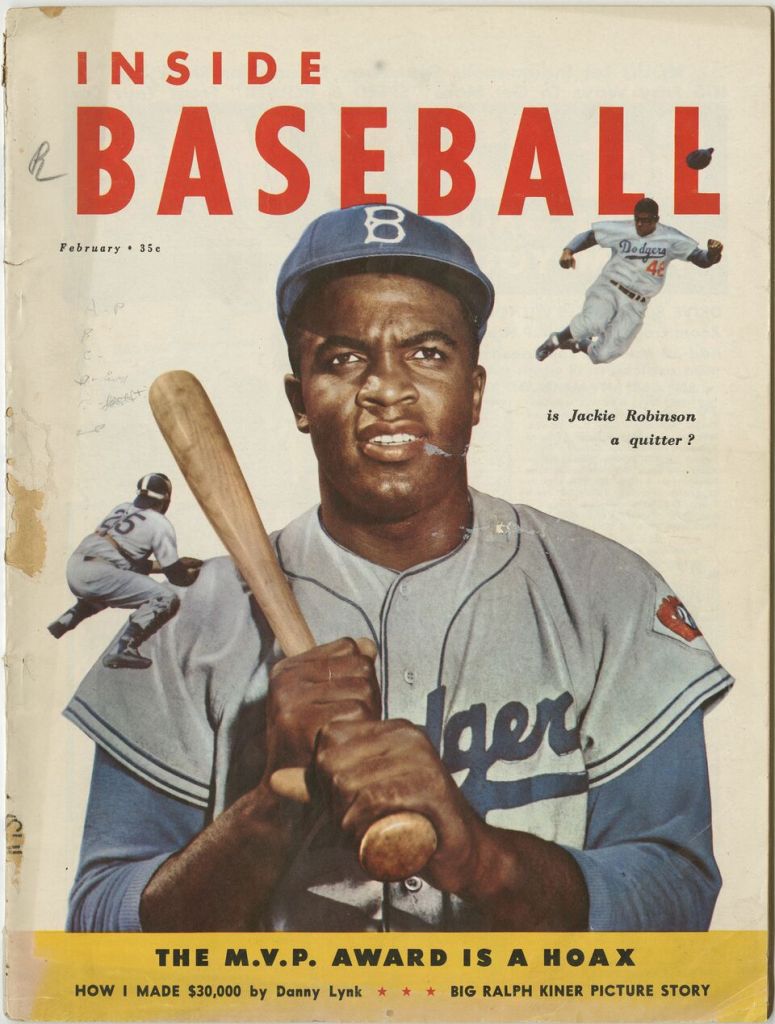
“The Jackie Robinson experiment could not have taken place in any other city, largely because of its Jewish population,” Dorinson said. “They were prone to support minorities.”
Brooklyn’s Jews included Dorinson’s family. His parents were Russian immigrants who, “at one time, both were extremely radical in their political beliefs,” he said. And, he added, “they always preached racial equality.”
“My mother asserted the reason Robinson was welcomed in Brooklyn was because it had a lot of liberal Jews,” said Alpert, who also grew up in Brooklyn, during the 1950s. “My mother was not alone. When I started research as an adult, [I found other] stories of [similar] experience, Jews feeling kinship towards Robinson, [from] our own group sense of oppression.”
“His first home was in a Jewish neighborhood,” Dorinson said. “He was not received warmly by everyone. But Jewish neighbors took him to heart.”
‘He was not received warmly by everyone. But Jewish neighbors took him to heart’
However, Alpert said that “there were Jews in Brooklyn who did not want him in the neighborhood,” and that he faced both Jewish support and opposition when he later moved to Connecticut.
“It’s a complicated story,” she said. “Nevertheless, there’s certainly a positive Jewish element to that story.”
Dorinson recalled going to Dodgers games as a boy and hearing Jewish fans use a Yiddish equivalent of their hero’s name: “Yankel, Yankel, get a klap! Smack the ball!”
“They embraced Jackie as a surrogate son,” he said.
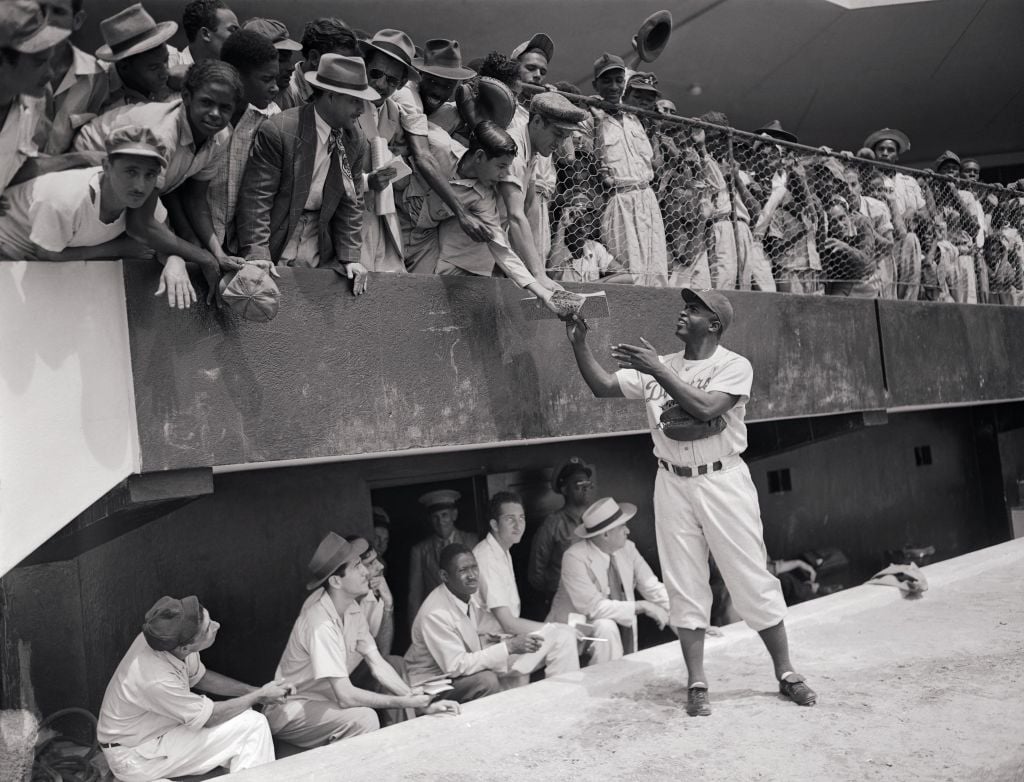
Another young Jewish fan of Robinson’s was Swiss immigrant Benjamin Blech — today a rabbi, professor of Talmud at Yeshiva University and author of 12 best-selling books.
Back then, Blech wrote in an email, “I was a little boy, a Jewish immigrant in love with America but aware of the powerful — at that time — barriers to full integration, both for blacks and for Jews. I was keenly aware that Robinson’s struggle was comparable to my own, hoping and praying that discrimination for whatever reason would be removed from the American landscape.”
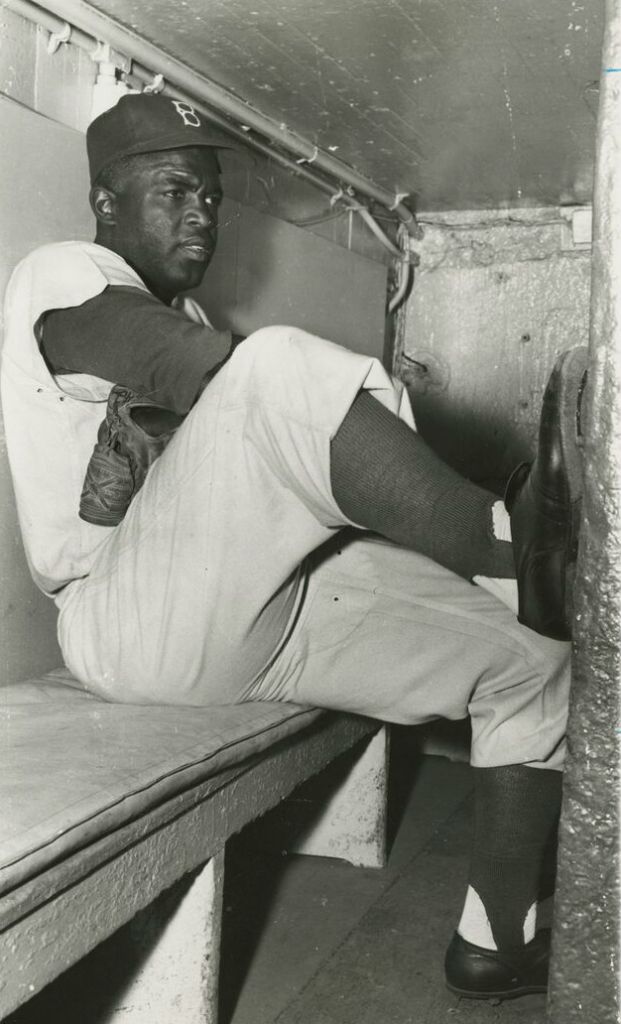
“Remarkably, as I vividly recall it to this day, a Yeshiva ‘bochur’ in Brooklyn — that was me — identified with the racially different star player of my beloved Dodgers because we were both victims of incomprehensible and unjustified hatred,” he concluded.
Early in the 1947 season, such hatred caused a crisis.
“On May 9, Robinson had come out and gone public about receiving threats to kidnap his son, and death threats against his wife,” said John Rosengren, author of “Hank Greenberg: The Hero of Heroes.”
Then, when the Dodgers went to Philadelphia to play the Phillies, the Phillies’ manager, Ben Chapman, “was inciting the players to say nasty things,” Rosengren said. “Players were pointing bats at Robinson as though they were rifles, after he had come out about the death threats. By the end of the series, he was on the verge of a nervous breakdown.”
That was the situation on May 15, 1947 — exactly one month after Robinson’s debut, which had taken place during Passover. The Dodgers were now in Pittsburgh, playing the Pirates and their superstar, Greenberg. During the game, because of an error, Robinson collided with Greenberg, who stood over six feet tall and weighed over 200 pounds.
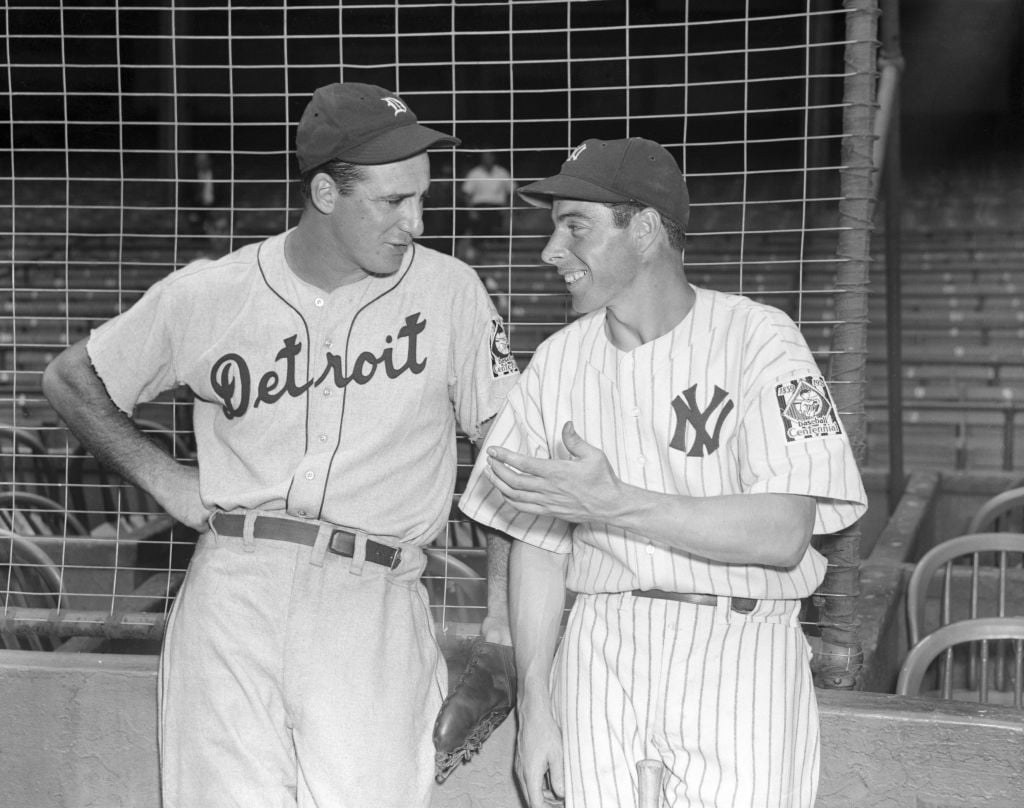
“A lot of people thought the Robinson experiment would lead to a racial brawl,” Rosengren said. “It seemed to be just the moment this would happen. A black man was not supposed to knock down a white man, especially an aging superstar. Had it been one of Greenberg’s Southern teammates, it might have well had ensued.”
Instead, both players reacted with professionalism and continued the game. When they encountered each other again the next inning, a civil conversation ensued.
‘A black man was not supposed to knock down a white man, especially an aging superstar’
“Greenberg said, ‘Hey, listen, are you OK?’” Rosengren recalled. “Robinson, surprised, said, ‘Yeah, I guess I am.’ Greenberg said, ‘Listen, you are a good ballplayer. Just keep your head up. You’ll do fine.’ Robinson was touched.”
A reporter asked Robinson about the incident, and Rosengren quoted his response: “Class tells. It spills all over Mr. Greenberg.”
“One columnist said he never had a prouder moment as a Jew than hearing about that interaction, the compassion and support Greenberg demonstrated,” Rosengren said.
Greenberg knew what it was like to experience hostility, having endured anti-Semitism with his previous team, the Detroit Tigers.
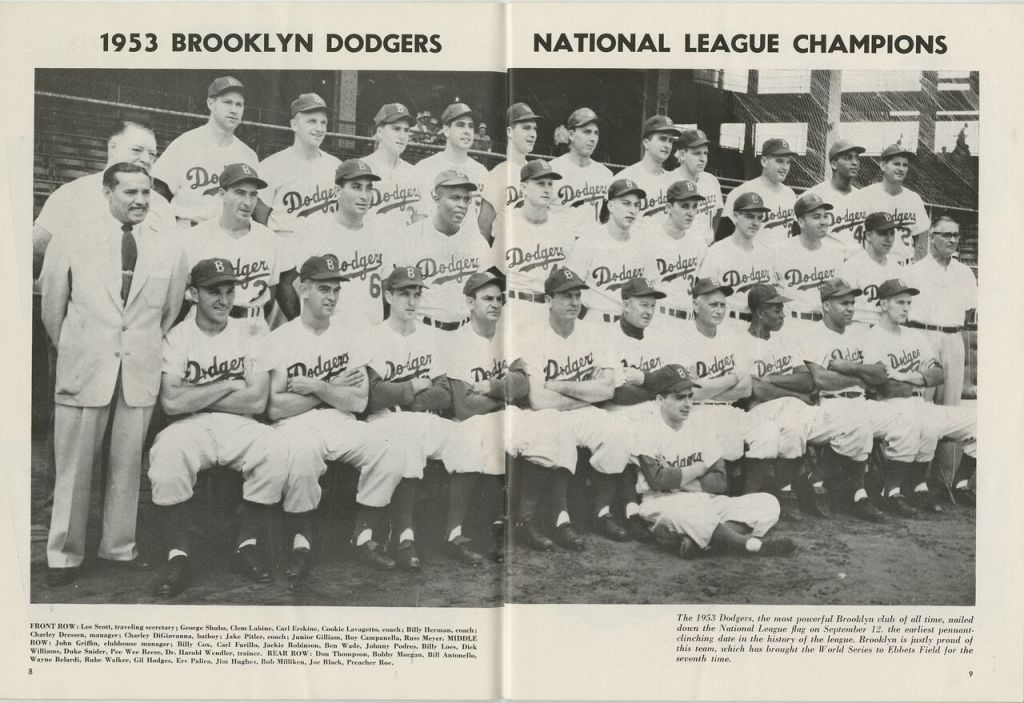
“Henry Ford was Detroit’s paterfamilias and an arch anti-Semite,” Rosengren said. “The Rev. Charles Coughlin, whose parish was in a suburb of Detroit, was spewing anti-Semitic rhetoric on the radio to 10 million listeners on Sunday afternoons.”
Greenberg even received taunts from “his own fans,” Rosengren said. “He bore the weight of his tribe on his shoulders.”
Greenberg embraced his Judaism, choosing not to play during the 1934 pennant race so he could attend Yom Kippur services. He also defended himself.
“There was an incident when he tore into an opposing team’s dugout and demanded to know who delivered slurs, invective, epithets his way. No one would own up,” said Robert Cottrell, a professor at California State University, Chico, and the author of “Two Pioneers: How Hank Greenberg and Jackie Robinson Transformed Baseball — and America.”
With the Tigers, Greenberg hit over 300 home runs and won two Most Valuable Player awards and two World Series championships. But by 1947, the WWII veteran was in his final season, with a different team.
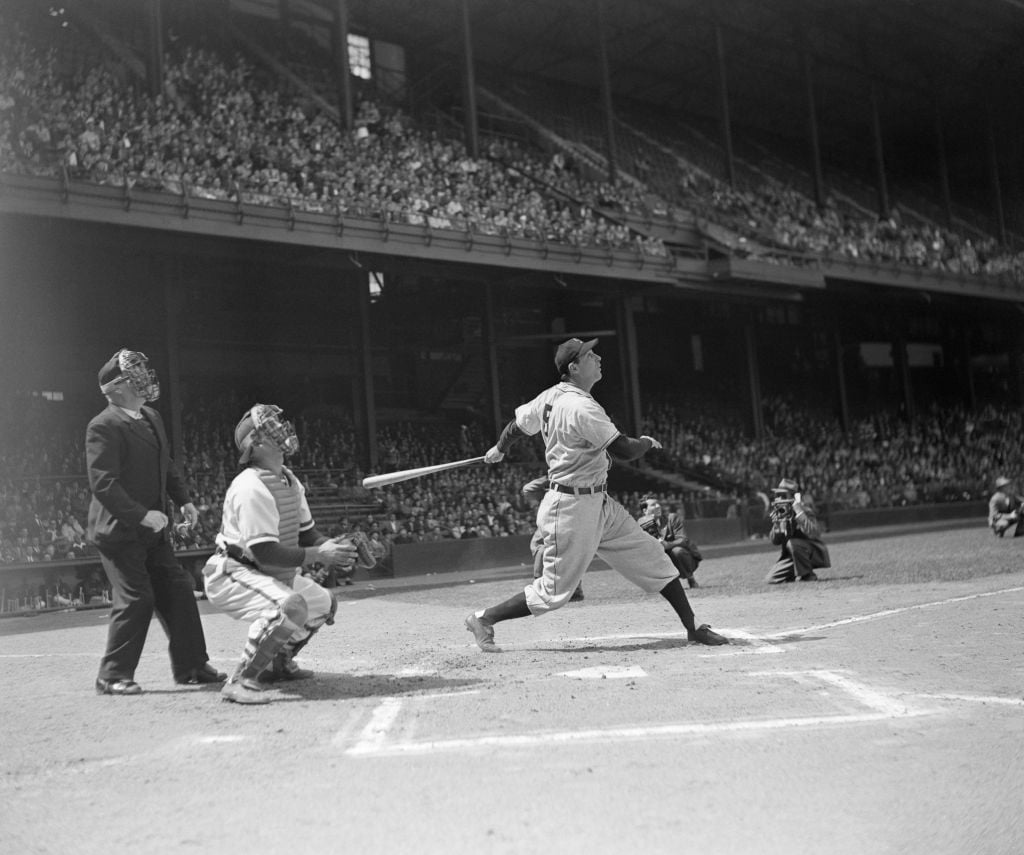
“The Pirates were horrible that year,” Cottrell said. “The moment with Jackie Robinson was one of the few that really stands out.”
Dorinson recalled another Greenberg-Robinson moment years later, in 1962. Dorinson and a friend were watching a Yale University football game in which Greenberg’s oldest son was playing. In front of them sat Robinson, his wife Rachel and their youngest son David. After the game, Robinson congratulated Greenberg on his son’s performance.
“Jackie and Hank were in the center of the field,” Dorinson said. “Greenberg was wearing an elegant camel coat. They embraced.”
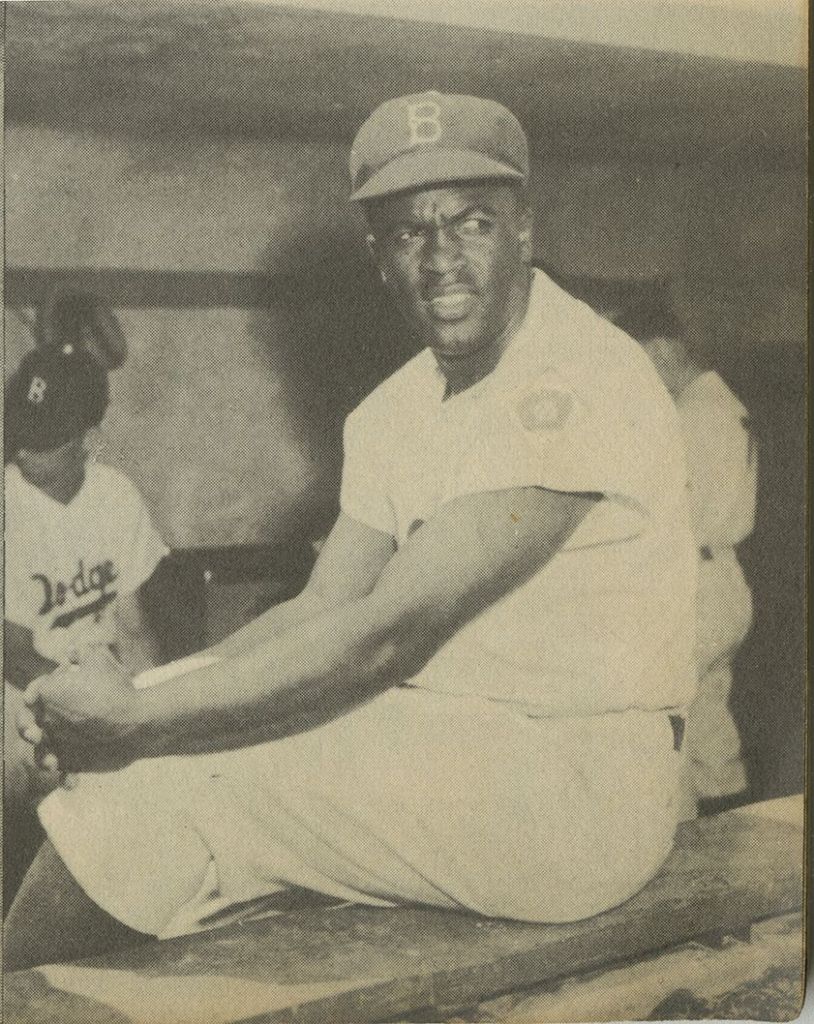
Robinson and Greenberg were “two pioneers battling very nefarious forces, ideas and isms,” Cottrell said. “They did it with such courage and such dignity. And it cost them. Jackie died way too young. [Robinson died in 1972 at age 53.] The stress factor was enormous. Hank was able to endure in a different way and live to a decent age. But Jackie died way too young.”
In April, the Brooklyn Historical Society unveiled a new exhibit, “Until Everyone Has It Made: Jackie Robinson’s Legacy,” honoring Robinson’s historic first season.
“As the season went on, it became clear that he was a key asset to the Dodgers,” said Kathryn Lasdow, an assistant public historian at the society. “His skill and ability on the field were really important to the team.”
Robinson won the Rookie of the Year award that season and helped the Dodgers reach the World Series, which they lost to the New York Yankees. Two years later, he won the MVP award and the Dodgers returned to the World Series, again losing to the Yankees.
The Dodgers eventually moved to Los Angeles a few years after winning their first and only World Series in Brooklyn, in 1955, over the Yankees. (The LA Dodgers included another Jewish superstar, Sandy Koufax.) Robinson did not join them on the West Coast. But he left a substantial legacy.
“It’s amazing how time flies,” Dorinson said. “My late, lamented colleague Jules Tygiel, who wrote the definitive study of Jackie Robinson [‘Baseball’s Great Experiment’], he argued that every Passover… every Easter, whether you’re Christian or Jewish, the story of renewal and resurrection is relevant to Jackie Robinson’s trajectory and narrative. It’s important to renew every year.”








The Times of Israel Community.