Adiv Sterman is a breaking news editor at The Times of Israel.
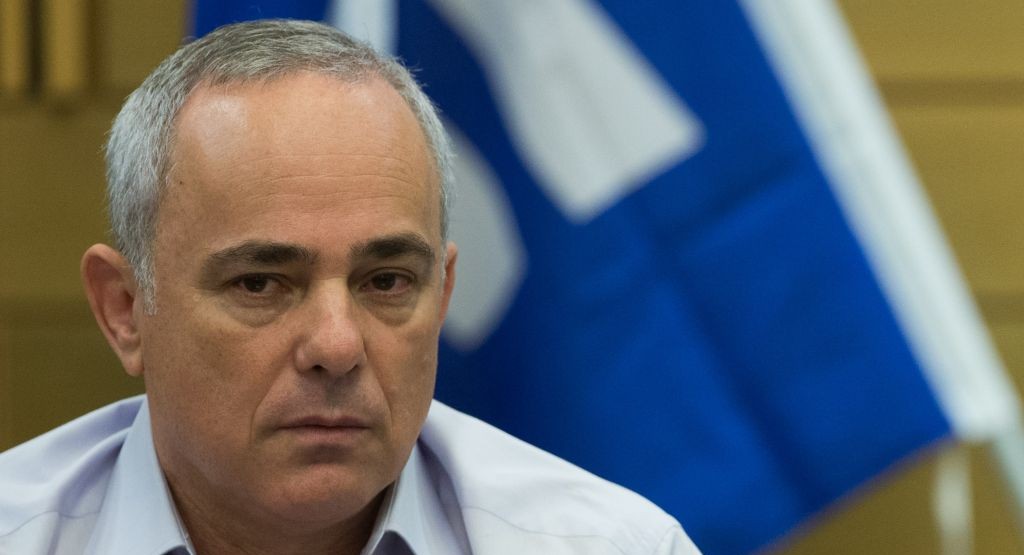
Energy Minister Yuval Steinitz attends a Likud faction meeting at the Knesset on July 27, 2015. (Yonatan Sindel/Flash90)
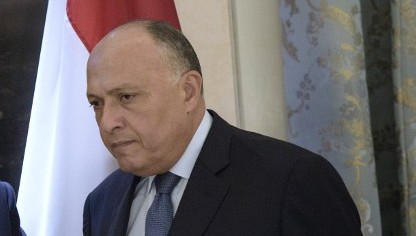
Energy Minister Yuval Steinitz met Thursday with Egyptian Foreign Minister Sameh Shoukry to discuss regional issues, including gas development and preventing “radioactive terrorism.”
The meeting between the two officials marked the highest level convention of senior ministers in both countries since the ouster of former Egyptian president Hosni Mubarak, following the 2011 uprising in the country.
The two met in Washington, where they are set to attend a top-level nuclear security summit hosted by President Barack Obama in Washington on Thursday and Friday.
“The meeting dealt with regional issues, the possibility of providing Israeli gas to Egyptian liquefaction facilities, and international cooperation in preventing radioactive terrorism,” a statement from Steinitz’s office said.
Egyptian Foreign Minister Sameh Shoukry on October 30, 2015 (Brendan Smialowski/AFP)
Official relations between Jerusalem and Cairo have been relatively warm since President Abdel-Fattah el-Sissi took power in 2013, after the ouster of Islamist former president Mohammed Morsi.
Get The Times of Israel's Daily Editionby email and never miss our top stories
Sissi’s government has closely allied with Israel on key security issues, including Egypt’s war against Islamic State-affiliated jihadists in Sinai and on both countries’ blockade of the Hamas-ruled Gaza Strip.
However, an Egyptian lawmaker was kicked out of parliament earlier this year after it emerged he ate dinner with Israel’s new envoy to Cairo, underlining still-fraught ties between the countries.
In September 2015, Israel reopened its embassy in Egypt, four years after it was shut when a mob stormed the complex.
Advertisement
We can't do this work alone.
The war with Iran has been draining for all of us in Israel. But when I heard about a high casualty incident – ballistic missile impacts in Arad and Dimona that left nearly 200 people wounded – I drank a cup of coffee, packed a bag, and headed south.
There, I spoke with Shilgit, the head of an after-school program for underprivileged youth. Standing outside her destroyed center, Shilgit said it was a miracle that no children were hurt and spoke about the community coming together in the hours since.
As a Times of Israel reporter, I’m committed to telling stories of resilience like Shilgit’s. But my colleagues and I can't do this alone. If you value work like this,please consider joining our reader support group, The Times of Israel Community. Your financial support is essential to keep real human reporting like this going.
We’re really pleased that you’ve read X Times of Israel articles in the past month.
That’s why we started the Times of Israel - to provide discerning readers like you with must-read coverage of Israel and the Jewish world.
So now we have a request. Unlike other news outlets, we haven’t put up a paywall. But as the journalism we do is costly, we invite readers for whom The Times of Israel has become important to help support our work by joining The Times of Israel Community.
For as little as $6 a month you can help support our quality journalism while enjoying The Times of Israel AD-FREE, as well as accessing exclusive content available only to Times of Israel Community members.
Thank you, David Horovitz, Founding Editor of The Times of Israel