

Israeli warning prompted Hezbollah threats last week — report
Jerusalem delivered cautionary message to Lebanese terror group via unnamed Arab emissary, Al-Hayat newspaper says
Jacob Magid is The Times of Israel's US bureau chief
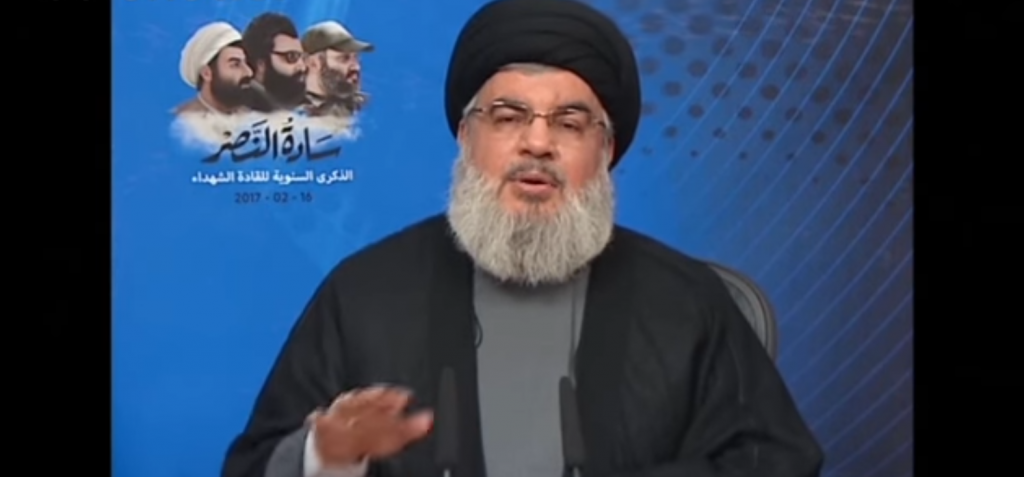
Israel passed a message to the Lebanese terror group Hezbollah, warning that Israel would respond forcefully to any Hezbollah aggression from Lebanon or Syria, according to a report in the Arab media Sunday.
This warning is believed to be the reason that the group’s leader Hassan Nasrallah threatened a strike against Israel’s nuclear reactor in Dimona last week.
The message was passed along to the Lebanon terror group via an unnamed Arab emissary, according to a Sunday report in the Arabic-language London-based Al-Hayat newspaper.
It was not clear exactly when Israel sent the message or what prompted it.
Al-Hayat said this is what prompted Nasrallah to boast last Thursday that his rockets can reach Israel’s nuclear reactor in the southern city of Dimona, and that he would turn Israel’s reported nuclear arsenal against it.
Nasrallah, who has in the past threatened to target an ammonia tank in Haifa, claimed credit for an Israeli court decision to shut down that facility this week and said he would do the same with the nuclear reactor.

“I call upon the Israeli not only to evacuate the ammonia tank from Haifa, but also to dismantle Dimona nuclear facility,” Nasrallah said at a rally. “The Israeli nuclear weapon that represents a threat to the entire region, we will turn it into a threat to Israel,” he declared.
In response to Nasrallah’s statement, Minister of Intelligence Yisrael Katz threatened in a statement to target “all of Lebanon,” including infrastructures there, in retaliation for any attack on Israeli population centers or infrastructures. He also called for “debilitating sanctions” on Iran over its support for its “proxy and stooge” Nasrallah.
Nasrallah is also believed to have considered the thawing of US-Israel relations before going forward with the escalating threat against the Dimona reactor.
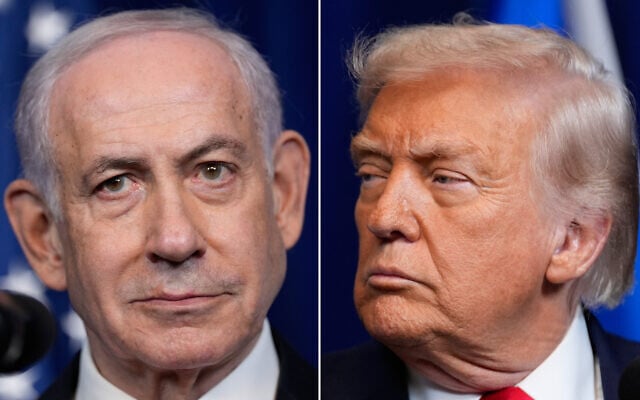
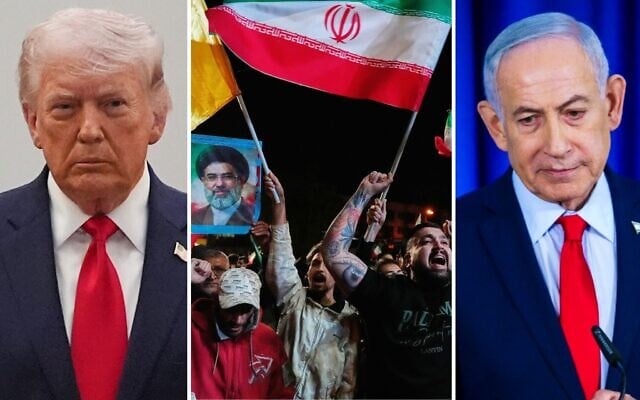
Hezbollah officials believe that Israel maintains more maneuverability in its regional operations under the new Trump administration than it did when Barack Obama was in the White House, according to Al-Hayat.
Obama was understood to have pushed Prime Minister Benjamin Netanyahu’s government to practice restraint in responding to aggression from its adversaries — namely Iran proxies Hezbollah and the Gaza-based group Hamas. But Hezbollah officials no longer believe that to be the case with Donald Trump at the helm.
/ AFP PHOTO / STRINGER
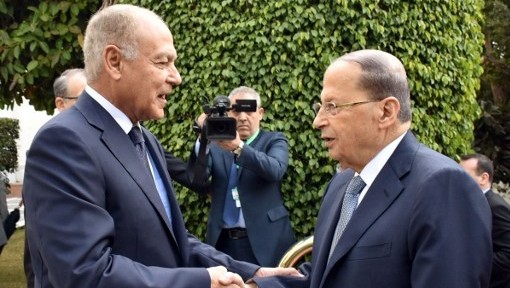
A similar conclusion was reached by Lebanese president and Hezbollah ally Michael Aoun following meetings with Arab League leaders last week.
Aoun, a Maronite Christian who was elected president in October after a 29-month political stalemate, caused controversy last week when he blamed Israel for his country’s need to support the Iranian-backed Shiite terror group Hezbollah in “a complementary role to the Lebanese army.”
He told the Egyptian TV network CBC, “As long as the Lebanese army is not strong enough to battle Israel … we feel the need for its existence.”
The United Nations immediately responded by warning that Resolution 1701, reached as part of a ceasefire deal after the 2006 war between Israel and the terror group, prohibits the country from being allowed to field its own militia.
Dov Lieber and Alexander Fulbright contributed to this report.




The Times of Israel Community.