

Israelis split on prospect of Biden cementing peace with Saudi Arabia
Ahead of visit by US president, surveys find public also almost universally pessimistic about the possibility of a breakthrough with the Palestinians
 Add ToI as a Preferred Source on Google
Most Israelis lack faith in US President Joe Biden’s ability to represent Israel’s interests, and they are split on the prospect of a breakthrough in diplomatic relations with Saudi Arabia during his visit, according to new polls released Monday.
The polls — the latest monthly Israeli Voice Index and a special survey on Biden’s visit, both by the Israel Democracy Institute — showed that Jewish and Arab citizens are wary of Biden’s ability to take Israel’s concerns into account in negotiations with Iran. They also are not hopeful about the prospect of peace with the Palestinians in the near future.
The polling was conducted in the lead-up to Biden’s first trip to the Middle East as president, but his tenth visit to Israel overall. He is set to land at Ben Gurion Airport on Wednesday, for a visit that will include Israel and the West Bank, before leaving for Saudi Arabia on Friday for a Saturday meeting with regional Mideast leaders as part of the GCC+3 summit (the Gulf Cooperation Council — Bahrain, Kuwait, Oman, Qatar, Saudi Arabia, and the UAE, along with Iraq, Egypt, and Jordan).
The visit carries the hope of some form of breakthrough in ties between Israel and Saudi Arabia, and a glaring absence of a peace push with the Palestinians.
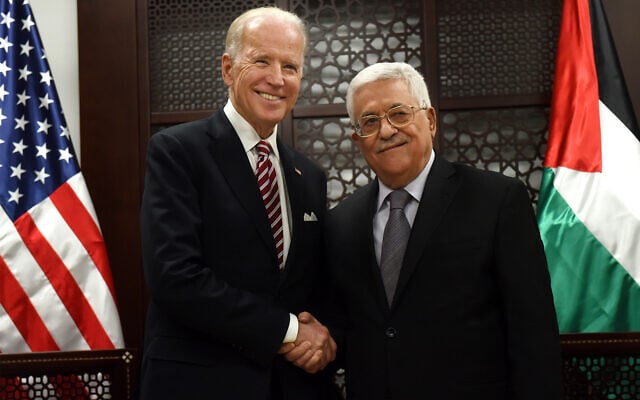
According to the special survey on Biden’s visit, 44 percent of respondents said that they believe in the US president’s ability to effect a peace agreement between Israel and the Saudis, and 44% said they did not.
Results regarding the public’s lack of faith in Biden’s ability to advance peace talks between Israel and the Palestinians were starker, with 81% answering that they did not think Biden could effect a breakthrough, while 11% said they did.
The same survey also asked questions about Israelis’ trust in Biden to act on behalf of Israel’s interests in the Iran nuclear talks and overall bilateral ties.
The poll suggested that neither Israeli Jews nor Arabs generally view Biden with high regard.
Seventy-five percent responded that they did not believe Biden would take Israel’s interests into account in the nuclear talks, including 79% of Jews and 54% of Arab respondents. Sixteen percent answered that they did trust Biden.
In terms of the overall relationship between the US and Israel, 54% of Israelis answered that they did not believe that Biden would take Israel’s interests into account; however, only 40% of Arab respondents expressed a lack of faith in the president’s ability, in contrast to 57% of Jewish respondents.
Thirty-seven percent answered that they did have faith in Biden on that front.
Meanwhile, the separate Israel Voice Index showed that Israeli citizens were wary of prospects for peace with the Palestinians and concerned about a future escalation in the West Bank and Gaza.
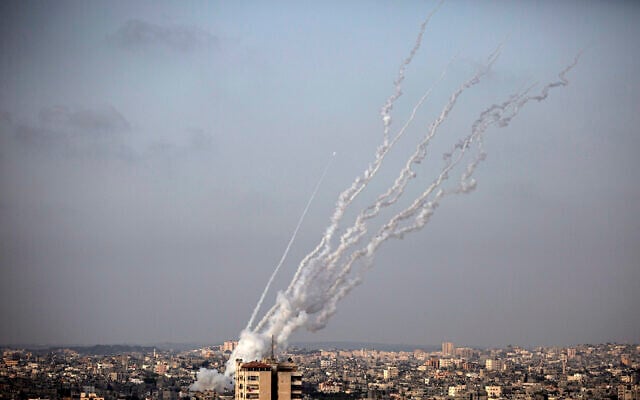
This survey showed that a majority of Israelis, including 91% of Jews and 68% of Arab citizens believe it is unlikely that a peace deal with the Palestinian Authority will be inked within the next five years.
Israel and the Palestinians have not engaged in direct peace talks since 2014, when the previous round of negotiations collapsed. A few months later, Israel was forced to embark on a large-scale counterterrorism crackdown in the West Bank after three Israeli teenagers were abducted and murdered by terrorists on June 12, 2014, which was followed by Operation Protective Edge, a month-and-a-half-long clash between the IDF and the Hamas terror group in the Gaza Strip.
According to the index, Jewish respondents and Arab respondents were split over whether they would support an agreement dividing the land into two states if such an understanding was agreed to by the two sides, with 71% of Arab respondents, but only 32% of Jewish respondents, answering that they would support a deal.
When asked whether they believe a third intifada could break out in the West Bank and Gaza if Israel and the Palestinians do not solve the conflict, 57% of Jewish respondents and 44% of Arab respondents answered that such an escalation is likely.
Twenty-eight percent of Jewish and 36% of Arab respondents responded that there was a low likelihood of such an outbreak of violence occurring.
The two surveys were conducted by the Viterbi Family Center for Public Opinion and Policy Research at the Israel Democracy Institute. The June 2022 Israeli Voice Index interviewed 755 people in Hebrew and Arabic, with a maximum sampling error of 3.59% at a confidence level of 95%.
The survey on Biden’s visit interviewed 606 people in Hebrew and Arabic, with a maximum sampling error of 4.06% at a confidence level of 95%.






The Times of Israel Community.