

Jerusalem to reconsider Shabbat commerce at First Station promenade
5 years after its opening, ultra-Orthodox seek to derail cultural compound’s Saturday activities; mayor ‘certain’ nothing will change
 Add ToI as a Preferred Source on Google
Marissa Newman is The Times of Israel political correspondent.
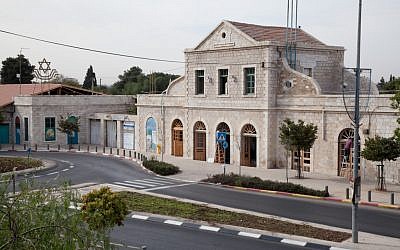
The Jerusalem municipality will hear an appeal next week by ultra-Orthodox council members protesting the capital’s First Station promenade being open for business on Saturdays.
The May 16 Jerusalem council meeting will debate permission given to the compound — a former 19th century train station that for the past five years has been home to restaurants and art displays, and offers live entertainment and cultural activities — to keep its doors open on the Jewish day of rest.
The appeal was filed over two years ago, according to Hebrew reports. The city’s legal adviser has mandated that the council, made up of secular, Orthodox, and ultra-Orthodox members, convene to hear the appeal next Wednesday. But the final decision rests with another committee within the Finance Ministry, which will vote on May 17 whether to uphold the existing arrangements, according to a statement from the municipality.
“As the person under whose leadership the station was built, Mayor Nir Barkat is certain there will be no change at the station and it will continue to operate according to the status quo in Jerusalem, according to which culture, leisure, and restaurants are permitted [to remain open] on Shabbat while commerce is forbidden,” a statement from Barkat’s office said.
The issue “will not be determined by the city council, but rather the following day by the district committee in the Finance Ministry and we expect and believe it will uphold the existing arrangement under the status quo,” the mayor’s office said.
The revived debate over the cultural compound’s Shabbat activity was also condemned by the Hitorerut party’s Ofer Berkovich, an original backer of the First Station and a candidate for mayor in the upcoming October elections.
“This is a declaration of war on the ability of diverse communities to live together in Jerusalem,” said Berkovich. “We will fight for a tolerant and open Jerusalem and to safeguard the First Station.”
The First Station is one of the only sites open on Saturdays in Jerusalem. Israeli law forbids businesses from operating during the Jewish day of rest, with exceptions including places of entertainment, restaurants and basic services such as pharmacies, as well as industries whose closure would hurt Israel’s economy. A vehemently debated issue in numerous Israeli cities, the policy is of particular sensitivity in deeply religious Jerusalem.
In January, the government passed a law to shutter minimarkets countrywide on Shabbat, though after a furious public debate over the passage of the law, Interior Minister Aryeh Deri later conceded it would not be enforced.
The debates come ahead of the annual city elections in October, during which the hot-button issue of businesses open on Shabbat will likely be a centerpiece of the various mayoral campaigns.
Barkat has announced he will not seek reelection and was setting his sights on joining the Likud party in government in the 2019 elections. Other candidates who have thrown their hat in the mayoral ring include Moshe Lion, while Jerusalem Minister Ze’ev Elkin, coalition chairman David Amsalem, and Zionist Union MK Nachman Shai were said to be mulling running in the 2018 Jerusalem election, though all three have yet to officially declare.






The Times of Israel Community.